


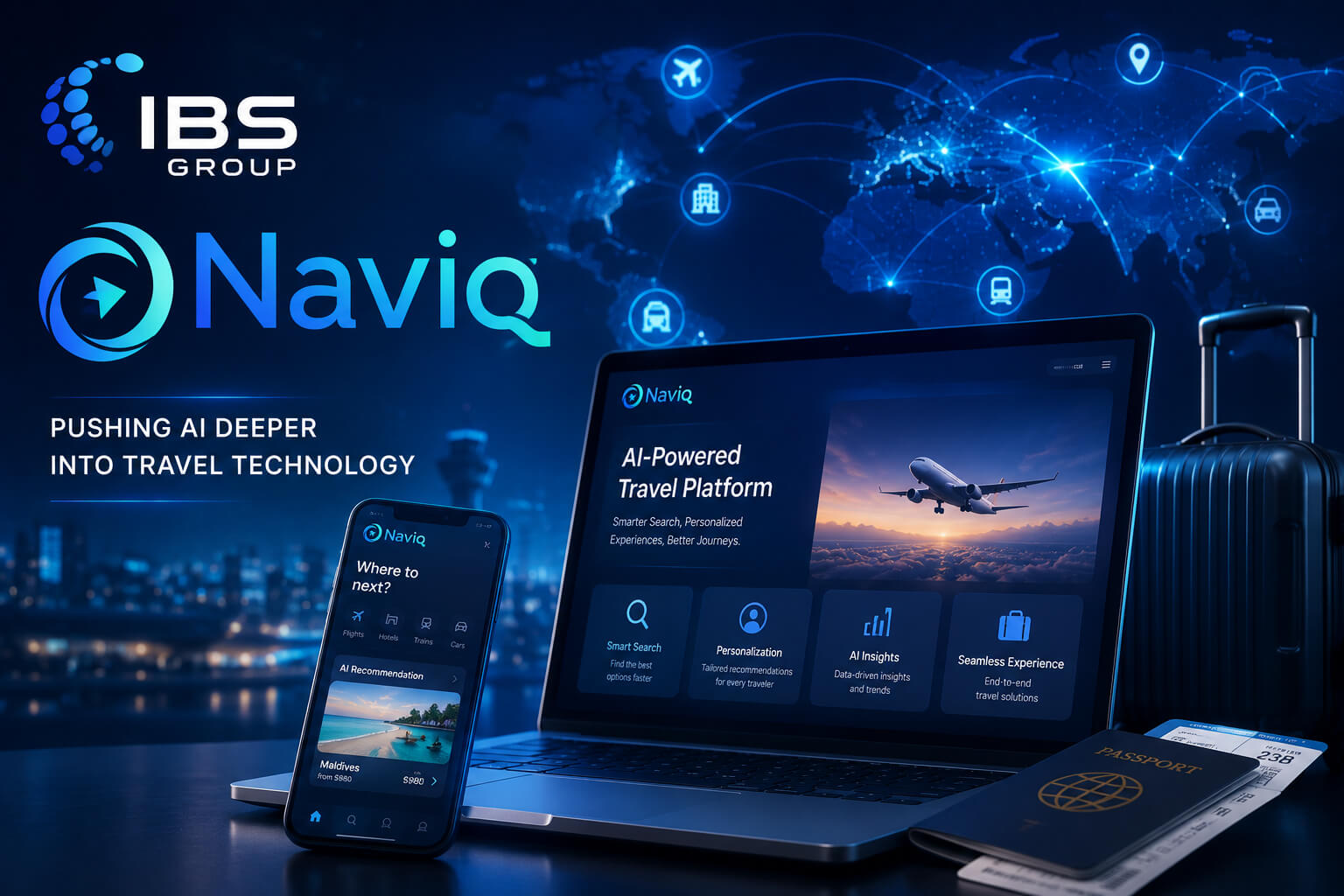
IBS Group is making a bigger AI move in travel.
The company has launched Naviq Technology, a new AI-first business created specifically for the global travel sector. Not a side product. Not just another software upgrade. Naviq is being positioned as a separate company focused on helping travel businesses use AI in a more serious, operational way.
That matters because travel has no shortage of AI experiments right now. Chatbots, trip planners, pricing tools, customer service automation. Some are useful. Some feel rushed. The harder part is making AI work inside the messy systems that actually run airlines, airports, cruise companies, hotels, and vacation providers.
That is the space Naviq wants to enter.
Naviq Starts With Travel, Not Generic AI
IBS Group said Naviq will combine IBS Software’s long experience in travel technology with AI-first innovation. The goal is to help customers improve operational efficiency, personalize customer experiences, and open new revenue opportunities.
The wording is corporate, yes. But the direction is clear enough.
Naviq is not being launched as a general AI consultancy that happens to sell into travel. It is built around the idea that travel companies need AI partners that already understand industry complexity. Flight operations, bookings, hospitality systems, cruise planning, passenger data, partner networks, revenue models. These are not simple workflows.
That may be the real selling point here. Travel companies do not only need AI tools. They need AI that can survive contact with old systems, fragmented data, and high-pressure customer expectations.
Airlines, Airports, Cruises and Hotels Are the Target
Naviq plans to work with global airlines, airports, cruise lines, vacation providers, and hospitality groups. Its focus will be large business transformations, modernizing operations, AI adoption at scale, new revenue streams, and faster time-to-value.
That last phrase matters more than it sounds.
A lot of companies are under pressure to show that AI can produce real business results. Not demos. Not innovation lab slides. Real improvements. Faster service. Better decisions. Lower operational friction. More personalized customer journeys. More useful data.
For travel businesses, the stakes are especially high because the customer experience is already full of friction. Delays, cancellations, rebookings, loyalty programs, hotel check-ins, missed connections, changing prices. AI has room to help, but only if it is connected to the real operating layer.
Naviq Will Operate Independently From IBS Group Affiliates
Naviq will operate as an independent business entity while still complementing IBS Software’s customer network and travel industry experience. The company begins with 16 offices already established worldwide.
That structure is interesting.
IBS Group appears to be giving Naviq enough separation to build its own identity while still using the credibility and customer access of IBS Software. For a new AI company, that helps. It avoids starting from zero, especially in a sector where enterprise trust matters.
There is also a talent angle. Naviq is being designed to attract AI researchers, data scientists, and travel domain specialists who want to work where applied AI and travel technology meet.
That sounds ambitious. It also reflects where the industry is going. Travel tech is no longer only about reservation systems and booking engines. It is becoming more about intelligence layers, data orchestration, automation, and prediction.
IBS Group Sees AI as a Travel Industry Turning Point
V. K. Mathews, Founder and Executive Chairman of IBS Group, said the travel industry is at a turning point as organizations look for smarter ways to operate and future-proof their businesses. He said Naviq is intended to offer specialized AI tools at scale, backed by IBS Software’s travel technology expertise.
That is the big claim behind the launch.
AI in travel is moving beyond simple assistance. It is starting to touch the business model itself. How companies price products. How they manage disruption. How they talk to customers. How they forecast demand. How they turn data into commercial decisions.
Naviq’s stated focus will be on AI adoption at scale, customer experience transformation, and data as the foundation for intelligent operations.
That is where many travel companies are likely stuck right now. They have data, but not always usable data. They have systems, but not always connected systems. They want AI, but they may not have the internal structure to deploy it properly.
A 5,000-Person AI Travel Tech Ambition
Naviq’s business plan includes rapid growth from its 16 centers worldwide, with headcount expected to grow to more than 5,000 high-tech professionals over the next five years. IBS Group also plans to invest significantly during that period to expand capabilities and grow the business.
That is not a small target.
It suggests IBS Group is treating Naviq as a major strategic bet, not a branding exercise. A 5,000-person target would place Naviq among the more visible AI-focused travel technology players if the company executes well.
Jason Wright, Partner at Apax Partners, described Naviq as part of a structural shift in travel technology services, where deep industry expertise is paired with an AI-first model built for speed and commercial impact.
That phrase, “commercial impact,” is where the pressure sits.
Travel companies have heard enough AI promises. The next stage will be judged by whether AI can actually change margins, improve operations, and make travel feel less broken for customers.
Why This Launch Matters for AI Travel Technology
Naviq arrives at a moment when the travel sector is trying to move from AI curiosity to AI execution.
The industry does not need more vague talk about transformation. It needs systems that can handle real travel complexity. Systems that understand airline disruption, hospitality operations, cruise inventory, customer data, and multi-channel booking behavior.
That is what makes the Naviq launch worth watching.
IBS Group already has a base in travel technology. Naviq now gives it a dedicated AI-first vehicle to chase the next wave of travel tech spending. Whether it becomes a major force will depend on delivery, not announcement language.
Still, the signal is clear.
AI is becoming part of the travel industry’s core technology stack. Not just the front-end chat window. Not just the itinerary suggestion tool. The deeper layer. Operations, data, customer experience, revenue, and decision-making.
That broader shift is also visible in Travel Compositor’s integration of AskIA into travel booking and Dida MCP’s move from AI recommendations to confirmed hotel bookings.
That is where the real race is starting.
