


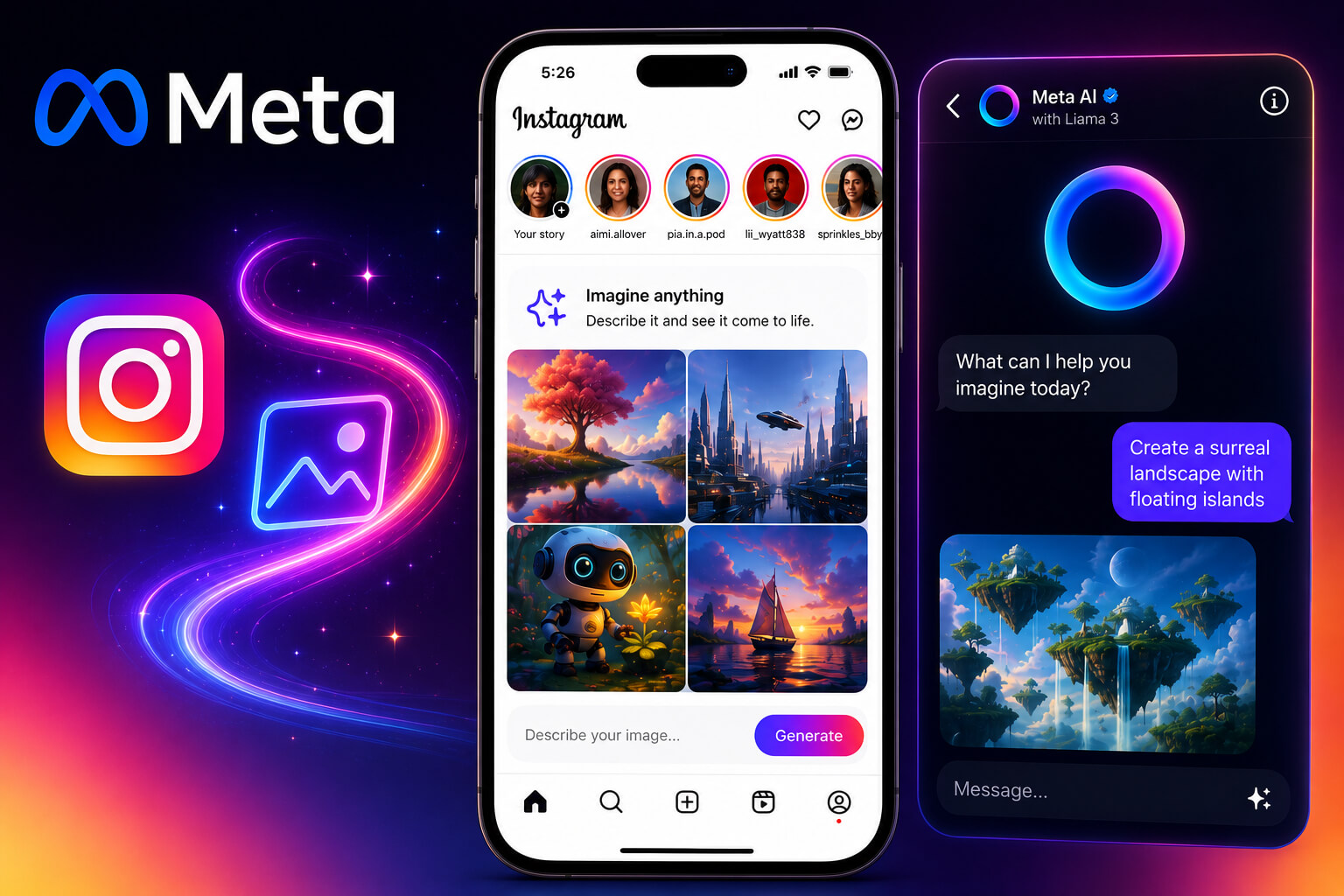
Meta is putting a new AI image generation model directly where people already waste, work, post, message, scroll, edit, and occasionally panic-delete a Story.
The company has introduced Muse Image, a new in-house AI image model built by Meta Superintelligence Labs. It will power image generation inside Meta AI, Instagram, WhatsApp, and other Meta platforms. Bloomberg reported the launch on July 7, 2026, as Meta continues trying to close the creative AI gap with rivals such as OpenAI and Google. Axios also reported that Muse Image will support more than 30 new AI effects across Meta apps, including Instagram and WhatsApp.
Meta Wants AI Image Creation to Feel Native
This is not just another standalone AI image tool sitting on a website somewhere.
Meta’s advantage is obvious: it owns the places where billions of people already share images. Instagram. WhatsApp. Facebook. Messenger. The Meta AI app. So instead of asking users to leave the platform, generate an image elsewhere, download it, and bring it back, Meta is trying to make AI creation feel like part of the normal posting flow.
That matters. A lot.
AI image generation has already moved past the novelty stage. People are using it for profile edits, brand mockups, memes, social posts, ad concepts, room redesigns, and quick visual experiments. Meta wants that behavior happening inside its own apps, not inside ChatGPT, Gemini, Midjourney, or another creative AI platform.
Muse Image Arrives After Meta’s AI Reset
Muse Image also lands after a bigger AI shakeup inside Meta.
The model was developed under Meta Superintelligence Labs, the group tied to Meta’s broader effort to rebuild its AI strategy and compete more seriously with frontier AI companies. Earlier this year, Meta introduced Muse Spark, a more capable AI assistant model that it said would roll out across WhatsApp, Instagram, Facebook, Messenger, Meta AI, and AI glasses.
Now Muse Image gives that push a more visual layer.
According to reporting from The Verge, Muse Image will power image generation across Instagram, WhatsApp, and the Meta AI app, with Facebook and Messenger integration also expected. The model can create images from prompts, transform existing images, support AI effects for Stories, and work with Instagram’s social graph in new ways.
The Instagram Part Is the Interesting Bit
The feature that will probably get the most attention is not just “type a prompt and get an image.” Everyone has that now.
The more Meta-specific feature is social image generation. The Verge reported that Muse Image can use Instagram @ mentions to bring other users into AI-generated images, based on public photos, while still giving users controls over how their likeness and content are reused.
That is powerful. Also sensitive.
Instagram is built around identity, faces, friendships, influencers, creators, and personal branding. Once AI starts mixing those ingredients together, the feature becomes more than a fun image filter. It becomes a moderation issue, a consent issue, and probably a creator economy issue too.
Meta will have to make the controls clear. Not buried. Not confusing. Clear.
Meta Is Chasing the Creative AI Moment
AI image generation has become one of the easiest ways for regular users to feel what generative AI can actually do. Text assistants are useful, sure. But images travel faster. They get posted. Shared. Remixed. Turned into ads. Turned into jokes. Turned into content calendars by people who are already tired by Monday morning.
That is why Muse Image matters for Meta.
If the model is good enough, it can make Instagram more creative without forcing users to learn a new tool. It can help advertisers produce quick visual drafts. It can give creators faster editing options. It can make Meta AI feel less like a chatbot pasted into an app and more like a creative layer across the whole Meta ecosystem.
The Bigger AI Race Is Still There
Meta is not launching Muse Image in a quiet market.
OpenAI has pushed hard into image generation. Google has been building image tools into Gemini. Midjourney remains a major name for visual AI. Social platforms are also trying to stop users from leaving their apps whenever they want to make something.
So Muse Image is partly a product update and partly a signal.
Meta wants people to see it as a serious AI builder again, not just a company adding AI buttons to existing apps. The company’s massive social distribution gives it a real advantage. But the model still has to be useful, fast, safe, and good enough that people choose it over tools they already know.
That is the hard part.
What Comes Next
Muse Image is expected to support new AI effects, image edits, prompt-based generation, and more creative tools across Meta’s apps. Meta is also reportedly working on Muse Video, which would push the same strategy into AI-generated video.
For now, the message is simple: Meta does not want AI image generation to be something users do outside Instagram. It wants the creation, editing, sharing, and maybe even the social remixing to happen inside its own walls.
And honestly, that was always the obvious play.
