


AI travel planning is moving past the “nice itinerary suggestion” stage.
That part already feels familiar. A user types where they want to go, maybe adds a budget, a travel style, a few preferences, and the system produces something that looks like a trip plan. Useful, sometimes. But still not enough.
The real test is booking.
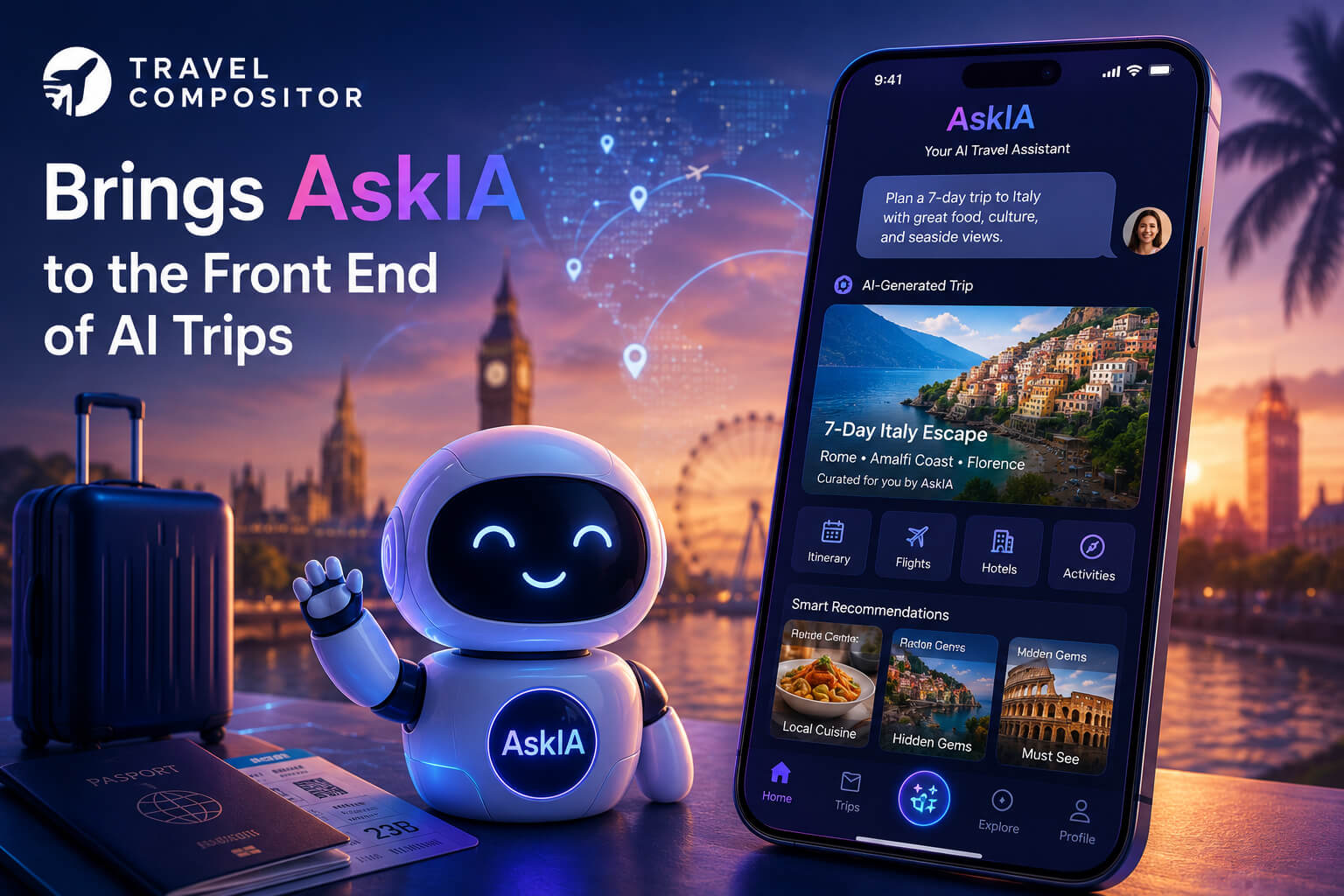
Travel Compositor is now pushing deeper into that part of the process by bringing AskIA directly into the front end of its AI Trips engine. The company says the update embeds unlimited AI into the booking flow, giving travel agencies and partners a more direct way to move from conversation to actual travel products.
AskIA Moves Closer to the Booking Moment
AskIA is not being positioned as a side assistant sitting somewhere outside the workflow. That is the important part.
By placing AskIA on the front end of AI Trips, Travel Compositor is trying to make artificial intelligence part of the first interaction with the booking system. Instead of using AI only to inspire a traveler or generate an itinerary draft, the tool becomes part of the route toward a bookable trip.
That matters because travel booking is messy. Flights, hotels, packages, availability, pricing, routes, dates, passenger details, and supplier rules all have to line up. A chatbot can make the experience feel simple, but the technology underneath still has to do the hard work.
Travel Compositor’s move suggests something more practical: AI that helps agencies sell trips, not just talk about them.
AI Trips Gets a More Conversational Front End
Travel Compositor’s AI Trips engine was already built around AI-powered travel booking. The latest update brings AskIA into the user-facing layer, which means agents can interact with the system in a more natural way while building travel options.
According to reports, the feature allows travel agents to turn plain-language trip requests into bookable itineraries in just a few clicks.
That sounds small until you think about the old process.
An agent usually has to search, compare, adjust, check availability, rebuild combinations, and repeat the same steps when the traveler changes their mind. AI can cut some of that friction, especially when the request starts as something vague like “a family holiday in Italy with good hotels and activities for kids.”
The goal is not only speed. It is less jumping around.
Travel Agencies Are Still in the Middle
This is where Travel Compositor’s approach feels different from the usual “AI will replace travel agents” storyline.
The company is not simply handing the whole booking process to the traveler and hoping the AI gets it right. The first rollout is aimed at agencies, including those in its Premium Innovator programme, according to coverage of the launch.
That choice makes sense.
Many travelers may enjoy using AI for ideas, but they still hesitate when money, dates, refunds, and actual bookings are involved. Travel agents, on the other hand, can use AI as a productivity layer. They can move faster, test more options, and respond to clients without building every itinerary manually from scratch.
The agent stays in control. The AI does more of the heavy lifting.
Why This Matters for AI Travel Booking
Travel technology has been full of AI announcements lately. Some are useful. Some are just old search tools with a chatbot window added on top.
This one sits closer to the commercial end of the travel funnel.
If AskIA can help agencies move from request to itinerary to booking faster, then AI becomes less of a marketing feature and more of an operating tool. That is where the travel sector is likely heading: fewer disconnected searches, more conversational booking, and systems that understand intent before forcing users through rigid forms.
Not every traveler wants to “chat” with a booking engine. Not every agency needs AI for every trip. But complex travel planning is exactly where these tools can earn their place.
Multi-destination trips. Family holidays. Tailor-made packages. Last-minute changes. Upsells. Alternative dates. Different budgets.
Those are the moments where a good AI layer can save time.
Travel Compositor Is Betting on AI Inside the Workflow
Travel Compositor, part of Travelsoft, describes itself as a booking technology provider focused on helping travel companies improve productivity and sales. Its wider platform promotes booking growth and lower operating costs for clients.
AskIA being moved to the front end of AI Trips fits that direction.
This is not AI as decoration. At least, that is the pitch. It is AI placed where the booking decision starts.
For travel agencies, that could mean faster proposals. For travelers, it could mean more relevant trip options without the usual back-and-forth. For suppliers and platforms, it points to a future where conversational interfaces are not separate from booking engines. They become part of them.
This direction also complements broader changes in AI-powered travel, where platforms are moving from recommendations to complete transactions, as seen with Dida MCP’s AI hotel booking gateway and the wider shift described in how technology is reshaping modern travel.
Still, the real question is adoption.
Agencies will judge AskIA by whether it saves time, avoids errors, and helps close bookings. Travelers will judge the result, not the technology. A beautiful AI-generated itinerary means very little if the price is wrong or the hotel is unavailable.
That is the hard part of AI travel.
Travel Compositor is now trying to bring the AI conversation closer to the confirmed booking.
