


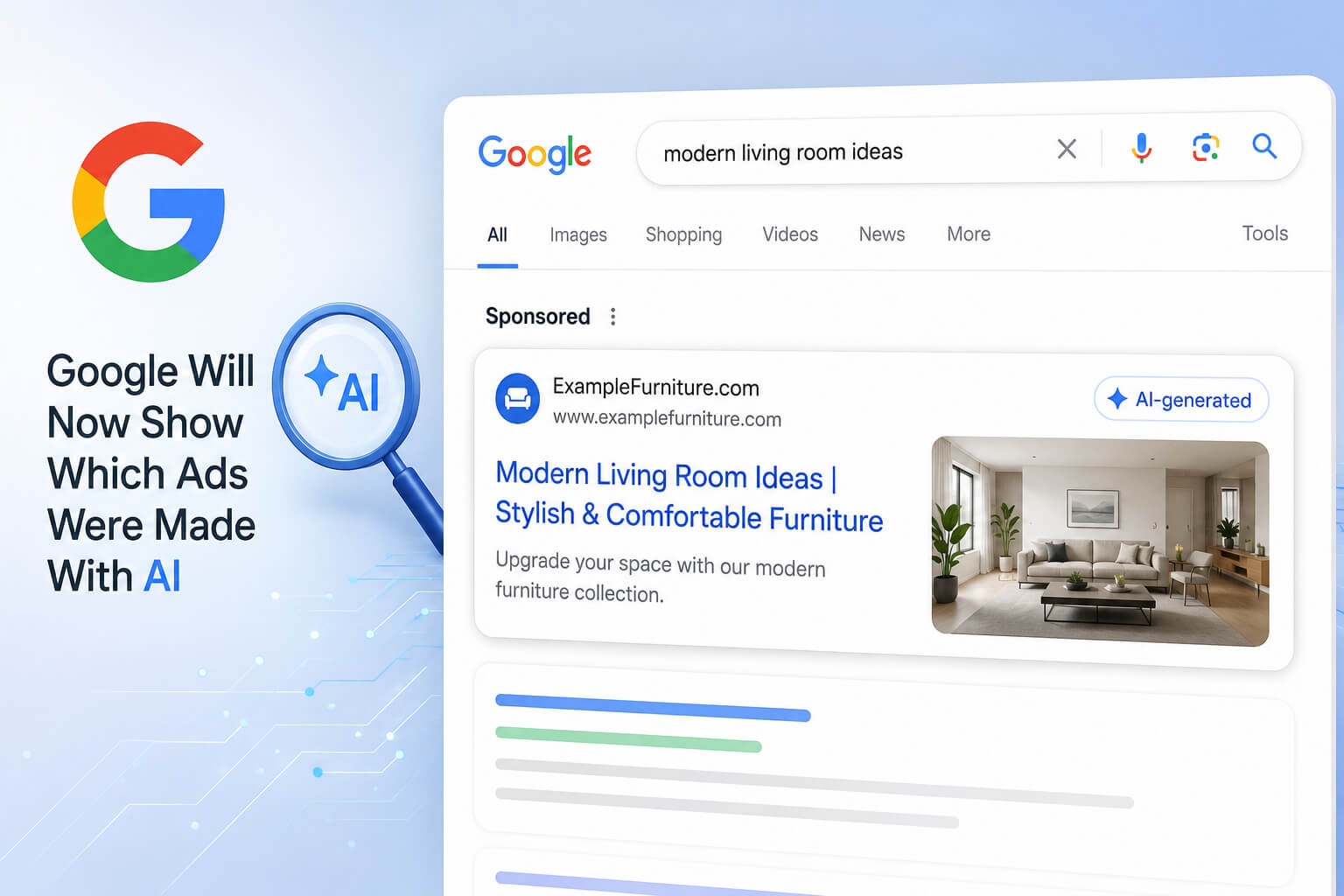
Google is adding a new way for people to see when an ad was made or edited using artificial intelligence.
It is a small label, tucked inside an ad information panel. Still, it says something bigger about where online advertising is going. AI-generated product photos, synthetic backgrounds, fake lifestyle scenes, polished campaign images made in seconds. This is no longer experimental marketing. It is becoming normal.
Now Google wants users to know when AI played a role.
Google Adds AI Disclosure Inside My Ad Center
The new disclosure will appear inside Google’s My Ad Center, the panel users can open by clicking the three-dot menu or information icon on ads across Google Search, YouTube, and Google Discover.
Inside that panel, users already get options to block an ad, report it, or learn why they are seeing it. Google is now adding another section called “How this ad was made.” That section will show whether the ad was created or edited with AI.
Not everyone will notice it right away. Most users do not open ad menus unless something looks suspicious, annoying, or oddly personal. But for those who do check, the extra detail could make a difference.
Especially when an ad looks like a real photo but is not.
Why AI-Made Ads Are Becoming Harder to Ignore
AI has made advertising cheaper and faster. A brand can now place a product in different rooms, seasons, cities, moods, or lifestyle settings without hiring a full production crew.
That is useful for businesses. Very useful, actually.
But it also creates a blurry line for shoppers. Was that couch really photographed in a real apartment? Are those skincare results from an actual image? Or is the clothing shown on a real model, not a digitally generated one?
Google already bans misleading and deceptive ads, but AI-created visuals can still sit in a gray area. They may not be outright false. They may still show the product. Yet they can make something feel more real, more tested, or more polished than it actually is.
That is why disclosure matters.
Google Will Auto-Label Ads Made With Its Own AI Tools
Google says ads created through its own generative AI advertising tools will automatically have the disclosure enabled. That part is fairly straightforward. Google knows when its own systems were used.
The weaker part is ads made outside Google.
If an advertiser creates an AI-generated or AI-edited ad using another tool, they will need to manually indicate that AI was involved. Google will not independently check every ad to confirm whether the advertiser is telling the truth.
That leaves room for trust problems. Not necessarily because every advertiser will hide AI use, but because disclosure systems often depend on honest self-reporting. And advertising, as an industry, is not exactly famous for volunteering uncomfortable details.
Election Ads Were Already Treated Differently
Before this update, Google’s AI disclosure requirement was more focused on election advertising. Political ads using synthetic or digitally altered content have faced stricter labeling rules because misinformation risk is higher.
Now the idea is moving further into regular consumer advertising.
That shift feels overdue. AI-generated media is not only a political issue anymore. It affects shopping, brand trust, beauty ads, fashion campaigns, real estate listings, travel promotions, food marketing, and almost anything that relies on visual persuasion.
A fake beach view in a travel ad may not be an election deepfake. But it can still mislead people.
AI Advertising Is Growing Faster Than Consumer Awareness
Most people already know AI images exist. That does not mean they can spot them reliably.
The better AI visuals become, the less obvious they are. Hands look normal now. Product reflections look cleaner. Backgrounds do not always have weird distortions. The old signs are disappearing.
So disclosure may become less about catching “bad AI images” and more about giving people context.
Was this ad photographed? Did someone digitally modify it? Was the product placed into a synthetic scene? Or did AI create the image from scratch?
Google’s new panel will not answer every question. But it gives users one more clue.
A Small Transparency Move With Big Advertising Implications
For advertisers, this is another sign that AI-generated creative is entering a more regulated and visible phase. The early rush was about speed. Make more ads. Test more versions. Lower production costs. Move faster than competitors.
Now comes the cleanup.
Platforms, regulators, and users are starting to ask what needs to be labeled. Not because AI-generated ads are automatically bad, but because people should know when what they are seeing has been artificially created or heavily altered.
Google’s move does not solve the whole problem. It depends partly on advertisers being honest, and many users may never open the ad panel at all.
Still, it is a step toward making AI advertising a little less invisible. And that matters, because AI-made ads are only going to become more common from here.
