


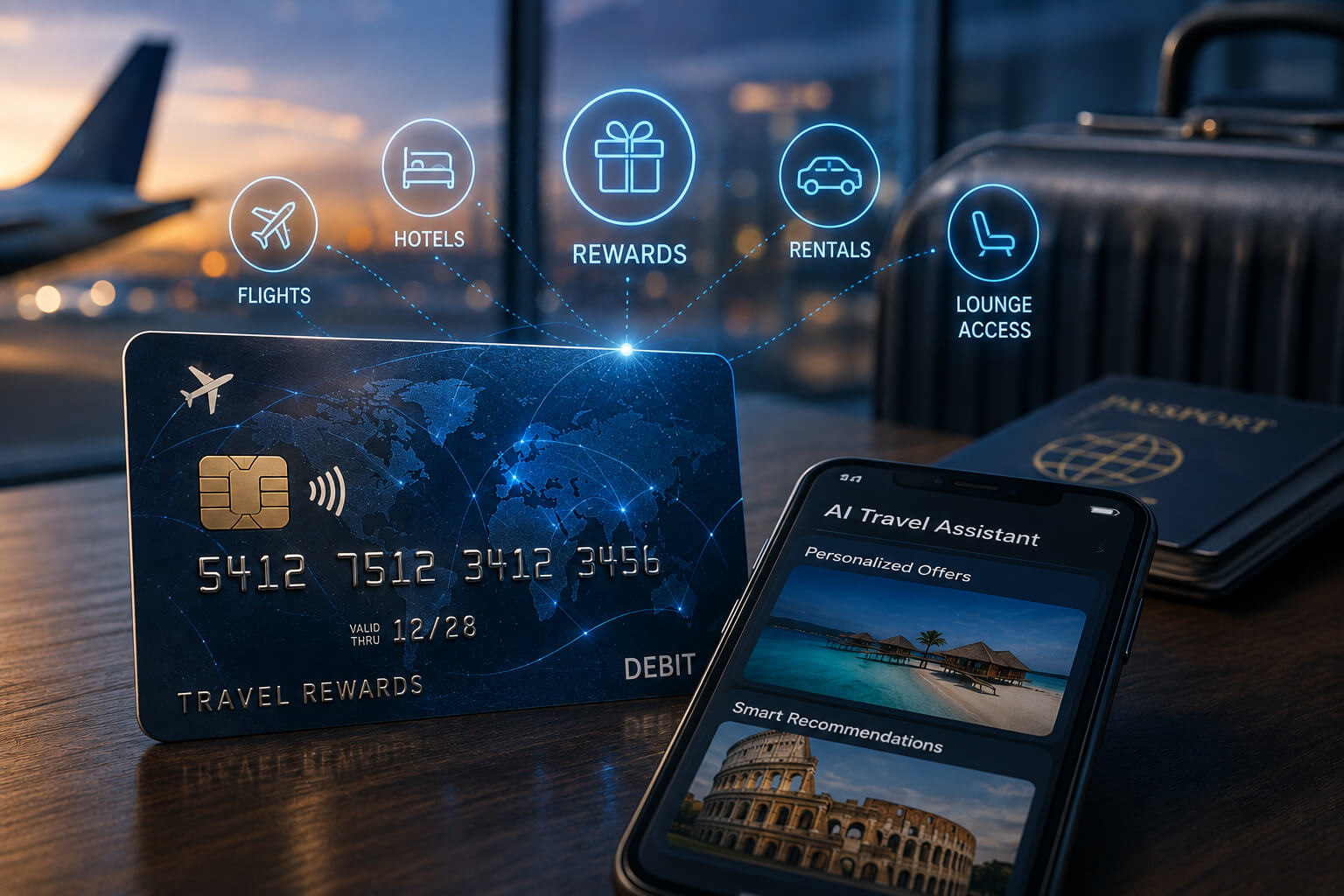
Artificial intelligence may soon handle much of the work involved in planning a trip. It can search routes, compare hotel rates, check reward balances and weigh whether using points makes more sense than paying cash. That convenience creates an awkward problem for travel brands.
When an AI agent makes the comparison, it has little reason to favour the airline or hotel a traveller usually books. Habit becomes less valuable. A slightly cheaper fare, a better redemption or a more flexible room could be enough to send the booking elsewhere. Payments platform Currensea believes co-branded reward debit cards could give European travel companies another way to hold onto customers, even when an AI system sits between the traveller and the booking page.
Currensea Sees a Gap in European Travel Loyalty
Currensea outlined the argument in a new whitepaper titled The Reinvention of Loyalty, which examines how new payment products, changing spending habits and agentic AI could reshape airline and hotel loyalty programmes. The European market still has plenty of room to grow.
According to polling cited in the report, 26% of British consumers earning more than £150,000 per household and taking at least five flights during the previous year had not joined an airline loyalty programme. Another 29% were not members of a hotel rewards scheme.
These are not occasional travellers who take one short break every few years. They are high-value customers, yet airlines and hotel groups have no formal loyalty connection with a sizeable portion of them. With travel brands competing for discretionary spending, leaving that audience untouched looks increasingly expensive.
The US Credit Card Model Does Not Fit Europe
Airline and hotel loyalty programmes in the United States have long leaned on co-branded credit cards. Customers collect miles or hotel points while making everyday purchases, giving the travel brand a presence far beyond the flight or hotel stay.
Europe is different. Debit cards account for 77% of consumer card spending across Europe and roughly 85% in the UK, according to figures included in the Currensea report. That makes a credit-heavy rewards strategy a poor match for how many European consumers actually pay.
A reward debit card offers a simpler fit. Travellers can earn airline miles, hotel points or status-related benefits while spending money they already have, without taking out another credit product. The harder part is getting people to use it regularly.
Currensea’s model connects a co-branded card to a customer’s existing bank account. There is no separate current account to manage and no balance to preload. Transactions are settled from the linked account through direct debit. That small detail matters. Currensea’s polling found that only 5% of Britons use a secondary bank account for their everyday spending. Asking customers to move their salary, set up another account or constantly transfer money could kill interest before the rewards begin.
AI Agents Could Weaken Familiar Travel Brands
The biggest change may come from agentic AI. Current travel search still requires people to open websites, browse apps and make their own comparisons. Future AI agents could complete more of that process directly, using a traveller’s preferences, budget, points balances and previous trips to recommend or even book an option.
An AI agent will not necessarily care which airline app a customer opens first. It may compare cash prices, points values, fees and benefits across several programmes in seconds. Loyalty schemes that survive mainly because customers cannot be bothered to compare alternatives could find that advantage disappearing.
Currensea argues that the fight for loyalty will move away from the booking screen and closer to the payment itself. A traveller may allow an AI assistant to choose the flight, but they could still use a debit card connected to a particular airline or hotel brand every day. That gives the brand a role in the transaction, even when it no longer controls the search process.
Reward Debit Cards Are Already Reaching Travellers
The idea has moved beyond a whitepaper. Hilton Hotels, United Airlines and Marriott Bonvoy have launched loyalty debit cards powered by Currensea. IHG and Revolut have also announced a reward-earning debit card linked to a single bank account.
Currensea says spending on its co-branded products is not limited to a few travel purchases. The highest-spending quarter of its cardholders spends more than £36,700 per year on average. More than half of total card spending goes toward accommodation, dining, travel and leisure, while 17% goes directly to the partner brand.
More than three-quarters of cardholders have also used their card abroad, with spending spread across an average of four foreign countries. Those figures come from Currensea’s own platform and should be viewed in that context. Still, they point to the behaviour travel companies want: frequent use, international activity and spending that extends beyond a single annual booking.
Loyalty Benefits Will Need to Be Worth Something
Adding a logo to a debit card will not protect a travel brand from AI-driven comparison. The reward still has to matter. If an airline offers weak redemption rates, confusing restrictions or points that expire too quickly, an AI agent could expose that poor value faster than a human traveller would. The same technology threatening traditional loyalty could also make rewards programmes easier to evaluate.
That puts pressure on brands to offer benefits customers can actually use. Status, upgrades, worthwhile points and direct travel perks may prove more durable than rewards built around friction or vague promises. Currensea’s report is ultimately a pitch for multi-bank loyalty debit cards, but the wider shift is bigger than one payment company.
AI may make travel booking more rational and less emotional. Airlines and hotels will need stronger reasons to remain part of the customer’s routine. A card used at restaurants, shops and hotels could become one of those reasons. Not because the customer visits the brand’s app every week. Because the brand is already sitting in their wallet.
