


Planning a city break through an AI chatbot usually starts well enough. Ask for a three-day itinerary in Rome or Lisbon and it will quickly produce a neat list of landmarks, restaurants and neighbourhoods. The problem comes when you try to book something.
Tour times may have changed. Activities may no longer operate. A highly recommended experience might not even have spaces available on the dates you are travelling.
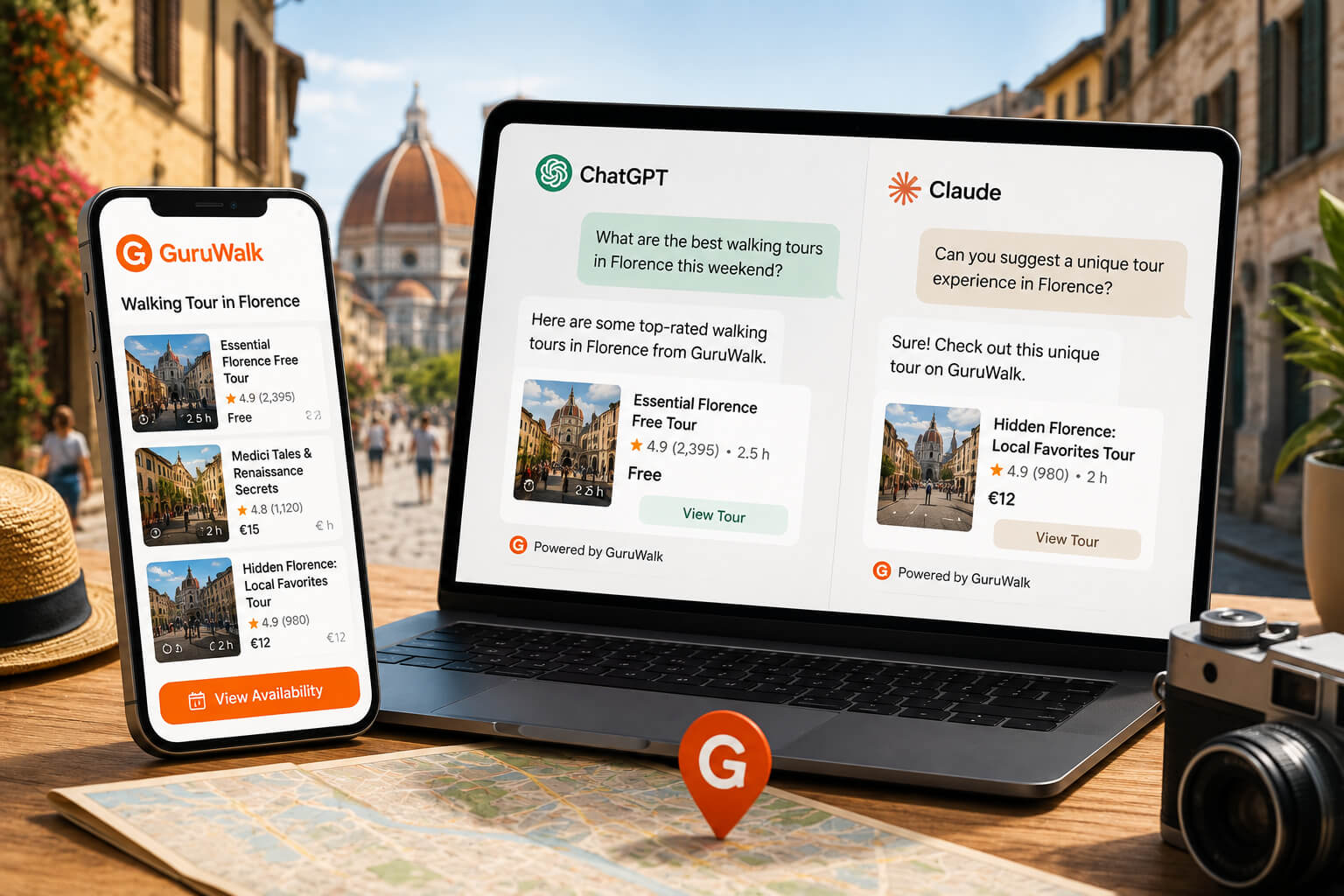
GuruWalk wants to close that gap. The travel platform has launched integrations for both ChatGPT and Claude, giving the AI assistants access to its live catalogue of walking tours, activities and bookable experiences. GuruWalk says this makes it the first free-tour platform available through both major AI assistants at the same time.
GuruWalk AI Travel Planner Uses Live Booking Data
The GuruWalk AI travel planner does more than hand an assistant another pile of travel information.
Its integration allows ChatGPT and Claude to search GuruWalk’s current inventory while the conversation is happening. Travellers can ask what tours are running in a city, compare options, check schedules and open a direct booking link without starting again on a separate search engine. That changes the quality of the answer.
A normal AI-generated itinerary may rely on information absorbed during training or collected from general web results. GuruWalk’s connector can pull details from the platform’s active catalogue, including dates, times, prices, ratings and traveller reviews. The service covers free walking tours as well as paid experiences such as food tours, day trips, attraction tickets and guided visits.
MCP Connects GuruWalk With AI Assistants
The integration is built around the Model Context Protocol, better known as MCP. MCP is an open standard that allows an AI assistant to connect with outside tools and data sources. Instead of relying entirely on information stored inside the model, the assistant can send a request to a service such as GuruWalk and retrieve fresher information.
That is useful for travel, where availability can change by the hour. When someone asks ChatGPT or Claude to find activities in Barcelona, for example, the assistant can search GuruWalk’s catalogue, return matching experiences and check whether those tours are available during the traveller’s planned visit.
GuruWalk’s general MCP server includes tools for discovering destinations, browsing activity categories, checking availability and retrieving full tour details. Its dedicated ChatGPT integration also supports interactive cards and calendar views inside the conversation.
Travellers Can Build Full Itineraries Inside the Chat
GuruWalk is pitching the integration as a full AI travel planner rather than a simple tour search tool.
A traveller could ask for a three-day Prague itinerary with food experiences, historical sites and one free walking tour. The assistant can then arrange the available activities into a day-by-day plan based on the request. Another user might ask for family-friendly activities in Rome over a weekend. Someone travelling alone could request evening tours, smaller groups or experiences available in a particular language.
The planning happens inside the AI conversation. Users do not need to learn a new travel app before they can start searching. GuruWalk says adding the service to ChatGPT or Claude is free, and travellers do not need to enter credit card details merely to create an itinerary. Free walking tours continue to use the platform’s pay-what-you-want model, while paid activities display their booking prices.
ChatGPT Gets Interactive Tour Cards
The ChatGPT version goes a little further than a basic text connector. GuruWalk’s ChatGPT app can display tours through interactive cards in the conversation. Users can open the details of an activity, view available dates through a calendar and follow the booking process from the results.
The integration is read-only, so ChatGPT can search and display GuruWalk’s inventory but does not silently make purchases or alter bookings on the user’s behalf. No GuruWalk account or API key is required to connect the service, according to the company’s technical documentation.
Claude Users Get Access Through Connectors
Claude users can add GuruWalk through the assistant’s connector system. Once connected, travellers can mention GuruWalk in a prompt and ask for tours, activities or itinerary ideas in a chosen destination. Claude then queries the platform’s live data rather than producing a travel list from its general knowledge alone.
The Claude-compatible MCP server supports free tours and paid activities across cities in Europe, Asia, Africa, Oceania and the Americas. It can also return meeting points, available languages, pricing details and verified reviews where those details are available.
AI Is Becoming a Travel Search Interface
GuruWalk’s launch points to a broader shift in how travel companies expect people to discover experiences. The old journey usually moved through several stages: search Google, open a travel blog, compare marketplace listings, check maps and then visit a booking platform.
AI assistants are pulling those stages into one conversation. A user can describe the destination, travel dates, budget and interests in ordinary language. The assistant can then search connected services and shape the results into something closer to a usable itinerary.
That does not mean every AI travel suggestion will suddenly be reliable. The quality still depends on the data source, the accuracy of the connector and whether users check the final booking details. But GuruWalk’s approach shows where travel search may be heading. The chatbot is no longer just suggesting where to go. It is becoming the place where discovery, comparison and booking begin.
