

Close Menu
    What's Hot
    AI Travel Technology News

    How Technology Is Blurring the Line Between Travel and Everyday Life

    By Art RyanJuly 11, 20260

    Travel used to mean leaving things behind. Today, technology in modern travel has completely changed…

    Three Major Tech Breakthroughs in 2026 Are Moving AI Into the Real World

    July 11, 2026

    Water Intelligence Platforms Are Making Cities Read Their Own Water Systems

    July 11, 2026

    Big Tech AI Infrastructure Spending Is Getting Bigger, Heavier, and Harder to Ignore

    July 11, 2026
    Facebook X (Twitter) Instagram
    Facebook X (Twitter) Instagram
    Breaking AI News
    Saturday, July 11
    • Home
    • Events
    • Videos
      • Machine Can Think Summit 2026
      • Step Dubai Conference 2026
    • Technology & Innovation

      How Technology Is Blurring the Line Between Travel and Everyday Life

      July 11, 2026

      Three Major Tech Breakthroughs in 2026 Are Moving AI Into the Real World

      July 11, 2026

      Water Intelligence Platforms Are Making Cities Read Their Own Water Systems

      July 11, 2026

      Big Tech AI Infrastructure Spending Is Getting Bigger, Heavier, and Harder to Ignore

      July 11, 2026

      Apple Sues OpenAI Over Alleged Trade Secret Theft in Major AI Hardware Fight

      July 11, 2026
    • Business & Marketing

      Google Will Now Show Which Ads Were Made With AI

      July 11, 2026

      Meta Brings New AI Image Model Into Instagram and Its Chatbot

      July 8, 2026

      Agentic AI Could Disrupt $234B in SaaS Spending by 2030

      July 7, 2026

      NVIDIA Pushes Bigger U.S. AI Buildout as America Races to Own the AI Infrastructure Era

      July 6, 2026

      Microsoft and Amazon Send AI Workers to Customers as Enterprise AI Gets Messy

      July 4, 2026
    • Industry Applications

      How Technology Is Blurring the Line Between Travel and Everyday Life

      July 11, 2026

      Three Major Tech Breakthroughs in 2026 Are Moving AI Into the Real World

      July 11, 2026

      Water Intelligence Platforms Are Making Cities Read Their Own Water Systems

      July 11, 2026

      HFCL Bets on Fiber Optics as AI Data Center Demand Surges

      July 11, 2026

      OpenAI ChatGPT Work Turns AI Into Something Closer to a Workplace Assistant

      July 11, 2026
    • Trends & Insights

      Big Tech AI Infrastructure Spending Is Getting Bigger, Heavier, and Harder to Ignore

      July 11, 2026

      OpenAI GPT Live Pushes AI Voice Into Real-Time Conversation

      July 10, 2026

      Grok Adds 21 New AI Voices as Voice AI Gets More Personal

      July 9, 2026

      US and China Are Restricting AI Models as Frontier AI Becomes a National Asset

      July 9, 2026

      Saudi Arabia and UNESCO Discuss AI Cooperation as Global AI Governance Talks Heat Up

      July 8, 2026
    • AI in Travel

      How Technology Is Blurring the Line Between Travel and Everyday Life

      July 11, 2026

      British Airways New App Rollout Brings Smarter Digital Travel Into the Passenger Journey

      July 10, 2026

      Alipay Adds AI Agents to Tap! as Offline Payments Get Smarter

      July 10, 2026

      Vibe Brings Corporate Travel Booking Into ChatGPT, Claude and Microsoft Copilot

      July 10, 2026

      What 60% Abandonment Means to Airlines and Hotels Betting on AI

      July 10, 2026
    Breaking AI News
    Home » Retailers Turn to AI and Robotics to Keep Holiday Fulfillment on Track
    Technology & Innovation

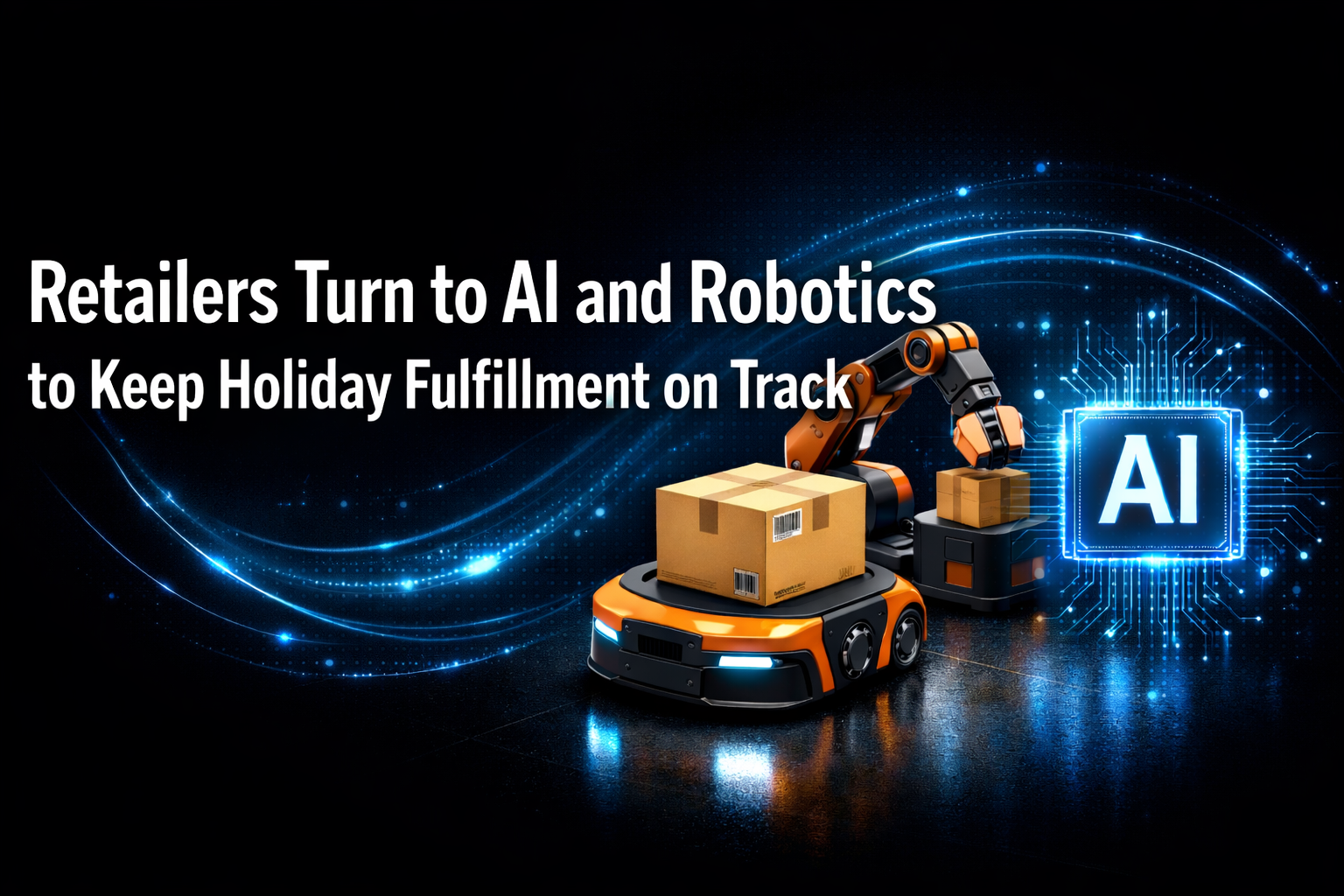
    Retailers Turn to AI and Robotics to Keep Holiday Fulfillment on Track

    Art RyanBy Art RyanDecember 24, 2025No Comments3 Mins Read
    Facebook Twitter Pinterest LinkedIn Tumblr Email
    Share
    Facebook Twitter LinkedIn Pinterest Email
    retail Ai robotics

    As peak holiday demand stretches supply chains to their limits, global retailers like Amazon, Walmart and Target are leaning heavily on artificial intelligence (AI) and robotics to move goods faster, reduce errors and protect workers from physically demanding tasks. 

    What was once experimental technology has become core infrastructure, reshaping how companies handle seasonal surges across warehouses, transportation networks and returns operations.

    AI Orchestrates Holiday Fulfillment

    For large retailers, holiday success increasingly depends on AI systems that can anticipate demand and coordinate thousands of moving parts in real time. At Walmart, an AI-driven orchestration network connects forecasting models, routing algorithms and decision agents to manage what the company described as its fastest holiday deliveries yet. The system continuously analyzes signals such as historical sales, local demand patterns, weather conditions and transportation constraints to position inventory closer to customers before orders are placed.

    Once demand spikes, AI tools dynamically rebalance delivery routes, adjust pickup times and reroute drivers as conditions change. Walmart says these models function like digital copilots, helping drivers and operations teams respond to disruptions without manual intervention. The result is fewer delays and more predictable delivery windows during the busiest weeks of the year.

    At Amazon, robotics and AI are tightly integrated to maintain reliability at holiday scale. In a recent Bloomberg interview, Amazon Robotics Chief Technologist Tye Brady said the company is “supercharging the world’s largest fleet of robotics with AI,” with a clear goal of eliminating “the menial, the mundane and the repetitive” tasks inside fulfillment centers.

    Exception handling is where AI makes the biggest difference. Brady noted that when fulfillment operates at massive scale, “just 1% of exceptional handling can kind of eat your lunch,” making rapid detection and resolution essential. AI systems now propagate learnings across robotic fleets, while dashboards consolidate complex signals into human-readable recommendations, allowing workers to intervene faster and more effectively.

    Robots Take On the Heavy Lifting

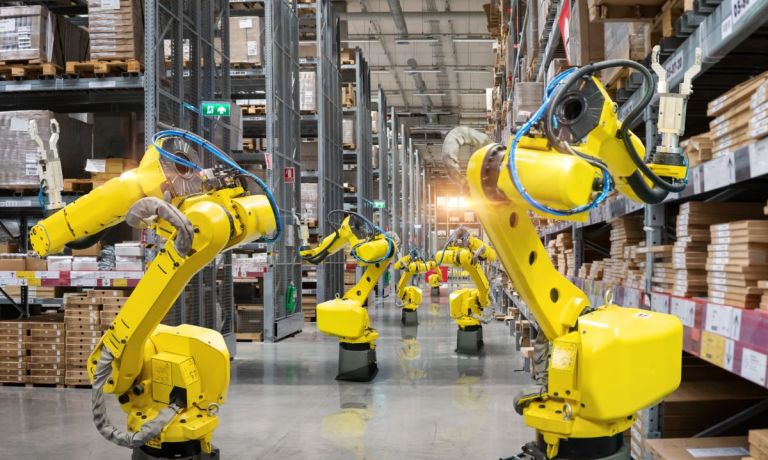
    Inside warehouses and distribution centers, robotics are increasingly responsible for the most physically demanding work. Research highlighted by MIT shows how autonomous robotic arms are now unloading trailers, lifting boxes weighing up to 50 pounds and placing them onto conveyors without human intervention. These systems rely on machine vision, sensors and generative AI models to identify objects, adjust grip strength and operate safely in crowded warehouse environments.

    The impact is twofold. First, robots help warehouses process higher volumes during short peak windows without dramatically expanding headcount. Second, they reduce injury risk for workers traditionally tasked with repetitive heavy lifting, a persistent challenge during holiday rushes.

    Retailers are positioning these robots as collaborators rather than replacements. Human workers increasingly oversee exceptions, quality control and system supervision, while machines handle repetitive motion at scale. The model allows facilities to extend operating hours and maintain throughput even as labor markets remain tight.

    AI Tackles Returns, Fraud, Fast-Changing Trends

    The holiday season does not end at delivery. Returns surge in January, creating another operational bottleneck. According to Reuters, a UPS-owned returns platform is now deploying AI to spot potentially fraudulent returns by comparing images of returned items with original product listings. While fewer than 1% of returns are flagged, the system helps retailers contain losses during a period when return volumes spike dramatically.

    At the same time, AI is helping retailers respond to fast-moving consumer trends that influence what must be fulfilled in the first place. Target is using AI to analyze social media signals, sales data and fashion trends, allowing it to adjust product assortments more quickly. By stockpiling raw materials and relying on predictive models, the retailer aims to shorten the time between trend emergence and product availability, reducing markdown risk and improving sell-through during peak demand.

    Source: https://www.pymnts.com/
    Share. Facebook Twitter Pinterest LinkedIn Tumblr Email
    Art Ryan

    Related Posts

    How Technology Is Blurring the Line Between Travel and Everyday Life

    July 11, 2026

    Three Major Tech Breakthroughs in 2026 Are Moving AI Into the Real World

    July 11, 2026

    Water Intelligence Platforms Are Making Cities Read Their Own Water Systems

    July 11, 2026

    Comments are closed.

    Latest News

    How Technology Is Blurring the Line Between Travel and Everyday Life

    July 11, 2026

    Three Major Tech Breakthroughs in 2026 Are Moving AI Into the Real World

    July 11, 2026

    Water Intelligence Platforms Are Making Cities Read Their Own Water Systems

    July 11, 2026

    Big Tech AI Infrastructure Spending Is Getting Bigger, Heavier, and Harder to Ignore

    July 11, 2026
    Facebook X (Twitter) Pinterest Vimeo WhatsApp TikTok Instagram LinkedIn YouTube Spotify Reddit Snapchat Threads

    AI University

    • Global Universities
    • Universities in Africa
    • Universities in Asia
    • Universities in Europe
    • Universities in Latin America
    • Universities in Middle East
    • Universities in North America
    • Universities in Oceania

    AI Tools & Apps Directory

    • AI Productivity Tools
    • AI Coding Tools
    • AI Voice Tools
    • AI Video Tools
    • AI Image Generators
    • AI Writing Tools

    Info

    • Home
    • About Us
    • AI Organizations & Associations
    • Contact Us
    • Cookie Policy
    • Copyright Policy
    • Disclaimer
    • Editorial Policy
    • Terms and Conditions

    Subscribe to Updates

    Get the latest creative news from FooBar about art, design and business.

    © 2026 Breaking AI News.
    • Privacy Policy

    Type above and press Enter to search. Press Esc to cancel.

    Sign Up

    Want to stay ahead In Artificial Intelligence?

     Sign up now and get exclusive breaking AI news and special updates—FREE!