


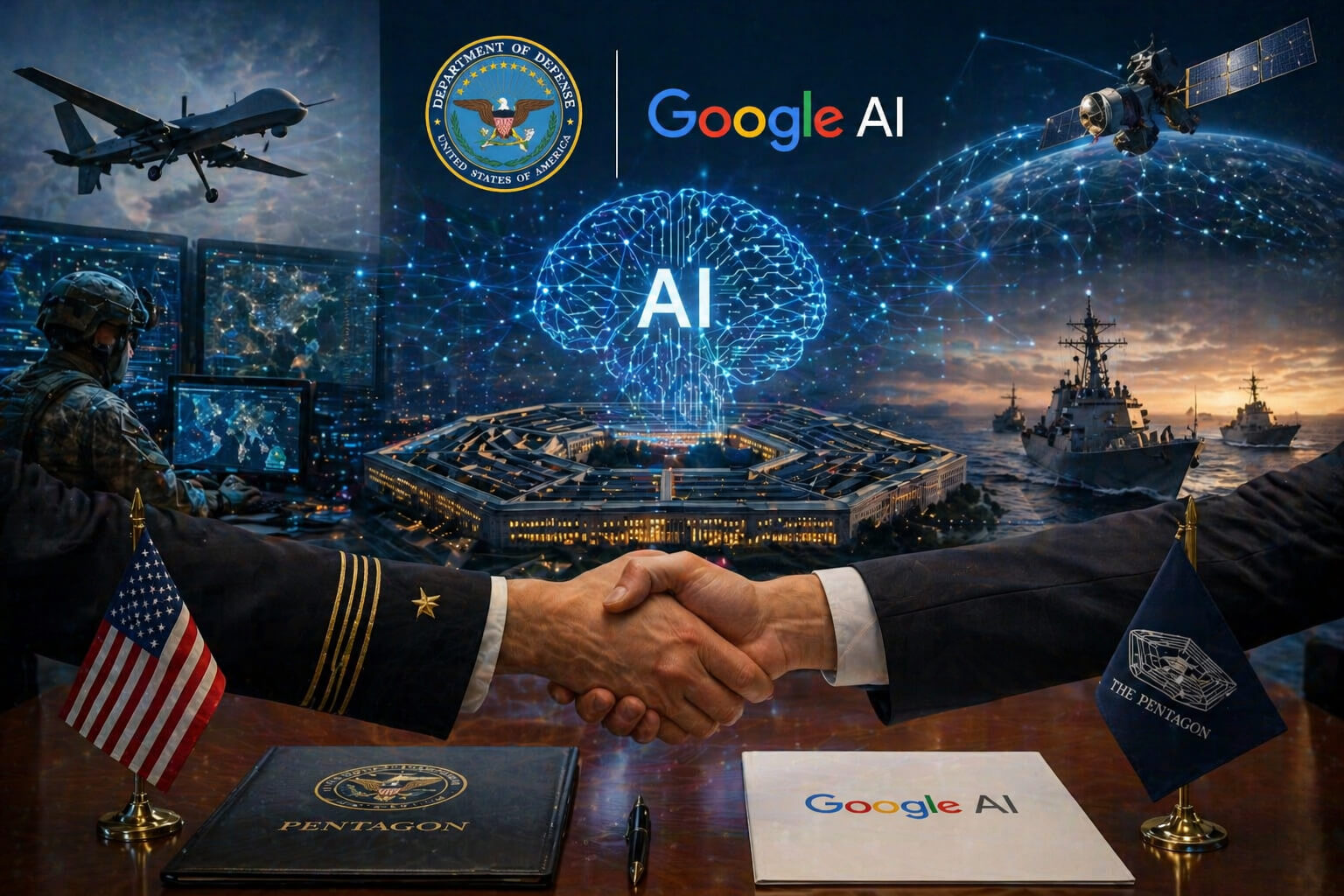
The United States Department of Defense (Pentagon) signed an agreement with tech giant Google, giving access to advanced artificial intelligence technology for military purposes and further expanding AI in the field of defense.
AI of Google To Serve the Military
According to the agreement, Google will offer its AI services, including the recently released Gemini AI, to Pentagon operations, including classified missions.
The deal allows the Department of Defense to use the mentioned technologies for “any lawful government purpose,” meaning AI can be applied to data analysis, logistics, and mission planning processes.
The Pentagon now joins a list of military clients of OpenAI, xAI and other AI firms in the country.
AI Is Gaining Momentum Within the Pentagon
In recent years, the Pentagon has been aggressively deploying AI within the organization, aiming to boost efficiency, decrease cost and streamline decision-making processes.
Currently, AI is used to:
- analyze data sets for intelligence purposes
- automate operational and administrative processes
- perform strategic planning and battle simulation
It is reported that AI in the Pentagon saves thousands of working hours per week, showing its increasing impact on defense. Learn more about AI in defense.
Few Restrictions, Potential Misuse
Despite the deal containing some restrictions, such as preventing the use of autonomous weapons and domestic mass surveillance without government oversight, the restrictions may not be enforceable.
Furthermore, Google is allegedly not able to ensure the correct application of its technologies after deployment by the government.
As a result, there are concerns regarding the possibility of the potential misusage of AI. Explore AI ethics.
Internal Resistance at Google
The controversial deal between Google and Pentagon caused serious backlash among the company’s employees. Employees reported to their managers that using Google’s AI for military purposes could harm the reputation of the company and contradict their promise of ethical use of the technology.
The reaction of Google employees mirrors the situation in previous years when Google decided to leave Pentagon’s Project Maven after internal criticism.
The Growing Impact of Big Tech in Military AI
The deal is one of many steps made by governments worldwide in the context of AI in warfare and military intelligence.
The following trends are currently emerging in the world:
- multiple AI firms receive defense contracts
- increasing calls for fewer restrictions in military AI use
- tech giants becoming increasingly involved in military AI development
- regulatory bodies struggling to address emerging ethical questions
Learn more about global AI governance.
Why Does It Matter?
Overall, the case shows a growing trend that AI moves beyond the experimental stage and becomes operational within military organizations.
The key aspects of the case include:
- improved decision-making speed and efficiency in defense
- growing cooperation between militaries and tech giants
- increased discussions around the ethics of AI warfare
Thus, as AI is advancing, the above-mentioned challenges will likely grow.
For more Breaking AI news visit: https://breakingai.news
