


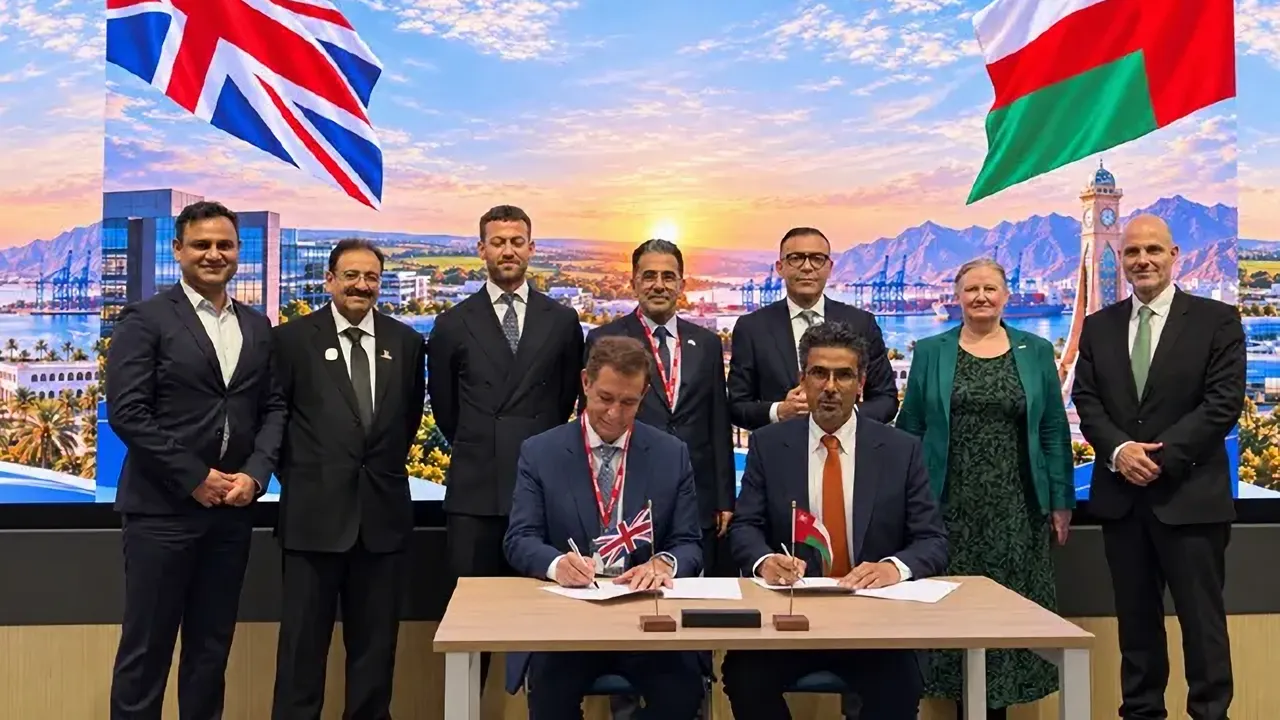
Oman is preparing for a major expansion of its artificial intelligence infrastructure, with a consortium of local and international companies unveiling plans for a $3 billion AI data centre with a proposed capacity of 400 megawatts (MW).
Led by Mubbadrah Investment, the initiative brings together Sustopia Capital, Vela Tech and O2 Global Energy to develop a large-scale computing facility designed for hyperscale cloud providers and AI technology companies.
The announcement reflects Oman’s growing ambitions in the digital economy, particularly as demand for AI computing power continues to place pressure on existing data centre infrastructure worldwide.
The project also includes a renewable energy component, with plans for solar generation and battery storage to support the facility’s substantial electricity requirements.
Oman Targets Large-Scale AI Computing With $3 Billion Investment
The proposed $3 billion development represents a significant step in Oman’s efforts to establish itself as a destination for advanced computing infrastructure. With a planned capacity of 400MW, the facility is intended to accommodate hyperscale operators running demanding artificial intelligence workloads, including model training, inference and large-scale data processing. These activities require substantial computing resources, reliable electricity and specialized cooling systems, making purpose-built infrastructure increasingly important for companies expanding their AI operations.
Mubbadrah Investment is leading the development alongside international partners with experience in technology infrastructure, financing and renewable energy. The consortium aims to attract major technology companies seeking additional computing capacity in the Middle East, where governments and private investors are increasingly investing in facilities capable of supporting next-generation AI applications. While the project remains in its planning stages, its proposed scale highlights Oman’s intention to compete in a market traditionally dominated by larger technology and infrastructure hubs.
International Consortium Brings Investment and Infrastructure Expertise
Mubbadrah Investment’s partnership with Sustopia Capital, Vela Tech and O2 Global Energy combines different areas of expertise needed to deliver a large-scale AI data centre. The Omani investment group brings local market knowledge and investment experience, while its international partners contribute capabilities in infrastructure development, financing and energy systems. Together, the companies intend to establish a facility capable of meeting the operational requirements of hyperscale computing customers.
Sustopia Capital and Vela Tech have been associated with a broader international pipeline of AI data centre developments, reflecting growing investor interest in the physical infrastructure supporting artificial intelligence. Their involvement in Oman could help connect the proposed facility with international financing networks and potential technology customers. For the consortium, the immediate challenge will be translating the investment announcement into detailed construction, financing and commercial agreements.
Crusoe Emerges as a Potential Customer for Oman’s AI Facility
US-based AI infrastructure company Crusoe has expressed interest in potentially becoming a customer of the proposed Oman AI data centre, providing an early indication of demand for the facility’s planned computing capacity. Crusoe develops infrastructure and cloud services designed to support artificial intelligence workloads, making it a relevant prospective customer for a project focused on high-performance computing.
Securing interest from established AI infrastructure companies is particularly important for developments requiring billions of dollars in investment. Long-term customer agreements can provide developers and financial institutions with greater confidence in future revenue, helping support decisions about construction and equipment deployment. However, Crusoe’s reported interest should not be confused with a finalized commercial agreement. The consortium must still secure binding commitments before any prospective arrangement can be treated as confirmed.
Solar Energy and Battery Storage Could Support AI Operations
Electricity supply is becoming one of the biggest challenges facing the global AI data centre industry, particularly as increasingly powerful computing systems require large amounts of energy to operate continuously. Oman’s proposed facility is expected to address part of this demand through a renewable energy development led by Dubai-based O2 Global Energy, which plans to establish 400MW of solar generation supported by battery storage.
The renewable energy component would operate alongside electricity supplied through Oman’s national grid, helping diversify the facility’s power sources. Solar generation could reduce dependence on conventional electricity during periods of strong production, while battery systems may help manage fluctuations in renewable output. However, the planned solar capacity does not mean the entire data centre would operate exclusively on renewable electricity. Actual energy availability will depend on generation conditions, storage capacity and the final electricity supply arrangements.
Salalah Offers Strategic Advantages for AI Data Centre Development
Salalah, a coastal city in southern Oman, has emerged as the proposed location for the development, offering access to international connectivity and infrastructure that could support large-scale computing operations. The city’s submarine cable connections, transport facilities and established economic zones provide potential advantages for technology companies seeking reliable access to regional and international markets.
Beyond connectivity, Salalah’s infrastructure and renewable energy potential could help attract companies interested in developing computing facilities outside traditional technology hubs. Large AI data centres require more than physical buildings, with operators also depending on reliable telecommunications networks, cooling systems, electrical infrastructure and specialized maintenance services. The proposed investment is expected to focus on these foundational requirements, while customers may separately invest in the servers and computing hardware deployed within the facility.
Oman Expands Its Ambitions in the Middle East AI Economy
Oman’s planned AI data centre comes as countries across the Gulf increase investment in digital infrastructure to attract technology companies, cloud service providers and artificial intelligence developers. The region’s growing focus on AI has created demand for facilities capable of supporting intensive computing workloads, particularly as businesses move from experimenting with AI applications to deploying them across commercial operations.
For Oman, projects of this scale could support broader economic diversification objectives by encouraging investment in telecommunications, renewable energy, engineering and advanced technology services. The country has also attracted interest in other large-scale data centre initiatives, suggesting that investors increasingly view Oman as a potential location for international computing infrastructure. Whether these developments translate into a sustainable AI industry will depend on customer demand, reliable infrastructure and the availability of skilled technical workers.
Financing and Construction Remain Important Next Steps
Although the consortium has outlined an ambitious development plan, the proposed Oman AI data centre has not yet reached the stage where its full investment, construction schedule or operational capacity can be considered confirmed. Major infrastructure projects typically require extensive preparation, including financing arrangements, land development, electricity agreements, regulatory approvals and commercial commitments from future customers.
The $3 billion figure represents the announced investment target for the development rather than evidence that the entire amount has already been spent. Similarly, the planned 400MW capacity describes the project’s intended scale, not computing infrastructure currently available for customers. Further announcements will be needed to establish when construction will begin, how the facility will be developed in phases and when its first customers could begin operations.
Oman’s AI Data Centre Plans Reflect Growing Demand for Computing Power
The rapid expansion of artificial intelligence is changing the economics of digital infrastructure. Companies developing advanced AI models increasingly need access to large computing facilities, while governments and investors are looking for opportunities to support the energy, telecommunications and construction requirements behind those systems.
Oman’s proposed $3 billion, 400MW AI data centre reflects that shift. By bringing together international infrastructure investors, renewable energy developers and potential computing customers, the project could strengthen the country’s position in the regional technology market.
Its long-term impact will depend on execution. Securing investment commitments, reliable electricity supplies and commercial customers will determine whether the proposed facility becomes a significant part of the Middle East’s AI infrastructure network.
For now, the announcement underscores a wider reality: the global competition in artificial intelligence is increasingly about who can build and operate the infrastructure needed to power it.
Sources
- Middle East AI News — Oman Consortium Plans $3 Billion, 400MW AI Data Centre
- Muscat Daily — Global Consortium Plans $3bn, 400MW AI Data Centre in Oman
- Oman Observer — Mubbadrah Details Scope of Planned $3bn Salalah AI Investment
- Enterprise MENA — Oman Becomes the Gulf’s Newest AI Compute Destination With Two Data Center Deals in a Week
