


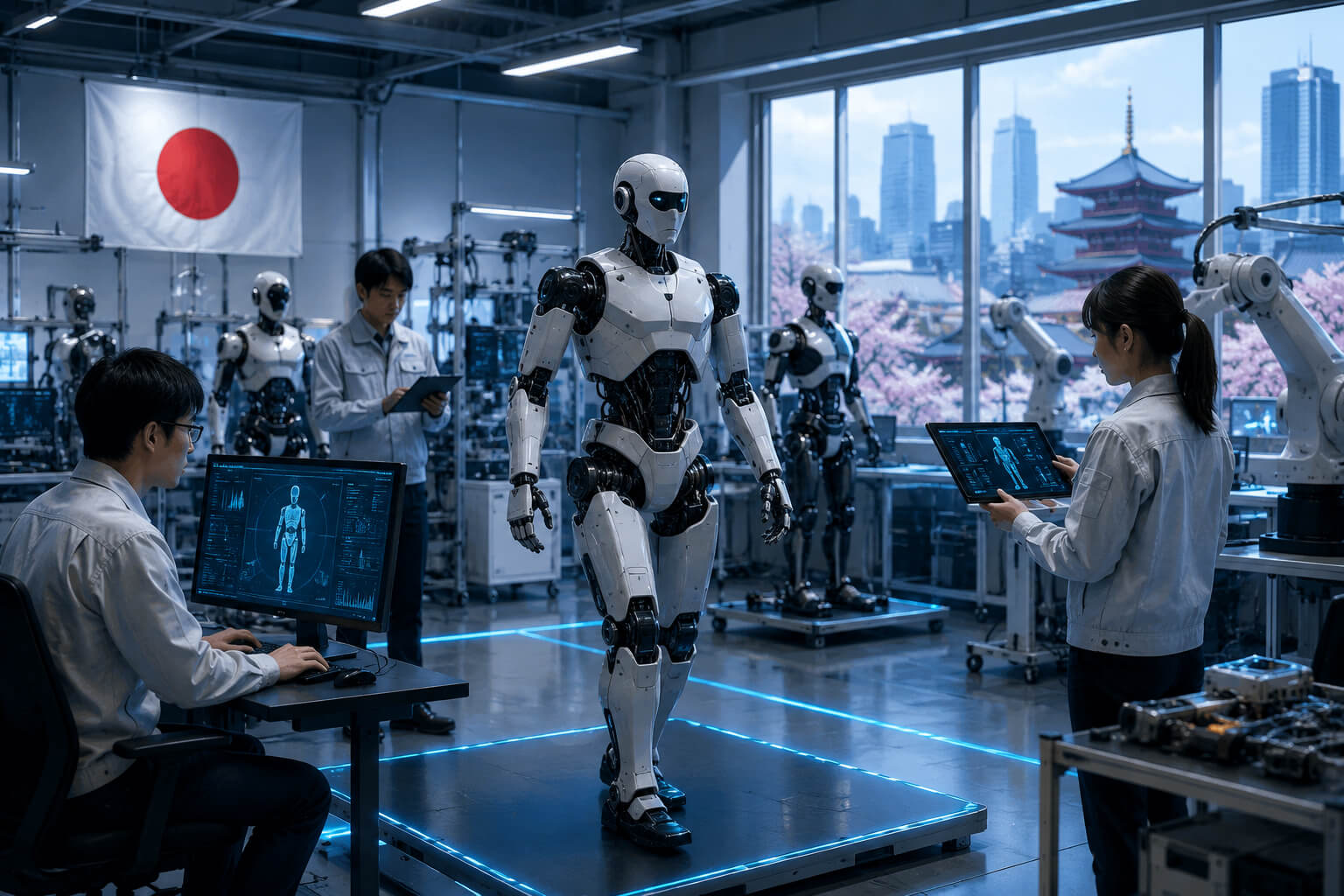
Japan has a new kind of school, and the students are humanoid robots. A group of five Japanese companies has opened a facility near Tokyo to train robots using physical AI. The technology allows AI systems to control machines and respond to changes in the real world. The facility is located in Chiba Prefecture, where media representatives recently watched workers train AI-powered humanoid robots. The goal is practical: develop machines that can eventually work on assembly lines and help ease labor shortages.
Five Japanese Companies Are Sharing the Experiment
The project brings together five companies from different industries, including an Osaka-based trading house and a pharmaceutical company from Tokyo. That mix is intentional because each business brings different operational needs into the training process. The companies believe this can make their physical AI models more flexible. Instead of building technology for one narrow task, they want robots that can adapt across several types of work.
Humanoid Robots Are Learning Physical Tasks
Training at the Chiba facility focuses on physical AI, which connects artificial intelligence with machines that interact with the real world. Humanoid robots can learn movements, react to objects and adjust their actions as conditions change. That is different from an AI chatbot working only with digital information. A factory robot has to understand movement, space and unexpected situations around it.
Japan’s Labor Shortage Is Driving the Project
The companies are not developing humanoid robots simply because the technology is interesting. Japan’s labor shortage gives the project a clear business purpose. The partners want physical AI systems that can eventually support their assembly lines. Robots could handle repetitive or physically demanding tasks. They may also help factories keep operating when fewer workers are available.
Sharing Development Costs Makes Physical AI More Practical
Building advanced robotics systems is expensive, especially when companies need AI models, computing power, hardware and repeated testing. The five firms believe collaboration can spread those costs and speed up development at the same time. Instead of every business creating similar technology alone, they can share infrastructure and knowledge. Each company can then bring different tasks into the same training environment.
Different Industries Could Produce More Flexible Robots
Isobe Munekatsu of Japan Humanoid Robot Training & Implementation said different industries can help create more adaptable AI models. Each sector requires robots to perform different movements and react to different conditions. Training across those environments could make the systems more versatile. The goal is not simply to build a robot that repeats one motion. Developers want machines that can adjust when the task changes.
Retail and Healthcare Companies Could Join Next
The consortium may eventually expand beyond its five founding companies. Isobe said retailers and healthcare businesses could join in the future. Snack manufacturers are another possibility. That would expose the robots to an even wider range of tasks and working environments. A machine trained across factories, stores and healthcare settings could become much more useful than one designed for a single production line.
Japan Wants to Move From Training to Real-World Trials
The project is not meant to stay inside the Chiba training facility. The group hopes to begin trials of its AI-powered robots during the current fiscal year. Those tests should show how well the systems perform outside a controlled setting. Real workplaces are unpredictable, with changing tasks, moving objects and unexpected interruptions. Physical AI will need to handle those conditions if humanoid robots are going to become reliable workers.
Physical AI Is Moving Beyond the Research Lab
Humanoid robots have spent years producing impressive demonstrations, but commercial use is a harder challenge. Japan’s new training facility takes a more practical approach by involving companies with real labor and production needs. The partners are also sharing the cost of finding out what works. The bigger race in robotics is no longer just about building machines that can walk or lift objects. Companies now need robots that can adapt to ordinary workplaces without constant reprogramming.
Sources
- NHK WORLD-JAPAN — Technology and Business News
https://www3.nhk.or.jp/nhkworld/ - Japan Humanoid Robot Training & Implementation
Original statements and project information cited in the source report. - Ministry of Economy, Trade and Industry (METI), Japan — Robotics and Technology Policy
https://www.meti.go.jp/english/
