


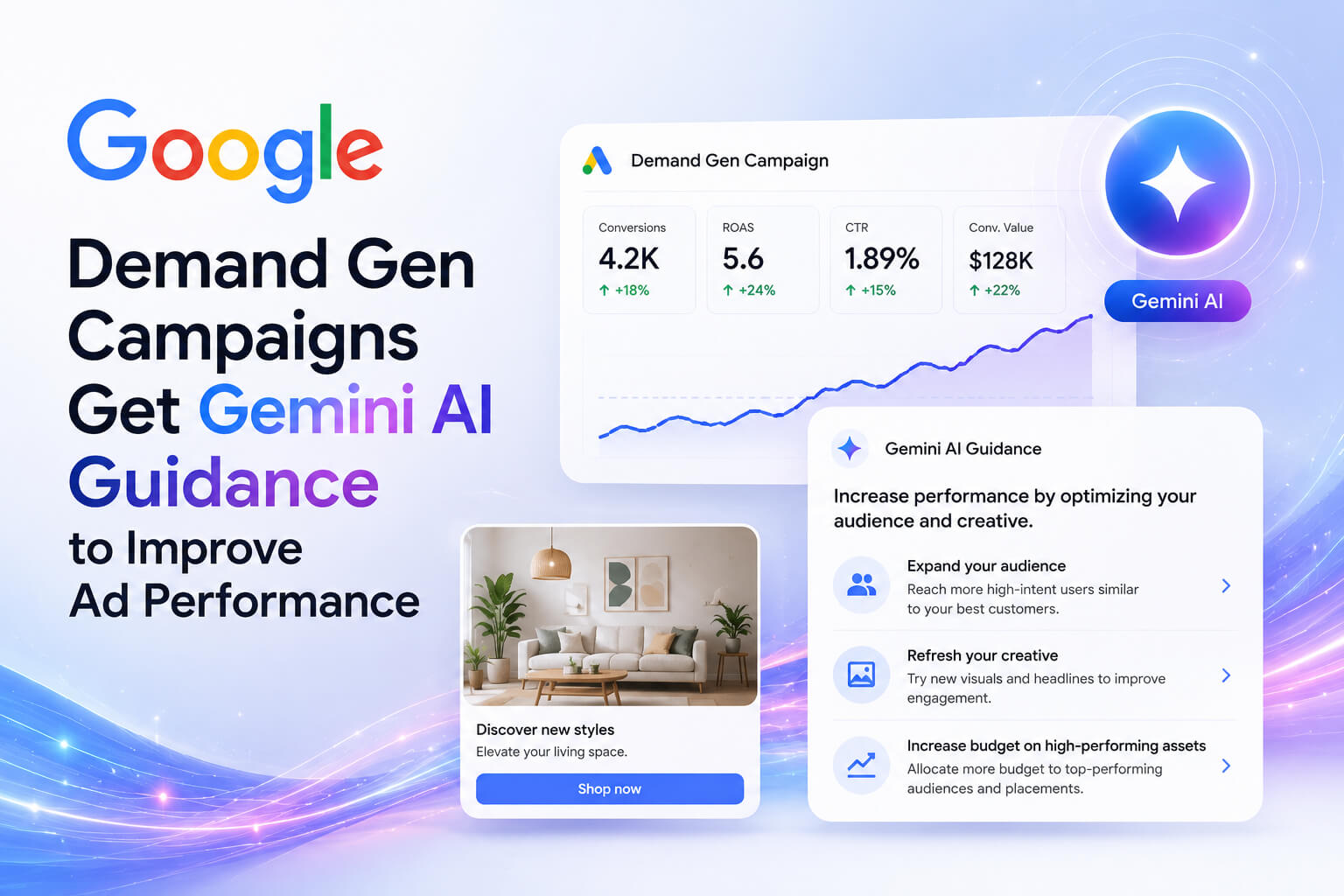
Google is bringing more Gemini-powered artificial intelligence features into Demand Gen campaigns, giving advertisers new tools to create, optimize, and measure ads across YouTube and other Google platforms.
The update highlights Google’s growing push to combine generative AI, creator content, product discovery, and performance marketing into one advertising workflow. For brands, the move could make it easier to build stronger creative assets, reach shoppers earlier in the buying journey, and track campaign results with greater accuracy.
Gemini AI Expands Its Role in Google Ads
Demand Gen campaigns are designed to help advertisers reach potential customers across visually driven Google surfaces, especially YouTube. With Gemini now playing a larger role, Google wants to simplify campaign creation and improve how ads match user intent.
The new AI-assisted campaign setup allows advertisers to use settings from an existing campaign, such as Performance Max, and apply best practices for Demand Gen campaigns. This can help marketing teams launch campaigns faster while still giving them visibility and control over campaign settings before publishing.
For advertisers managing multiple campaigns, this could reduce manual setup time and help improve consistency across Google Ads strategies.
AI-Powered Creative Tools for YouTube Ads
One of the biggest parts of the update is creative generation. Google is making it easier for advertisers to build high-impact ad assets using AI-powered tools.
With multimodal video creation in Asset Studio, advertisers can use prompts to develop more relevant YouTube ads. This gives brands a faster way to create campaign-ready content without starting from scratch every time.
Google is also making creator partnerships easier to use in Demand Gen campaigns. Advertisers can now boost authentic creator partnership videos directly within the asset picker during campaign setup. This reflects a broader trend in digital advertising, where brands are relying more on creator-led content to build trust and improve engagement.
Product Videos and Feeds Support More Discovery
Google is also expanding how retailers and other businesses use product content in Demand Gen campaigns. Retailers will soon be able to upload videos to Google Merchant Center and have them distributed dynamically across Demand Gen campaigns based on real-time user interest.
This is important because shoppers increasingly discover products through video content before actively searching for them. By combining product videos, AI signals, and Demand Gen placements, Google aims to help advertisers connect with potential customers earlier in the purchase journey.
Google is also expanding product feeds to more surfaces and industries, including automotive. This allows advertisers to show richer product information and inventory details within their campaigns.
Demand Gen Reaches More Google Surfaces
The update also adds new discovery opportunities through Google Maps inventory. This means brands can reach users as they explore local areas, creating more opportunities for advertisers with physical stores, local services, or location-based campaigns.
Google is also expanding checkout links to more markets, helping move users from product discovery to purchase with fewer steps. This could be especially useful for e-commerce brands looking to reduce friction between ad engagement and conversion.
Better Measurement for Campaign Performance
Alongside creative and targeting updates, Google is adding tools to help advertisers measure Demand Gen performance more clearly.
Campaign Type Attribution will allow advertisers to isolate conversions from Demand Gen campaigns and compare performance against channels such as paid social. Google is also offering Uplift Experiments to show how Demand Gen works alongside Performance Max.
These updates are designed to help marketers better understand return on investment and make more informed decisions about campaign budgets.
Google is also expanding privacy-safe third-party integrations with partners such as TransUnion, allowing advertisers to connect YouTube exposure with broader business outcomes.
Why This Matters for Advertisers
The latest Demand Gen updates show how Google is using Gemini to make advertising more automated, visual, and performance-focused.
For marketers, the benefits may include faster campaign setup, easier creative production, improved product discovery, stronger creator content integration, and clearer measurement. However, advertisers will still need to review AI-generated assets carefully to ensure brand accuracy, compliance, and message quality.
As competition grows across paid social, search, retail media, and video advertising, Google is positioning Demand Gen as a stronger bridge between brand awareness and direct response marketing.
AI Is Reshaping Digital Advertising
Google’s use of Gemini in Demand Gen campaigns reflects a wider shift in the advertising industry. AI is no longer limited to writing ad copy or generating images. It is now becoming part of the full campaign lifecycle, from planning and creative production to targeting, optimization, and measurement.
For brands using YouTube and Google Ads, Gemini-powered Demand Gen tools could offer a more efficient way to reach customers and drive conversions. The update also shows how major technology companies are embedding AI deeper into everyday marketing platforms.
As AI advertising tools continue to evolve, businesses that combine automation with strong creative strategy may gain an advantage in reaching audiences across digital channels.
