


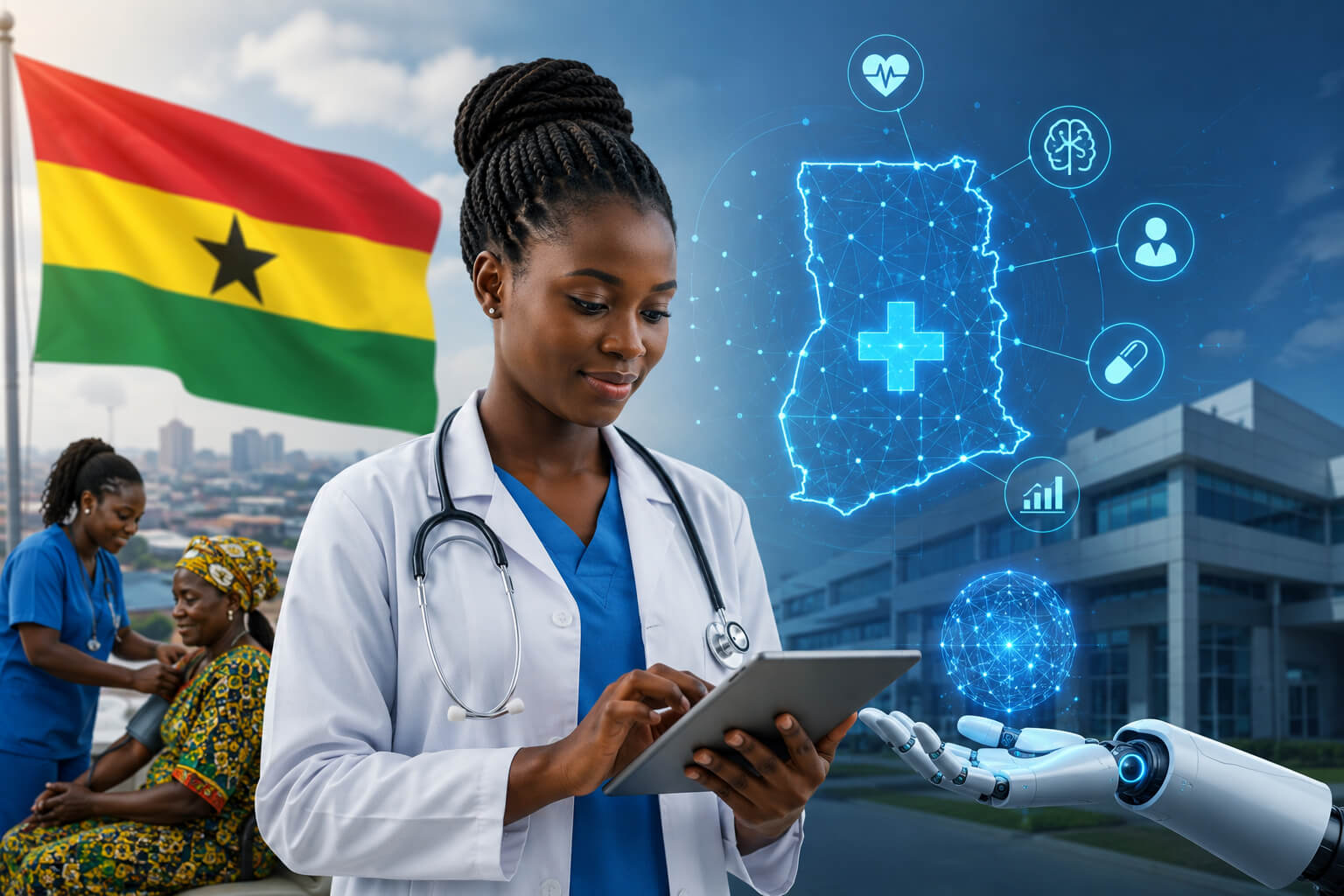
Accra, Ghana – Ghana has launched a major artificial intelligence-driven healthcare program aimed at improving the country’s public health system and strengthening disease surveillance. Furthermore, the program seeks to increase access to quality healthcare across the country.
The initiative is being supported by the World Health Organization (WHO), the United Nations Development Programme (UNDP), and the Government of Japan. This support is part of Ghana’s broader digital transformation strategy focused on integrating emerging technologies into healthcare delivery.
Artificial Intelligence to Strengthen Disease Surveillance
One of the main goals of the programme is to use AI technologies to improve early detection of infectious diseases. It also aims to strengthen healthcare data systems and enhance climate-sensitive disease monitoring across the country.
Project leaders say AI-powered healthcare systems will help improve surveillance and response capabilities for illnesses including:
- Malaria
- Cholera
- Meningitis
- Other infectious disease outbreaks
Officials believe the technology will allow faster identification of potential health threats. In addition, it will improve emergency response coordination during public health crises.
The programme will also seek to improve cybersecurity protections for digital healthcare systems. Meanwhile, it will raise digital skills and AI literacy among healthcare workers.
“Responsible and ethical implementation of Artificial Intelligence in healthcare is critical. We need to address concerns regarding privacy, security and equitable access,” said WHO Ghana Country Representative Dr. Fiona Braka.
Japan Supports Ghana’s Digital Transformation of Healthcare
The healthcare project is one aspect of a larger partnership enabled through Japan’s Fiscal Year 2025 Supplementary Budget. The initial phase of funding is estimated at approximately $1.5 million.
The wider collaboration includes projects on:
- AI-driven healthcare innovation
- Public sector digital transformation
- Peacebuilding and resilience programs in Bawku
Ghana’s Minister for Foreign Affairs, Samuel Okudzeto Ablakwa, said the projects align closely with the country’s long-term priorities in digital governance. Furthermore, he emphasized sustainable development and universal healthcare coverage.
Ghana Steps Up AI Use in Healthcare
The move is in line with Ghana’s growing efforts to incorporate artificial intelligence into the country’s healthcare infrastructure. Additionally, these efforts include public services.
Earlier this year, the Ghana Health Service announced plans to integrate AI technologies into national health platforms such as DHIMS2 and GHIMS. The goal is to enhance these platforms:
- Healthcare delivery
- Predictive health analytics
- Medical decision-making
- Operational efficiency
Health authorities also believe AI solutions can help bridge the healthcare access gap in underserved communities through technologies such as telemedicine. They also expect benefits from multilingual patient support systems and predictive diagnostics.
At the same time, startups, universities and innovation hubs across Ghana have increasingly been involved in developing AI-powered healthcare tools. For example, these entities participate through hackathons, research programs and digital health initiatives.
Ghana Strengthens its Position as an AI Innovation Center in Africa
Ghana’s increasing investment in artificial intelligence is part of a broader trend across the continent to embrace digital technologies. These technologies can enhance healthcare systems and spur economic growth.
Ghana’s National Artificial Intelligence Strategy has been approved by Cabinet and will serve as a guide for the responsible use of AI in a range of sectors. This was announced by government officials.
The new healthcare programme could position Ghana as one of Africa’s leading centres of AI-driven innovation in public health. In addition, it could create new opportunities for healthtech, fintech and the development of digital infrastructure, industry analysts say.
As the adoption of AI continues to expand globally, the latest initiative from Ghana is an example of how emerging technologies are playing a growing role in improving healthcare resilience. Moreover, these technologies improve efficiency and access in developing economies.
For more Breaking AI news visit: https://breakingai.news
