


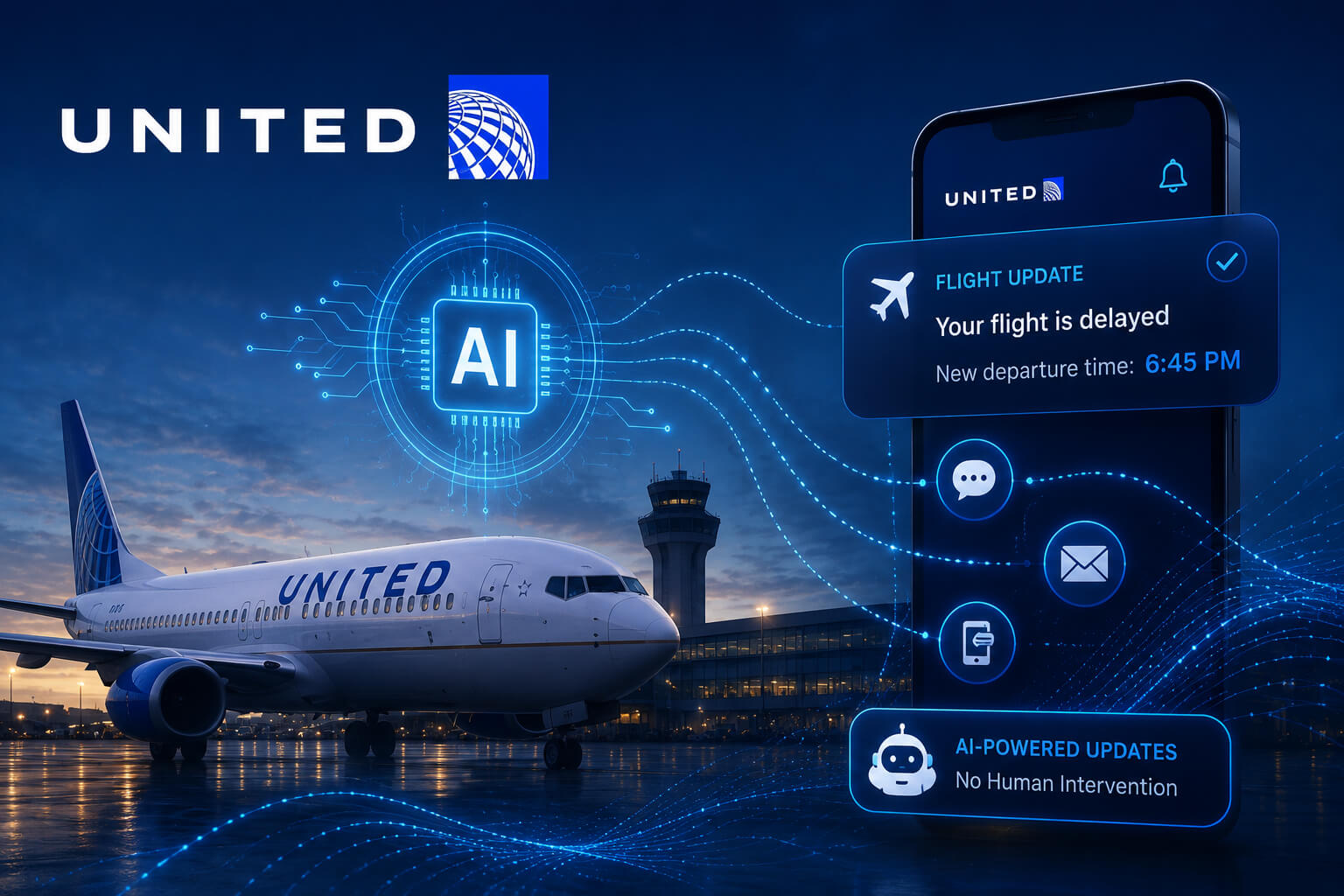
United Airlines is working on a new artificial intelligence system that could explain flight delays to passengers without human intervention.
The airline is expanding its use of AI as part of its “Every Flight Has a Story” program. This program is designed to give travelers clearer and more detailed information when flights are delayed or disrupted.
Instead of sending out generic delay alerts, United wants AI to give passengers real-time explanations based on operational data and maintenance updates. Moreover, it will consider weather issues, crew schedules and other factors that can affect a specific flight.
United Airlines Expands Use of AI for Passenger Updates
United Airlines first introduced its “Every Flight Has a Story” program back in 2018 to better communicate with passengers during delays. Then, the program began using generative AI in 2024 to help create clearer and more personalized updates.
Now, the airline is moving toward a more automated version of the system. According to United CEO Scott Kirby, the goal is for AI to eventually explain what is happening with every flight using available company data. Importantly, this approach would not require human staff to manually create each update.
The system could send passengers plain-language explanations through text messages, app notifications, and other customer communication channels.
Why United Is Looking to AI to Explain Flight Delays
Flight delays are one of the most aggravating things for airline customers. This is especially true when travelers are given generic notices like “operational issue” or “weather delay.”
United thinks AI can make this experience better by turning complex airline operations information into simple-to-grasp updates. For instance, instead of just reporting a delay, the AI might be able to describe whether the delay is due to aircraft maintenance or a late inbound plane. Alternatively, it could explain air traffic restrictions, severe weather elsewhere, or crew availability.
This type of communication can help passengers understand why they are waiting. Furthermore, it helps them know what is being done to solve the problem.
AI Could Make Airline Communications More Transparent
The trend is part of a growing movement throughout the aviation industry. Now airlines are using artificial intelligence to enhance operations, customer service and decision-making.
For passengers, the biggest benefit may be transparency. AI-generated updates could offer faster and more detailed information than traditional delay alerts. This is especially helpful during peak travel times when airline staff are juggling multiple disruptions at once.
United also believes better communication could help increase customer loyalty. By providing passengers with more detailed explanations, the airline hopes to reduce frustration and create a more reliable travel experience.
United’s ConnectionSaver Tool and AI
United already employs AI in other aspects of its flight operations. Its ConnectionSaver tool, for example, analyzes real-time flight data to assess if a departing flight can be held momentarily. This helps connecting passengers.
The algorithm takes into account many variables, including arrival times, gate locations, and number of connecting passengers. Moreover, it considers whether a flight can still arrive on time if it is held.
The tool has helped save tens of thousands of passenger connections, reports say, especially at major hubs, such as Denver.
Implications for Air Travel Going Forward
United Airlines’ AI flight delay updates are a sign of the increasing use of artificial intelligence in daily travel.
AI is often mentioned in the context of chatbots, search engines and workplace tools. But airlines are increasingly deploying the technology behind the scenes to improve communication and reduce disruption.
If it works, the United system could set a new standard for how airlines talk about delays and handle passenger expectations. It might also spur other carriers to adopt similar AI-driven communication tools.
But the shift to automated updates raises other key questions. Passengers will expect AI-generated information to be correct, timely and transparent. Airlines will need to ensure automated systems don’t oversimplify problems or provide false explanations during complex disruptions.
AI Is Transforming the Passenger Experience
United Airlines’s plan illustrates a general evolution in customer service: AI is evolving from basic automation to live, bespoke communication.
For travelers, it could mean less vague delay announcements and more helpful information when stress levels are high. For airlines, it could mean more efficiency, deeper customer trust and a more up-to-date passenger experience.
Airlines will be paying close attention to see if automated explanations can help passengers better understand flight disruptions. As United continues to develop its AI-powered delay communication system, this trend may grow.
