


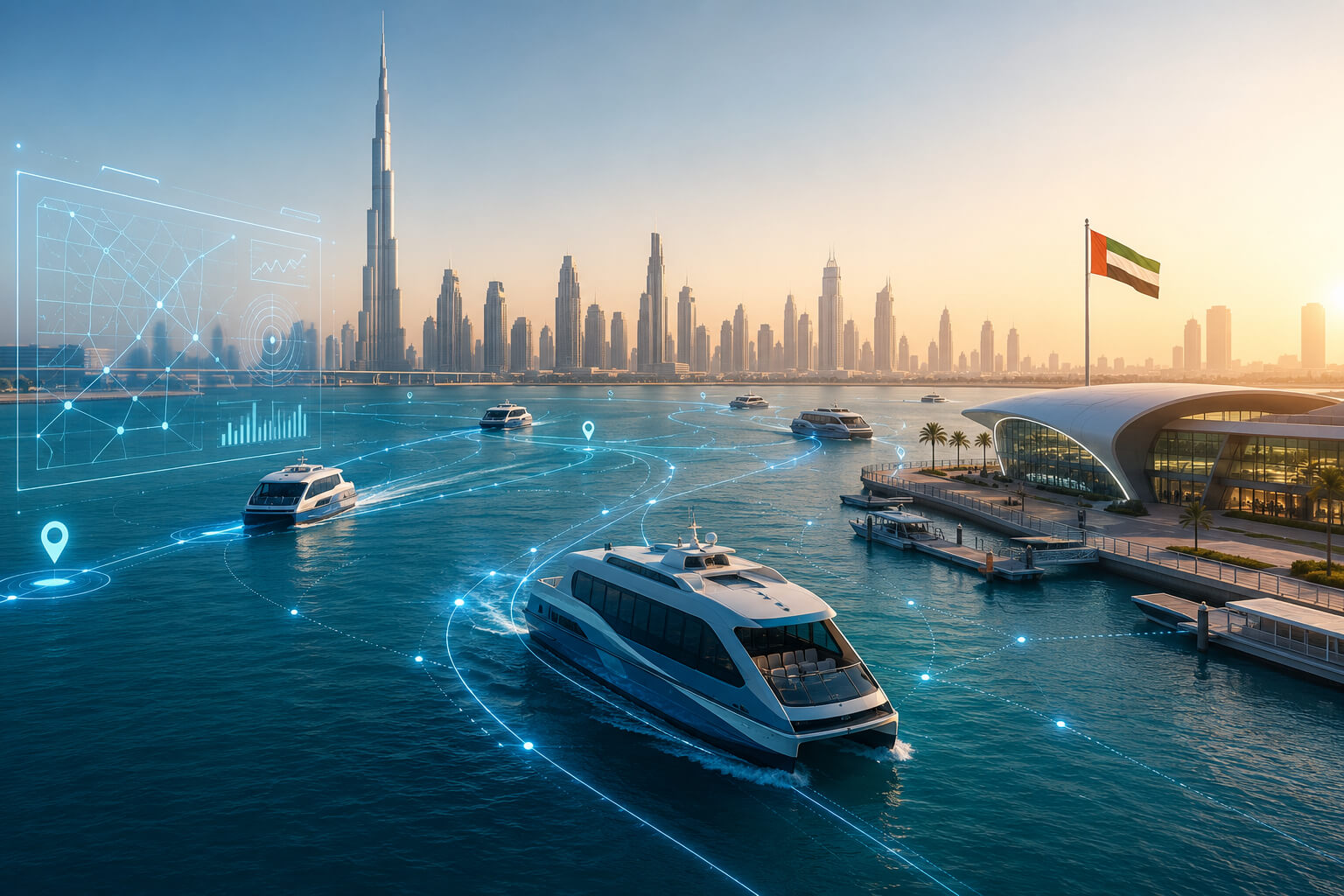
The Roads and Transport Authority in Dubai is turning to artificial intelligence to make the city’s marine transport network more responsive, efficient and data-driven.
The RTA has enhanced its Seasonal Network for marine transport services with AI-powered tools, predictive analytics and big data. These are used to enhance service planning across seasons, holidays and major events.
The move is part of Dubai’s wider push to integrate smart technologies into public transport and enhance mobility services for residents and visitors.
AI to Predict Passenger Demand
The Seasonal Network initiative uses advanced in-house algorithms and AI-based analytical tools to process large amounts of transport data, the Government of Dubai Media Office said.
These include data such as passenger numbers, revenues and occupancy rates. By analysing these data points, the RTA can forecast future demand and adjust marine transport schedules more efficiently.
The summer season operating plan is expected to begin in July 2026. It will rely on an integrated big-data repository to support more accurate planning and operational decisions.
Smarter Scheduling for Dubai’s Marine Transport
The AI system helps the RTA create flexible operating plans for Dubai’s marine transport services. The system adjusts these plans based on seasonal demand, public holidays, tourism activity, and major events across the emirate.
Khalaf Belghuzooz Al Zarooni, Director of Marine Transport at RTA’s Public Transport Agency, said the initiative allows the authority to forecast future demand. In addition, it lets them apply season-specific operating models.
The goal is to balance customer needs with operational efficiency. This approach helps companies maintain reliable services while using resources more effectively.
Big Data to Help Make Better Public Transport Decisions
This project uses predictive analytics to study patterns of marine transport usage and to understand how various factors influence operating schedules, service frequency, numbers of passengers, occupancy levels and revenue.
By using modern computing applications and big-data analytics, the RTA can simulate customer behaviour. They can also forecast demand for marine transport services.
This allows Dubai’s marine transport network to operate with more precise schedules and improved service quality while supporting sustainability goals.
Human-Centred AI in Public Transport
While technology powers the initiative, the RTA still prioritizes customer needs during the planning process.
The RTA reviews passenger suggestions and requirements submitted through official channels. The agency then uses this feedback to shape service design. As a result, the AI-supported transport model focuses not only on technical performance but also on real customer needs.
Why this matters
Dubai’s use of AI in marine transport demonstrates how cities can push the application of artificial intelligence beyond software and digital services. Here, AI is being used to improve physical infrastructure, maximise efficiency in public transport and enable smarter urban mobility.
The Seasonal Network initiative is also part of a broader trend in transportation: using predictive analytics to make public services more adaptive, efficient and sustainable.
The project boosts Dubai’s position as a smart city, through the implementation of AI-enabled solutions in government services and transportation systems.
Key Takeaway
RTA in Dubai uses AI, predictive analytics and big data to optimise seasonal marine transport network. By adjusting services based on demand forecasts and real-world data, the authority aims to improve efficiency, service quality and sustainability of the city’s ma
For more Breaking AI news visit: https://breakingai.news
