


Water infrastructure used to be easy to ignore.
Pipes underground. Pumps somewhere out of sight. Treatment plants doing their work far from most people’s daily attention. Water arrived, bills came in, leaks were noticed when something looked obviously wrong.
That old model is starting to feel dated.
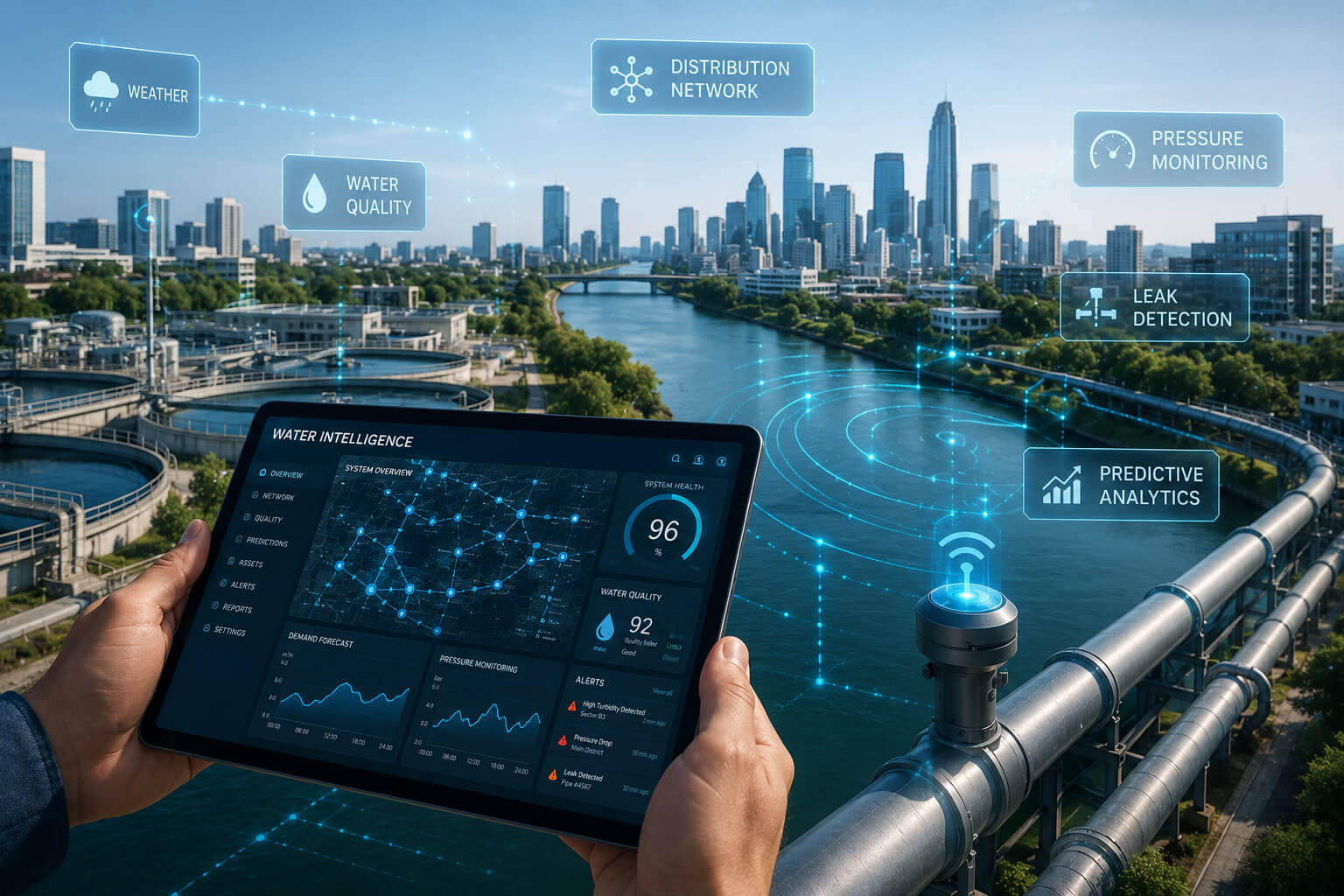
A new digital layer is forming around water systems, and it is changing how cities, utilities, and industrial zones understand one of their most critical resources. Water intelligence platforms are bringing sensors, smart meters, cloud systems, AI, machine learning, and real-time analytics into networks that were once mostly mechanical. The result is not just “smarter water.” It is infrastructure that can finally tell operators what is happening before a small problem becomes a costly failure.
What Are Water Intelligence Platforms?
Water intelligence platforms are digital systems built to monitor, analyze, and manage water networks in real time.
They usually combine IoT sensors, smart meters, cloud infrastructure, GIS mapping, machine learning, and analytics dashboards. That mix gives utilities a live view of water flow, pressure, consumption, leakage, waste, and system performance.
Sounds very technical. The idea is actually simple.
Instead of waiting for a pipe to burst or a complaint to arrive, a utility can see warning signs earlier. A pressure drop. Unusual consumption. A leak pattern. A section of the network behaving differently from normal. The platform reads the signals and helps teams decide what to fix, where to send crews, and how to plan future investment.
That is the shift. Water systems are becoming data environments.
Why Visibility Matters So Much
Many water utilities still work with limited real-time visibility. Information can be slow, fragmented, or dependent on manual reporting. Leaks can sit unnoticed. Maintenance often happens after damage is already visible.
That is expensive. It also wastes water at a time when many regions do not have much room for waste.
With water intelligence platforms, utilities get a clearer operational picture. Smart meters and digital water systems can provide near real-time information on consumption and waste, while digital monitoring systems can support better maintenance, planning, and sustainability decisions.
This is not just about dashboards looking impressive in a control room. Better visibility changes how water is managed.
A city can move from reacting to problems toward predicting them. A utility can prioritize repairs based on data instead of guesswork. Customers can understand usage patterns faster, not only after a monthly bill arrives.
Small difference on paper. Big difference when millions of people depend on the same network.
AI Is Moving Into Water Management
Artificial intelligence has already moved into finance, healthcare, logistics, marketing, cybersecurity, and manufacturing. Water infrastructure may not sound as flashy, but it could become one of AI’s more important real-world applications.
AI and machine learning in water management can help detect anomalies in water networks, forecast demand, identify likely leak locations, optimize pumping systems, and support predictive maintenance. These tools are especially useful because water systems generate patterns over time. Flow rates, pressure levels, seasonal demand, weather impacts, neighborhood usage, industrial consumption.
Once that data becomes visible, AI can start finding signals humans may miss.
And there is a practical reason this matters now. Urban populations are growing. Climate volatility is increasing. Water scarcity is becoming harder to ignore, especially across the Middle East and Africa. According to the LEAP Insights article, the smart water management market in the Middle East and Africa is projected to grow from $1.4 billion in 2025 to $3.1 billion by 2032.
That growth is not happening because water technology suddenly became trendy. It is happening because pressure is rising.
Smart Cities Are Giving Water Tech a Faster Path
Water intelligence platforms fit neatly into the smart city conversation.
Cities such as Dubai, Riyadh, Cairo, and Johannesburg are already expanding smart water programs that combine hardware, analytics platforms, and digital monitoring. The Middle East, in particular, has a strong reason to move quickly: water scarcity creates urgency, while large state-backed infrastructure projects create room for scale.
Newer infrastructure projects also have an advantage. They do not always have to bolt digital systems onto old networks built in disconnected phases over decades. They can design connected sensors, central dashboards, and analytics systems into the project from the beginning.
That makes water intelligence easier to deploy.
Not easy. Easier.
Because even the best platform still has to work with old pipes, public budgets, utility teams, regulations, procurement processes, and people who may not want to change how operations have worked for years.
The Hard Part Is Not Only Technology
The technology is improving. That does not mean adoption will be smooth.
Water utilities can face limited capital, skills gaps, legacy infrastructure, cybersecurity concerns, and internal resistance. A platform may show where problems are, but someone still has to fund the repair, send the crew, manage the data, train staff, and make sure the system actually improves service.
This is where the story becomes less glamorous but more important.
Water intelligence is not just a software upgrade. It is a governance challenge. A planning challenge. A workforce challenge. A public infrastructure challenge.
Cities can buy sensors. They can install meters. They can pay for cloud systems. But the real value comes when those tools change decisions.
Water Systems Are Becoming Information Systems
The bigger picture is hard to miss.
Water networks are no longer just physical assets. They are becoming information systems connected to urban planning, climate resilience, public health, industrial growth, and sustainability targets.
For AI companies, infrastructure startups, utilities, and governments, this opens a serious opportunity. Not the loud kind of AI opportunity that gets social media attention every week. A quieter one. Less glamorous, maybe. But deeply useful.
Water intelligence platforms could help cities reduce waste, detect failures earlier, improve investment planning, and respond better to rising climate and population pressures.
Pipes still matter. Pumps still matter. Treatment plants still matter.
Now the data matters too.
Source: LEAP
