


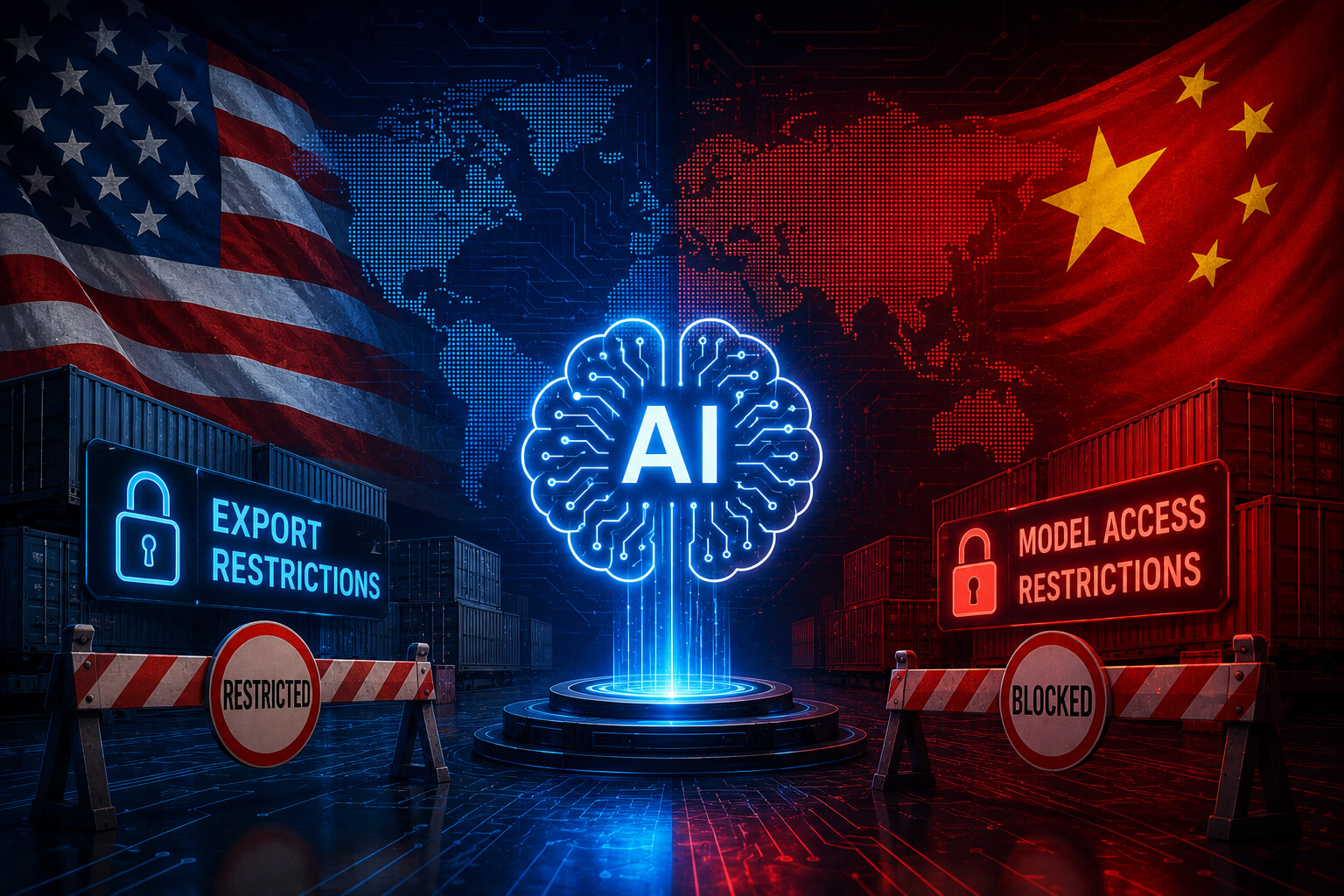
Artificial intelligence used to carry this almost romantic idea of being borderless. But now, US China AI model restrictions are beginning to reshape the landscape. Build a model in one country. Launch it somewhere else. Let developers, startups, researchers, and businesses plug in from anywhere.
That version of AI is getting harder to believe now.
The United States and China are both moving toward tighter control over their most advanced AI systems. Not just chips. Not just data centers. The models themselves are becoming part of national strategy.
This is where the AI race starts looking less like a software market and more like a power contest.
Frontier AI Is No Longer Just a Product
Frontier AI models are not ordinary digital tools anymore. They can write code, analyze sensitive data, assist research, automate business decisions, and potentially support military or intelligence-related systems.
That makes them valuable. It also makes governments nervous.
The United States has already placed export controls on advanced AI chips and tightened access to sensitive technologies. Some leading American AI companies have also restricted where certain advanced models can be used, partly because of security concerns and regulatory pressure.
China now appears to be moving in a similar direction.
According to the report, Chinese authorities have discussed limiting overseas access to the country’s most advanced homegrown AI models, including systems that have not yet been released publicly.
That detail matters. China is not only protecting what already exists. It may be thinking ahead about what comes next.
Why the US and China Want Tighter AI Control
The reason is simple, even if nobody wants to say it too bluntly.
Powerful AI models are becoming strategic infrastructure.
They can improve productivity, speed up scientific work, support cyber operations, strengthen military planning, and give companies or governments an edge in global competition. Once a model becomes capable enough, access to it is no longer just a business decision.
It becomes a policy decision.
For Washington, restricting advanced chips and certain AI capabilities is about slowing rivals from gaining access to cutting-edge technology. For Beijing, building and protecting domestic AI models is partly a response to US restrictions and partly a way to reduce dependence on foreign systems.
Both sides are acting differently, but the message is almost the same: the best AI cannot be treated as freely available software forever.
China’s AI Strategy Is Becoming More Protective
China has spent years building its own AI ecosystem. Local companies have developed large language models, AI platforms, and cloud-based tools aimed at reducing reliance on Western technology.
That push became even more urgent after the US limited China’s access to advanced semiconductors.
Now, if China restricts overseas access to its strongest AI models, it would mark another step in that shift. The country would be treating domestic AI systems as national resources, not just commercial products for global users.
It is not hard to see why.
If frontier AI becomes central to industry, research, defense, and economic growth, then giving unrestricted access to foreign users starts to look risky from a government perspective.
The Open AI Era Is Getting Smaller
This does not mean AI development will stop being global. Researchers will still publish papers. Startups will still build tools. Open-source models will still matter.
But the most powerful systems may become harder to access across borders.
Countries without their own strong AI infrastructure could be pushed into choosing sides. Some may depend more on US-based AI companies. Others may work more closely with Chinese technology providers. A few will try to build sovereign AI systems of their own.
That is a very different world from the early AI boom, when the main question was which chatbot was better.
Now the question is becoming: who is allowed to use the strongest models?
AI Trust Is Also Turning Political
The issue is not only access. Trust is becoming part of the AI rivalry too.
The Times of AI report also connects this broader shift to recent Chinese concerns about Anthropic’s Claude Code, where Chinese authorities reportedly raised security worries around the tool. Anthropic denied the accusations, but the controversy shows how AI products are now being judged through a geopolitical lens.
That pattern feels familiar.
Huawei faced years of suspicion in the West over national security concerns. Now American AI companies may face similar treatment in China. Whether the claims are technical, political, or both, the result is the same: AI tools are no longer being trusted automatically.
They are being inspected as strategic systems.
What This Means for the Future of AI
The global AI market may become more fragmented.
Instead of one open AI ecosystem, the world could move toward separate technology zones shaped by national rules, export controls, cloud restrictions, and political alliances.
That would affect developers first. Then businesses. Then universities, governments, and smaller countries that rely on foreign AI systems.
The AI race is no longer only about who can build the smartest model. It is also about who controls access, who sets the rules, and who gets left outside the gate.
That is the uncomfortable part.
AI was supposed to flatten access to intelligence. Now the most advanced intelligence systems may become some of the most restricted technologies in the world.
