


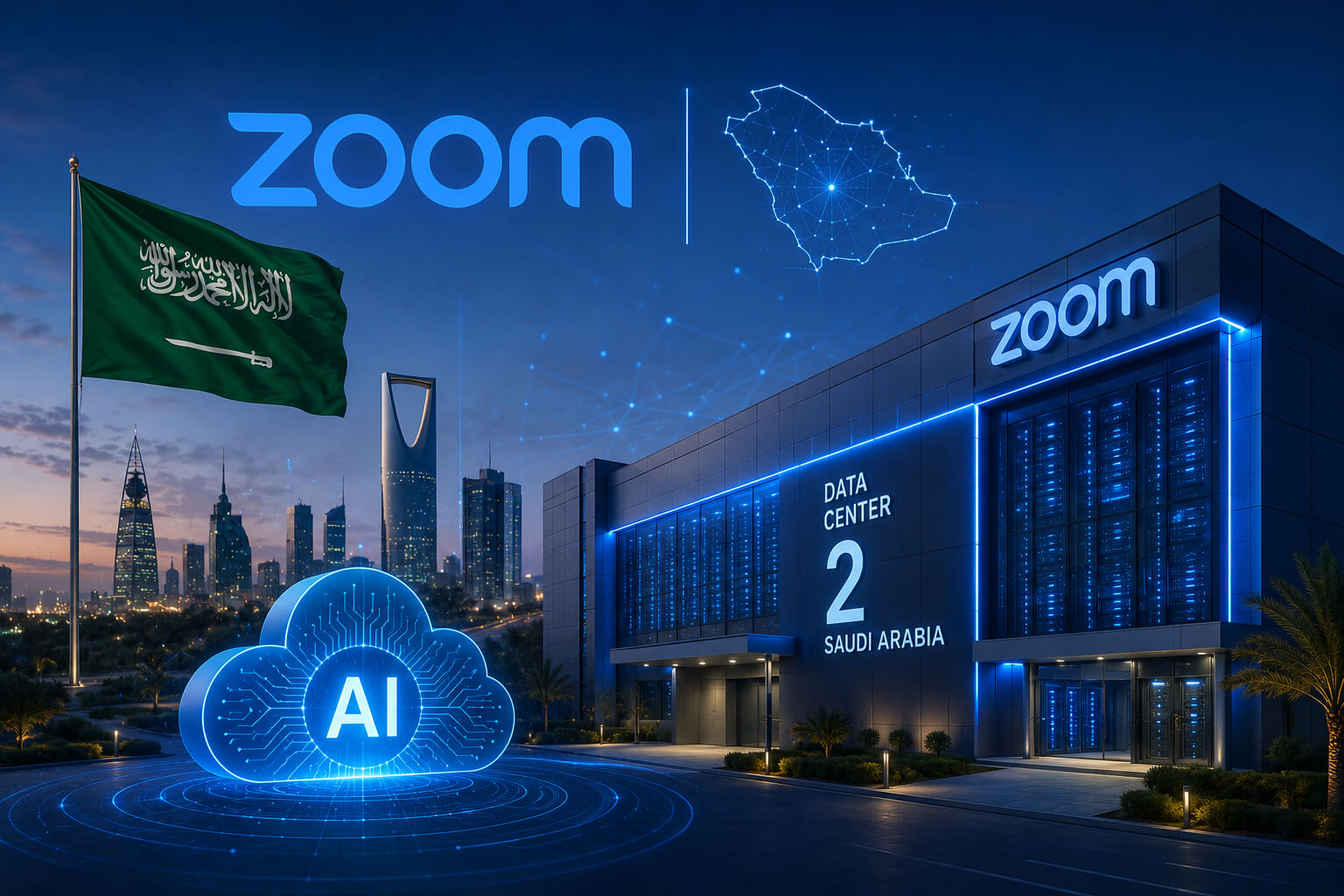
Zoom has opened its second data center in Saudi Arabia. This extends its digital infrastructure footprint in the Kingdom. This comes amid rising demand for secure, locally hosted collaboration and AI-enabled workplace tools.
The new facility is hosted at center3, a Saudi-headquartered carrier-neutral data center and subsea cable operator based in Riyadh. The launch builds on Zoom’s previously announced $75 million investment commitment in Saudi Arabia. This commitment focuses on artificial intelligence innovation and the infrastructure needed to support large-scale digital transformation.
This move is especially significant for government agencies, large enterprises and critical national infrastructure organizations that require local data residency. By expanding its Saudi-based infrastructure, Zoom is positioning itself to better serve organizations with strict compliance needs. Moreover, it supports those with specific security and data governance requirements.
Why Zoom’s Saudi Data Center Matters
Under Vision 2030, Saudi Arabia is fast-tracking its digital economy. Artificial intelligence, cloud computing, data centers and connectivity infrastructure are now key national priorities. Zoom’s latest expansion coincides with the Kingdom declaring 2026 the Year of Artificial Intelligence. This underlines the country’s drive to embed AI across government, business and industry.
The second Saudi data center is more than a capacity boost for Zoom. It is also a sign of a deeper commitment to one of the fastest-growing technology markets in the Middle East. Zoom opened its first Saudi regional data center in 2023. This gave customers access to local infrastructure and helped to meet data residency requirements.
The new facility adds further capacity for organizations that rely on reliable video communications, collaboration tools and AI-enhanced productivity platforms.
Supporting Government, Enterprise and Critical Infrastructure
For many regulated industries, local data residency has become a key requirement. Government agencies, financial institutions, energy companies and critical infrastructure operators often require assurance. In particular, they want to know that sensitive information can be processed and stored within national borders.
The new Zoom data center in Saudi Arabia is intended to address those needs. Additionally, it improves service availability and scalability for customers in the Kingdom.
The facility’s location at center3 also provides strategic connectivity advantages. center3 operates carrier-neutral data centers and subsea cable infrastructure linking Europe, Asia, and Africa. Therefore, this makes the new Zoom data center well positioned for organizations operating in regional and international markets.
Zoom’s AI Strategy in Saudi Arabia
Zoom’s Saudi expansion also connects directly to its broader AI strategy. The company has been developing AI-powered collaboration features that help users summarize meetings and generate content. Furthermore, they help users manage follow-ups, and turn workplace conversations into completed tasks.
Recent Zoom product announcements include ZoomMate, described as the company’s first AI teammate, and an AI Productivity Suite. These tools can help teams create presentations, reports, and other business materials from meeting context.
These AI tools are especially relevant for Saudi organizations looking to modernize workflows while maintaining compliance with local data requirements.
Saudi Arabia’s AI Infrastructure Race Heats Up
Saudi Arabia is becoming one of the more active AI infrastructure and data center markets in the Middle East. International technology companies are investing heavily into the Kingdom as it builds out the digital groundwork. In particular, this is for AI adoption, cloud services, smart government platforms and enterprise automation.
Zoom’s second Saudi data center adds to this momentum. It also reflects a wider industry trend: AI adoption is no longer only about software. It depends on reliable local infrastructure, secure data handling, regulatory compliance, and high-performance connectivity.
As AI tools are integrated more deeply into day-to-day work, companies with local infrastructure offerings may be in a better position. This could allow them to serve government and regulated enterprise customers more effectively.
What This Means for Zoom Customers
For Zoom customers in Saudi Arabia, the new data center could enable stronger local service delivery and better compliance alignment. Additionally, it may offer better access to AI-enabled collaboration tools.
For the broader market, the launch reinforces Saudi Arabia’s position as a major regional hub for AI infrastructure and enterprise technology investment.
Zoom’s latest move is indicative of how global tech firms are responding to the Kingdom’s digital transformation agenda. As Saudi Arabia continues to invest in AI, cloud infrastructure and data sovereignty, the trend of international tech firms expanding their local footprint is set to continue.
The new Zoom Saudi data center is yet another sign that the race for AI infrastructure in the region is heating up.
