


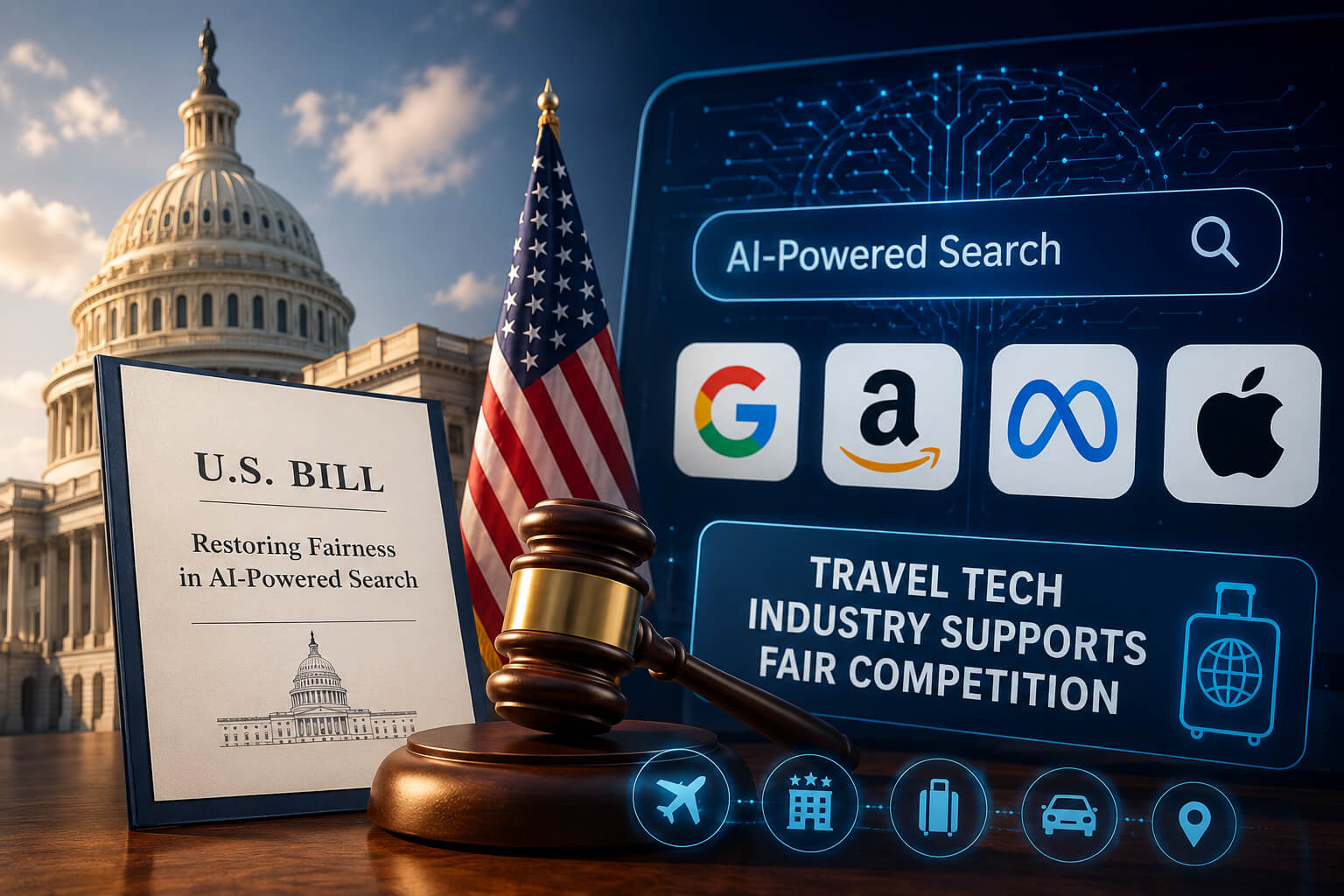
The Travel Technology Association is supporting a renewed U.S. legislative effort. This effort is aimed at limiting how dominant online platforms promote their own products and services over competitors.
The bill, known as the American Innovation and Choice Online Act, or AICOA, has been reintroduced by a bipartisan group of U.S. senators. It seeks to prevent the biggest digital platforms from using their dominance over online marketplaces, search results and discovery tools. Their goal is to stop them from steering users toward their own products.
The travel industry has a growing urgency: artificial intelligence is changing how people plan trips, compare options, and book experiences online.
Why AICOA Is Important For AI Travel Search
Travel discovery isn’t confined to traditional search results, comparison websites or booking platforms anymore. Instead, travelers are more and more turning to AI-powered assistants, recommendation engines and automated search summaries. These tools help decide where to go, where to stay and what services to book.
That shift could give big tech platforms more power over what consumers see first.
Proponents of AICOA say when a dominant platform owns the discovery layer and its own competing products, independent travel companies can struggle to get in front of potential customers. Instead of competing only on price, quality, and service, smaller operators could be forced to compete against platform-controlled visibility.
This is especially important in travel, where independent hotels, tour operators, booking platforms, and experience providers rely heavily on digital discovery to reach customers.
Travel Tech Says Competition Should Drive Visibility
The Travel Technology Association said the bill would help ensure that travelers can find the most relevant products and services. That’s because it prevents them from being pushed toward options owned or favored by dominant platforms.
The group argues that fair competition is becoming even more important. That is because AI search tools begin acting less like lists of links and more like decision-making assistants.
In an AI-powered travel search environment, a platform may not simply display options. It may summarize, rank, recommend, or even complete a booking journey on behalf of the user. That makes transparency and fair access critical for companies that depend on being discovered online.
Small Travel Operators Face Higher Stakes
Industry leaders supporting the legislation say AI could make the visibility problem more serious for smaller travel businesses.
If AI assistants recommend only a narrow set of options, or if they prioritize services connected to a dominant platform, independent companies could be excluded before the traveler even visits a website. This could affect tour companies, travel marketplaces, hotel groups, destination services, and other businesses that depend on open digital competition.
The concern is not just about search rankings. It is about who controls the digital path between a traveler’s question and the final booking decision.
AICOA Reflects a Wider Global Debate
The U.S. debate around AICOA is similar to competition discussions already happening in Europe under the Digital Markets Act. European regulators have moved to restrict certain practices by large digital gatekeepers, including self-preferencing.
Now, U.S. lawmakers are revisiting whether similar rules are needed to protect competition in online markets.
Supporters argue the legislation could help restore a sense of balance by preventing dominant platforms from unfairly promoting their own services. However, critics worry rules targeted at big tech could create new regulatory burdens and change the way digital platforms operate.
The rise of generative AI adds a new twist to the debate.
AI Adds Urgency to Competition Debate
AI-generated answers, summaries and recommendations are becoming more common in search engines and digital platforms. These tools can help consumers plan faster, but they may also reduce direct traffic to the original sources of information.
For travel brands, that means traditional SEO may no longer be enough. Companies may need stronger structured data, trusted distribution channels and better integration with AI-driven discovery systems to remain visible.
As AI takes an increasingly important role in travel planning, the question of who controls recommendations may become one of the most important competition issues in the industry.
What this means for travelers
For consumers, it’s a battle of choice.
If AI-powered travel search is open and competitive, travelers may see more options for hotels, flights, tours and local experiences. If dominant platforms can prioritize their own services, travelers may get fewer independent options, even when better alternatives are available.
AICOA advocates say the bill could help ensure the best travel products rise based on relevance, quality and value, not platform ownership.
The Bigger Picture
The Travel Technology Association’s support of AICOA is a clear example of how AI is reshaping competition beyond the traditional tech markets. In fact, travel is becoming a prime example of how digital gatekeeping, search visibility and AI recommendations can impact entire industries.
As AI-powered travel search becomes more prevalent, lawmakers, regulators, and businesses will likely continue to debate the best ways to strike a balance between innovation and fair competition.
The message to independent travel companies is clear: Visibility in AI-driven discovery systems could soon be as important as visibility in traditional search.
