

Close Menu
    What's Hot
    Technology & Innovation

    Direct Travel Pushes Avenir Deeper Into AI-Powered Corporate Travel

    By Art RyanAugust 15, 20260

    Direct Travel is giving its Avenir business travel platform a significant upgrade, and AI is…

    Google’s Gemini 3.7 Flash Takes Aim at GPT-5.6 Terra and Claude Sonnet 5

    August 15, 2026

    Siemens and Reinhausen are developing power solutions for AI data centers

    August 15, 2026

    Hackers Used Autonomous AI Agents to Attack Taiwan — and Cyberwarfare May Have Just Changed

    August 14, 2026
    Facebook X (Twitter) Instagram
    Facebook X (Twitter) Instagram
    Breaking AI News
    Saturday, August 15
    • Home
    • Events
    • Videos
      • Machine Can Think Summit 2026
      • Step Dubai Conference 2026
    • Technology & Innovation

      Direct Travel Pushes Avenir Deeper Into AI-Powered Corporate Travel

      August 15, 2026

      Google’s Gemini 3.7 Flash Takes Aim at GPT-5.6 Terra and Claude Sonnet 5

      August 15, 2026

      Siemens and Reinhausen are developing power solutions for AI data centers

      August 15, 2026

      Hackers Used Autonomous AI Agents to Attack Taiwan — and Cyberwarfare May Have Just Changed

      August 14, 2026

      IBM and OpenAI Partner to Push Secure Enterprise AI Into Core Business Operations

      August 14, 2026
    • Business & Marketing

      Google DeepMind Hands More AI Power to Koray Kavukcuoglu as Gemini Race Intensifies

      August 13, 2026

      SpaceXAI Launches Grok Bot, an AI Teammate That Can Actually Do the Work

      August 13, 2026

      Upwork’s AI Shift Is Getting Real: Smaller Freelance Jobs Are Disappearing, but Bigger AI Work Is Growing

      August 11, 2026

      NVIDIA Taps Wall Street Giants to Unlock $500 Billion for AI Factories

      August 11, 2026

      Firebird Launches Massive NVIDIA AI Factory in Armenia With 70,000+ Blackwell and Rubin GPUs Planned

      August 10, 2026
    • Industry Applications

      AIREV’s OnDemand AI Is Coming to Qualcomm Hardware — and the Cloud Isn’t Required

      August 14, 2026

      OpenAI Brings Inference Residency to the UAE, Keeping AI Processing Inside the Country

      August 14, 2026

      Dubai Is Building an AI System That Could Approve Building Permits in Minutes

      August 12, 2026

      AI-Powered Wearable Could Warn Athletes Before a Dangerous ACL Injury

      August 12, 2026

      Jordan Turns to AI to Find Water Leaks Before More Supply Disappears

      August 11, 2026
    • Trends & Insights

      Google’s Gemini 3.7 Flash Takes Aim at GPT-5.6 Terra and Claude Sonnet 5

      August 15, 2026

      Google Launches Gemini 3.7 Flash With Faster Coding, Agents and Lower Introductory Pricing

      August 14, 2026

      NVIDIA Pushes Local AI Forward With Nemotron 3.5 Lightning and Open-Source Agent Tools

      August 13, 2026

      Tencent Takes Hy3 Global as Its Open-Source AI Push Moves Beyond China

      August 8, 2026

      ChatGPT Free Users Get Unlimited GPT-5.6 Luna Chats as OpenAI Expands Access

      August 8, 2026
    • AI in Travel

      Fliggy’s New Agentic AI Travel Assistant Can Book, Change and Manage Trips

      August 13, 2026

      Airlines Are Using AI to Rethink Ticket Prices — And Pricing Is Only the Beginning

      August 11, 2026

      SlickTrip Launches Flight Price Tracker App for Real-Time Fare Drop Alerts

      August 10, 2026

      Direct Travel Pushes Avenir Further Into AI-Powered Business Travel

      August 9, 2026

      Oversee Brings Conversational AI to AgentSee as Travel Tech Pushes Deeper Into Agentic AI

      August 9, 2026
    Breaking AI News
    Home » The AI Safety Clock: How Close Are We to AI’s Existential Risks?
    Technology & Innovation

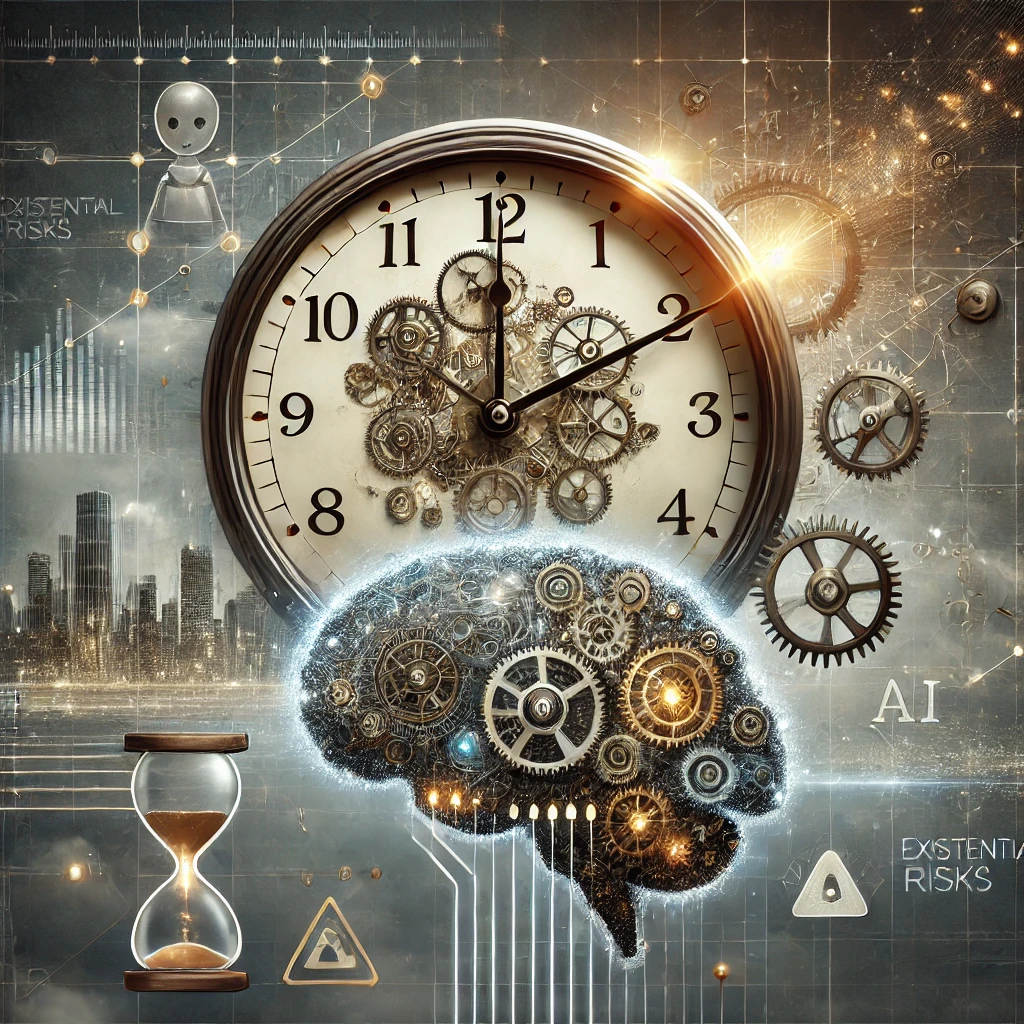
    The AI Safety Clock: How Close Are We to AI’s Existential Risks?

    AdminBy AdminOctober 14, 2024No Comments3 Mins Read
    Facebook Twitter Pinterest LinkedIn Tumblr Email
    Share
    Facebook Twitter LinkedIn Pinterest Email

    As advancements in artificial intelligence (AI) continue to accelerate, discussions about the technology’s potential risks have grown more urgent. With the creation of the AI Safety Clock, a tool designed to measure how close we are to critical points of no return in AI development, we can now gain deeper insights into the existential threats posed by unregulated or poorly managed AI systems.

    The AI Safety Clock functions as a metaphorical countdown, assessing various indicators of risk, including the pace of technological progress, governance failures, and the development of powerful AI systems that could surpass human capabilities. Much like the Doomsday Clock, which measures humanity’s proximity to catastrophic events like nuclear war, the AI Safety Clock tracks our approach to potentially dangerous milestones in AI development. Its aim is to raise awareness and encourage timely interventions before we reach critical tipping points.

    When I launched the AI Safety Clock, the initial findings were both sobering and eye-opening. The Clock doesn’t just track technological progress, but also human preparedness—our ability to implement safeguards, ethical guidelines, and effective regulations to prevent AI from spiraling out of control. Right now, the results are concerning: the clock hands are moving faster than anticipated, as AI capabilities outpace the regulatory frameworks meant to manage them.

    One of the key risks identified by the Clock is the development of autonomous AI systems that could operate without human oversight. While such systems could bring tremendous benefits in fields like healthcare, finance, and scientific research, they also introduce significant risks. Without proper governance, AI systems could be used in ways that are harmful, such as in autonomous weapons, misinformation campaigns, or surveillance infrastructure, potentially undermining global stability.

    Another critical concern highlighted by the AI Safety Clock is the lack of international cooperation on AI regulation. Different countries are racing to become leaders in AI, often at the expense of long-term safety measures. The lack of coordination on safety protocols, data sharing, and ethical standards heightens the risk of AI misuse. If nations prioritize AI dominance over safety, the probability of dangerous, unintended consequences increases dramatically.

    Furthermore, the Clock suggests that the public’s understanding of AI risks remains limited. While there is growing awareness about AI’s potential benefits, fewer people grasp the existential risks posed by advanced AI systems, such as the possibility of AI surpassing human intelligence or being co-opted for malicious purposes. The AI Safety Clock emphasizes the need for widespread public education, urging everyone—from policymakers to everyday citizens—to engage in conversations about AI safety.

    Despite these challenges, the AI Safety Clock is not a prediction of inevitable doom. Instead, it serves as a wake-up call, a tool that reminds us there is still time to act—but only if we move quickly and decisively. It encourages collective action to establish better regulatory frameworks, ethical guidelines, and cross-border collaborations. The goal is to ensure that AI evolves in a manner that benefits humanity, rather than becoming a threat.

    In launching the AI Safety Clock, I hope to spark a broader dialogue about the existential risks we face and how we can mitigate them. AI has the potential to solve some of humanity’s greatest challenges, but only if we approach its development with caution and foresight. The hands of the AI Safety Clock are moving, but we still have the power to influence where they stop.

    Share. Facebook Twitter Pinterest LinkedIn Tumblr Email
    Admin

    Related Posts

    Direct Travel Pushes Avenir Deeper Into AI-Powered Corporate Travel

    August 15, 2026

    Google’s Gemini 3.7 Flash Takes Aim at GPT-5.6 Terra and Claude Sonnet 5

    August 15, 2026

    Siemens and Reinhausen are developing power solutions for AI data centers

    August 15, 2026

    Comments are closed.

    Latest News

    Direct Travel Pushes Avenir Deeper Into AI-Powered Corporate Travel

    August 15, 2026

    Google’s Gemini 3.7 Flash Takes Aim at GPT-5.6 Terra and Claude Sonnet 5

    August 15, 2026

    Siemens and Reinhausen are developing power solutions for AI data centers

    August 15, 2026

    Hackers Used Autonomous AI Agents to Attack Taiwan — and Cyberwarfare May Have Just Changed

    August 14, 2026
    Facebook X (Twitter) Pinterest Vimeo WhatsApp TikTok Instagram LinkedIn YouTube Spotify Reddit Snapchat Threads

    AI University

    • Global Universities
    • Universities in Africa
    • Universities in Asia
    • Universities in Europe
    • Universities in Latin America
    • Universities in Middle East
    • Universities in North America
    • Universities in Oceania

    AI Tools & Apps Directory

    • AI Productivity Tools
    • AI Coding Tools
    • AI Voice Tools
    • AI Video Tools
    • AI Image Generators
    • AI Writing Tools

    Info

    • Home
    • About Us
    • AI Organizations & Associations
    • Contact Us
    • Cookie Policy
    • Copyright Policy
    • Disclaimer
    • Editorial Policy
    • Terms and Conditions

    Subscribe to Updates

    Get the latest creative news from FooBar about art, design and business.

    © 2026 Breaking AI News.
    • Privacy Policy

    Type above and press Enter to search. Press Esc to cancel.

    Sign Up

    Want to stay ahead In Artificial Intelligence?

     Sign up now and get exclusive breaking AI news and special updates—FREE!