


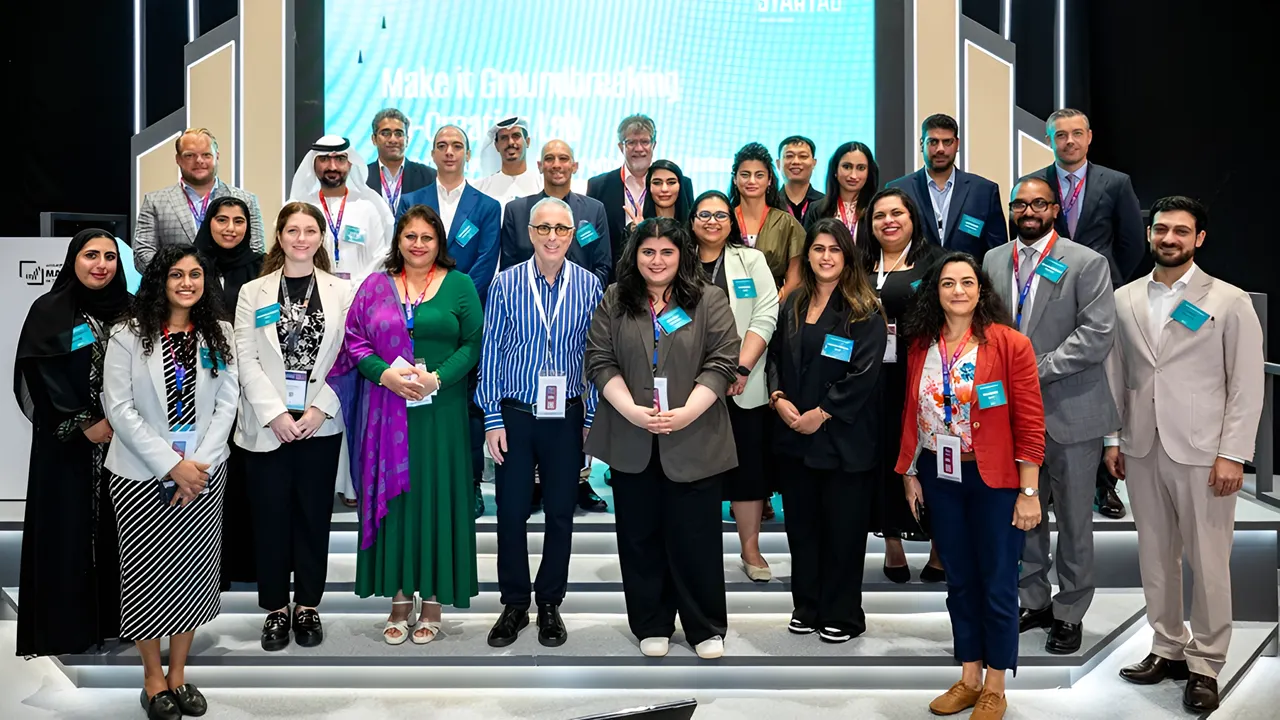
Abu Dhabi startup accelerator startAD has launched a new AI Adoption Barometer for the UAE, and the findings say something pretty clear: healthcare organisations are interested in AI, some are already testing it, but the money and structure around adoption are still catching up.
The Barometer was developed through startAD’s AI for Good initiative, with support from Google.org. It is described as the first practitioner-informed snapshot of how healthcare and social impact organisations in the UAE are actually approaching AI, not just talking about it. The research draws on insights from 52 UAE-based organisations across healthcare and social impact sectors.
UAE Healthcare Is Moving Toward AI, But Not Evenly
The strongest signal from the report comes from healthcare. According to the Barometer, 81% of surveyed UAE healthcare organisations already have defined AI use cases. That is not a small number. It suggests AI is no longer sitting in the “maybe one day” folder for much of the sector.
More than half of the surveyed healthcare institutions, around 58%, are already piloting or deploying AI solutions. That means some organisations have moved beyond internal discussions and are now testing AI in real workflows.
But then comes the awkward part. Around 42% of healthcare organisations surveyed said they have no dedicated AI budget. So the interest is there. The use cases are there. Even pilots are happening. But a large part of the sector still appears to be trying to adopt AI without ring-fenced funding behind it.
That is where the adoption gap starts to show.
AI Budgets Remain a Problem
AI adoption in healthcare is not just about buying software or launching a chatbot. It needs governance, staff training, testing, privacy safeguards, workflow redesign, and proper measurement. Without a dedicated budget, those pieces become harder to sustain.
This is why the Barometer matters. It shows that the UAE healthcare sector is not starting from zero. Far from it. Many organisations already know where AI could help. The harder question now is whether they can turn that early momentum into long-term deployment.
A pilot can look impressive. A real deployment is different. It needs ownership, funding, compliance, and a reason to survive after the first announcement fades.
Social Impact Organisations Face a Different Challenge
The social impact sector appears to be at an earlier stage. While healthcare organisations are already defining use cases and testing tools, many social impact organisations are still figuring out where AI fits in the first place.
That is not necessarily a weakness. It may simply reflect different resources, different teams, and different operating pressures. Social impact organisations often have to be more careful with limited budgets, sensitive communities, and mission-driven outcomes.
For them, the first challenge is not always deployment. It is understanding which AI use cases are worth pursuing at all.
startAD Publishes AI Implementation Playbooks
Alongside the Barometer, startAD also released two practical implementation playbooks. The first is the AI Use Case Discovery Playbook, which is designed to help non-technical teams move from an idea to a testable AI use case. The second is the Evaluate and Pilot AI Solutions Playbook, which focuses on assessing AI tools and running responsible pilots.
This part is important because many organisations do not fail at AI because they lack interest. They fail because the jump from “we should use AI” to “here is a tested, governed, measurable pilot” is bigger than expected.
The new startAD AI Resource Hub gives organisations access to these playbooks and related support materials. That makes the Barometer less of a static report and more of a practical entry point for teams trying to move carefully but seriously.
AI for Good Programme Shows Early Results
startAD’s AI for Good programme has already worked with five organisations through 13 AI readiness workshops. According to the report, the programme delivered a 43% overall increase in AI readiness among participants and mobilised nearly 200 university students and solution builders across the UAE, Saudi Arabia, and the wider MENA region.
That student and builder involvement is worth noting. AI adoption in healthcare and social impact will not only depend on hospitals, nonprofits, or government entities. It will also depend on the regional talent pipeline around them.
The UAE has been pushing hard on AI across public services, business, and research. Healthcare is one of the areas where that ambition can become very visible, but also very sensitive. Mistakes matter more here. Responsible deployment cannot be treated as decoration.
Why This Matters for UAE AI Adoption
The startAD AI Adoption Barometer gives a more grounded view of where AI adoption stands in the UAE’s healthcare and social impact sectors. It is not just hype. It is not just a national AI vision statement either. It shows the messy middle: use cases are forming, pilots are happening, but budgets and internal capacity are not always in place.
That may be the real story.
The UAE healthcare sector seems ready to experiment with AI. Some organisations are already doing it. But the next stage will require more than enthusiasm. It will need dedicated funding, better governance, stronger internal skills, and practical frameworks that help teams decide what should actually be built.
startAD’s Barometer does not claim that AI adoption is complete. It shows that the work has properly begun.
