


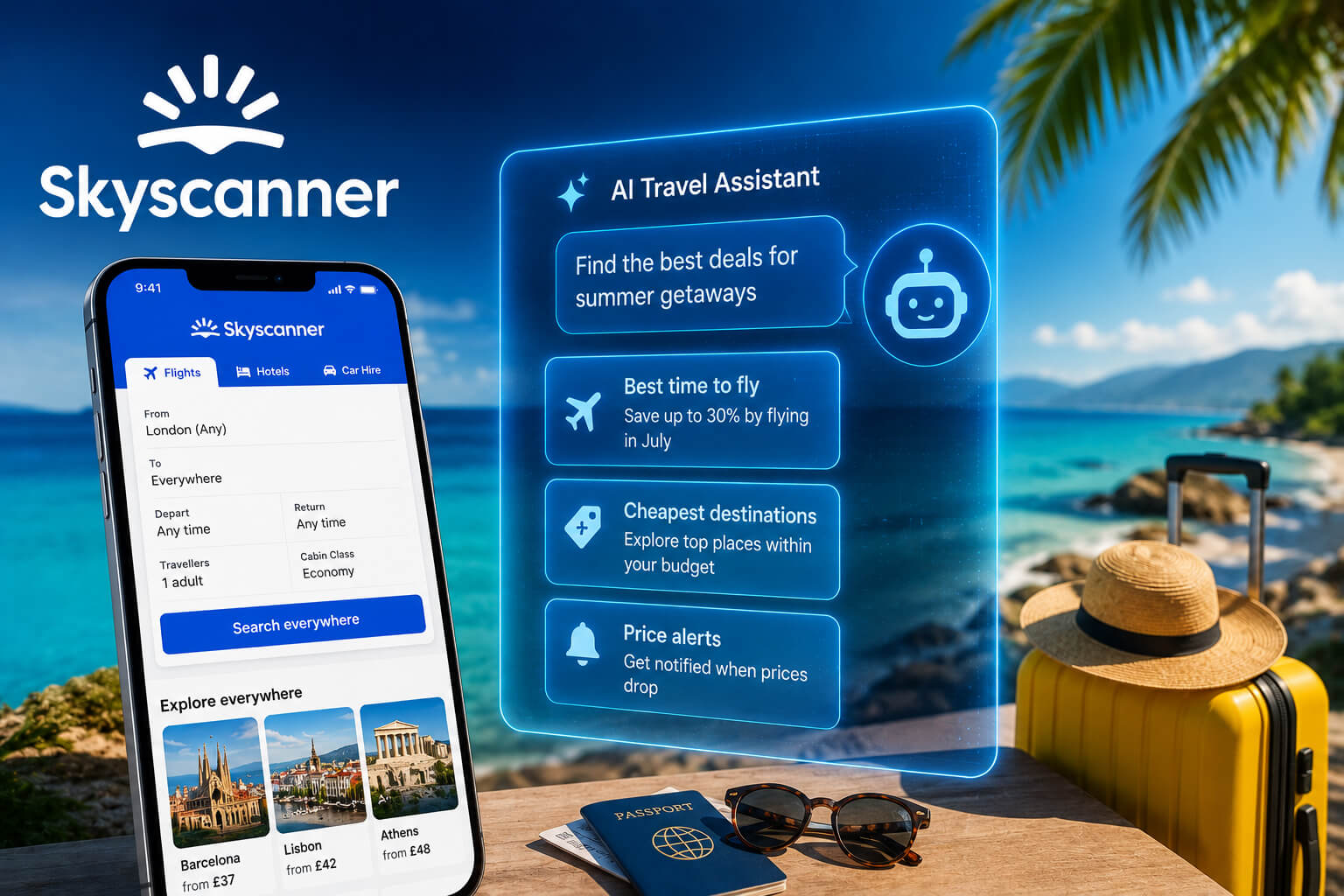
Skyscanner is pushing deeper into AI-powered travel planning with new beta tools designed to make trip discovery, flight tracking, car hire, and accommodation search feel less like a spreadsheet exercise.
The company has introduced new and updated features across its app and website, including AI travel discovery, a road trip planner, live flight tracking, expanded hotel options, and more aggressive price-drop discovery. The move comes as travellers continue to look for cheaper, easier ways to plan summer trips without jumping between too many tabs.
Skyscanner Wants AI to Start the Travel Search
The most direct AI feature is Explore with AI, a beta tool available on Skyscanner’s website. Instead of asking users to enter fixed destinations and dates, the tool lets travellers type natural prompts such as looking for cheap flights to Japan in December.
That sounds simple, but it changes the starting point. Travel search usually begins with a destination. Skyscanner is testing a version where the traveller begins with a mood, budget, season, or loose idea, then AI helps shape the options.
The tool can show destination data side by side, including pricing, weather, flight duration, and trip style. It also adds AI-generated insights, such as when a month is typically cheaper than another or when a destination fits a certain travel vibe. Early testing showed that 60% of travellers clicked through to view flight options from Explore with AI searches, according to the company.
Road Trip Planning Gets an AI Layer Too
Skyscanner is also testing an AI-powered Road trip planner, built for travellers who want more than a basic route map.
Users enter their car hire pick-up location, dates, and preferred route type. From there, the tool can generate different journey styles, including scenic routes, faster trips, cultural exploration, adventure trips, or slower relaxing getaways.
The AI then suggests stops, attractions, and points of interest along the way, while also helping users find car hire options that fit the trip. It is not just “rent a car and go.” It is closer to turning car hire into a planned travel experience.
Flight Tracking Becomes Part of the Same Travel Flow
AI discovery is getting most of the attention, but Skyscanner is also improving practical travel tools.
Its updated Flight Tracker now includes real-time flight information such as departures, arrivals, flight status, gates, terminals, and baggage belt details for millions of flights. That matters because travel planning does not stop after booking. The stressful part often comes later, at the airport, when one gate change or delayed bag can wreck the mood fast.
DROPS Pushes Harder on Cheaper Flights
Skyscanner’s app feature DROPS is also being expanded. The tool highlights flights that have dropped by 20% or more in the last seven days.
According to Skyscanner, users can now see up to 822% more deals per day, with the platform scanning 100 billion prices to spot lower fares. That is a lot of number-crunching sitting behind what looks like a simple alert. And honestly, that is where AI and automation in travel search start to feel useful: not flashy, just quietly hunting for better prices before someone else books them.
Stays Expands Beyond Standard Hotels
Skyscanner has also rebranded and expanded its Stays platform. The accommodation search now includes more than five million properties, up from 3.5 million, covering everything from hostels and five-star hotels to campsites, capsule accommodation, farm getaways, and floating stays.
This fits the wider shift in travel search. People are not always looking for the cheapest hotel near the airport anymore. Sometimes they want something weird, quiet, remote, family-friendly, or just different enough to make the trip feel worth it.
AI Is Becoming Travel’s New Planning Assistant
Skyscanner CEO Bryan Batista said the company is experimenting with how AI can make each stage of travel simpler and more intuitive, from destination discovery to road trip planning. He also pointed to live flight tracking and mapping price insights as part of the company’s wider effort to help travellers make more confident decisions.
That is probably the bigger story here. AI in travel is moving beyond chatbots. It is being built into search, pricing, route planning, comparison tools, and real-time journey support.
Not every traveller will call that “AI.” Many will just see a better way to find a cheaper flight, plan a road trip, or avoid airport confusion. And that may be the point.
