


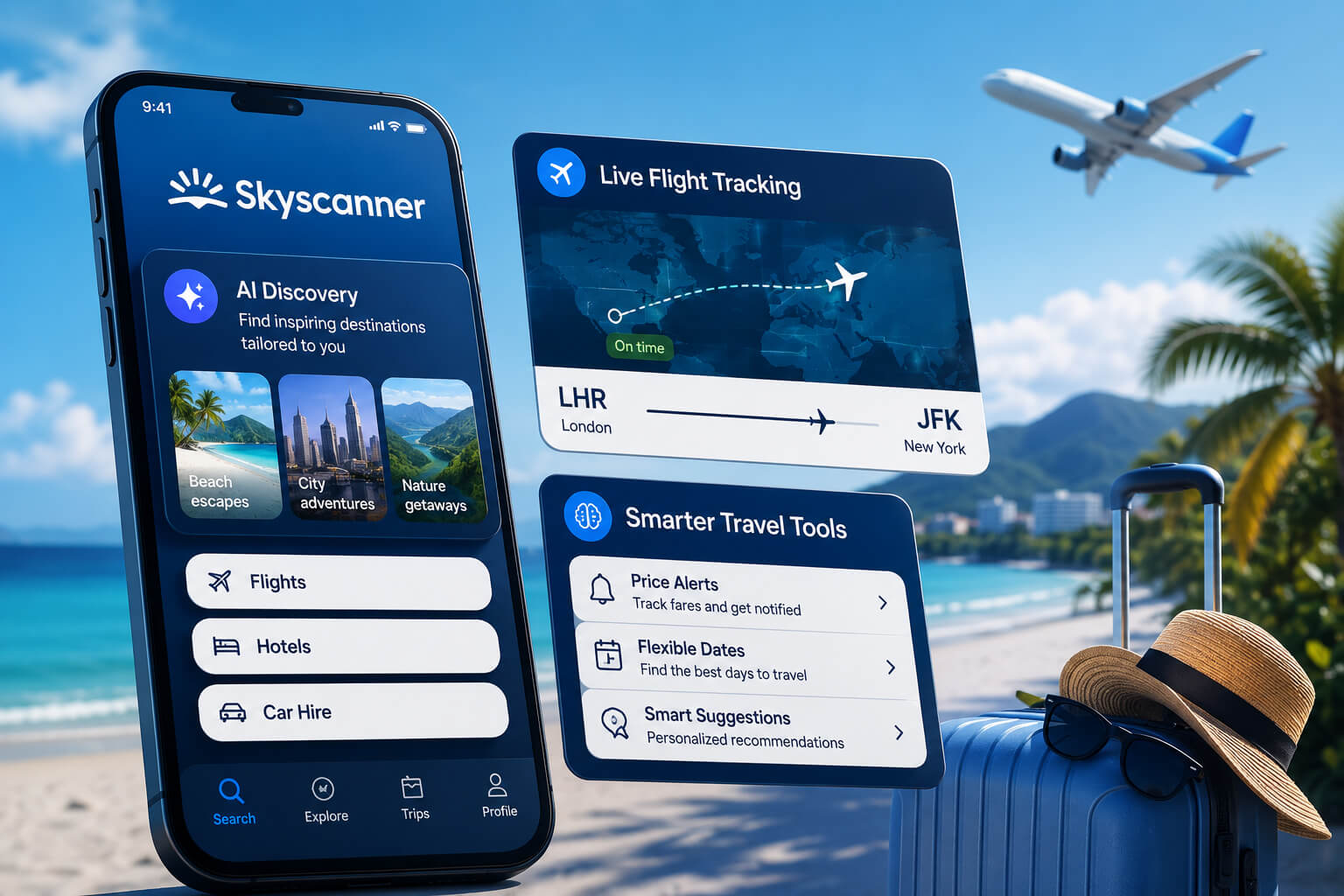
Skyscanner is pushing further into AI-powered travel planning with new beta tools and updated product features designed to make summer travel easier, cheaper, and less stressful for users. This marks a significant step in the evolution of AI travel discovery, as the company, already known for helping travellers compare flights, accommodation, and car hire, is now experimenting with tools that feel less like traditional search boxes and more like travel assistants.
This is where travel technology is heading. People do not always want to start with fixed dates, fixed airports, or one perfect destination in mind. Sometimes they just want to say what kind of trip they are thinking about and see what comes back. Cheap flights to Japan in December. A relaxing road trip. A family-friendly beach escape. A place with good weather and lower prices. That kind of loose, human travel search is exactly where AI starts to make sense.
Explore With AI Makes Search Feel More Natural
One of the main updates is Explore with AI, a beta travel discovery tool available on Skyscanner’s website. Instead of forcing travellers to search through the usual destination-and-date format, the tool lets them describe what they want in natural language.
A traveller can type something like “help me find cheap flights to Japan in December,” and the system returns personalised recommendations based on that request. It can also show destination data side by side, including pricing, weather, flight duration, and the general feel of a place. That matters because travel planning is rarely just about the cheapest ticket. People also care about timing, mood, weather, distance, and whether the destination actually fits the trip they have in mind.
Skyscanner said the tool is currently available in English-speaking markets, with plans to expand. Early testing also showed strong engagement, with 60% of travellers clicking through to view flight options generated from Explore with AI searches.
Travel Discovery Is Becoming Less Rigid
The interesting part is not only that Skyscanner is using AI. Everyone says they are using AI now. The more important shift is how AI changes the starting point of travel planning.
Traditional travel search works best when the traveller already knows what they want. Destination, dates, budget, airport. But many people start earlier than that. They are still comparing ideas.Maybe they want somewhere warm. Others may prefer a city break that is not too expensive. Some travelers may want a beach trip but do not care which country. In other cases, they simply want the cheapest decent option.
AI travel discovery gives platforms a way to meet users at that messy stage. Not fully decided. Not totally open-ended either. Somewhere in between.
Road Trip Planner Turns AI Into an Itinerary Tool
Skyscanner is also testing a Road trip planner that creates personalised itineraries based on travel style. Users can enter their car hire pick-up location, travel dates, and preferred route type, then choose from options such as scenic routes, fastest routes, cultural exploration, adventure trips, or relaxing getaways.
The AI then builds a route with suggested stops, attractions, and points of interest along the way. It also recommends car hire options that match the journey. This is a practical use of AI because road trips usually involve more than one decision. The route matters. The timing matters. The stops matter. The car matters too.
For travellers, this could remove some of the friction from planning. Instead of bouncing between maps, blogs, car hire pages, and destination guides, they can get a structured starting point in one place.
Live Flight Tracking Adds Real-Time Confidence
Skyscanner is not only focusing on discovery. The company is also expanding real-time flight information through its Flight Tracker feature. The update includes details such as departures, arrivals, flight status, gates, terminals, and baggage belt information for millions of flights.
That may sound basic, but during peak travel periods, small pieces of live information can make a big difference. A gate change, a delay, a baggage belt update, or a terminal detail can save travellers from panic at the airport. It also shows how travel apps are trying to cover more of the journey, not just the booking stage.
Booking the trip is one part. Getting through the trip smoothly is another.
DROPS Gives Travellers More Price Drop Alerts
Skyscanner is also continuing to develop DROPS, its app feature that highlights flights with major price drops. The company said travellers can now see up to 822% more deals per day, with Skyscanner scanning 100 billion prices to find flights that have dropped by 20% or more in the last seven days.
This is still one of the clearest areas where travel platforms can create value. Prices move constantly, and most travellers do not have the time or patience to check the same route again and again. A tool that surfaces sudden drops gives users a better chance of catching a deal before it disappears.
It also fits the current travel mood. People still want to travel, but they are watching costs more carefully. Cheap does not always mean low quality. Sometimes it just means knowing when to book.
Skyscanner Expands Stays Beyond Traditional Hotels
Skyscanner’s rebranded Stays platform has also grown, now offering more than five million properties, up from 3.5 million. The wider selection includes everything from hostels and five-star hotels to campsites, capsule accommodation, farm stays, and floating stays.
This reflects how travel habits have changed. Not every traveller wants a standard hotel room. Some want unusual stays. Some want budget options. Others want something more local, flexible, or experience-driven. Expanding accommodation choice gives Skyscanner a stronger position beyond flights and car hire.
AI Travel Tools Are Becoming the New Booking Layer
The bigger story here is not one feature. It is the direction of travel search itself.
Skyscanner is moving toward a model where AI travel tools help travellers discover, compare, plan, track, and save across more stages of the journey. Explore with AI helps users find ideas. Road trip planner turns preferences into routes. DROPS watches prices. Flight Tracker supports the travel day itself. Stays gives users more accommodation choices.
That is a broader travel assistant strategy, even if it is still being tested feature by feature.
The travel industry has spent years making booking faster. Now the real race is making planning feel easier. Less rigid. Less scattered. More personal. AI is not replacing the traveller’s decision, at least not here. It is helping narrow the noise.
And for summer travellers trying to save money, avoid stress, and find the right trip faster, that may be enough to make these tools useful.
