

Close Menu
    What's Hot
    Technology & Innovation

    Avnet Brings AI Ecosystem Together to Scale Edge AI in Singapore

    By Art RyanJune 30, 20260

    Edge AI Moves Past the Demo Stage Avnet is bringing a wide technology ecosystem together…

    AI Could Unlock $79 Billion for the Philippines by 2030, Accenture Says

    June 30, 2026

    From AI to AGI: Should Nations Build Intelligence as Critical Infrastructure?

    June 30, 2026

    From Digital Transformation to AI Transformation: Enterprise Leadership Enters Its Next Phase at AI Vision 2030

    June 30, 2026
    Facebook X (Twitter) Instagram
    Facebook X (Twitter) Instagram
    Breaking AI News
    Tuesday, June 30
    • Home
    • Events
    • Videos
      • Machine Can Think Summit 2026
      • Step Dubai Conference 2026
    • Technology & Innovation

      Avnet Brings AI Ecosystem Together to Scale Edge AI in Singapore

      June 30, 2026

      AI Could Unlock $79 Billion for the Philippines by 2030, Accenture Says

      June 30, 2026

      From AI to AGI: Should Nations Build Intelligence as Critical Infrastructure?

      June 30, 2026

      From Digital Transformation to AI Transformation: Enterprise Leadership Enters Its Next Phase at AI Vision 2030

      June 30, 2026

      Predict, Diagnose, Act: AI’s Revolution in Healthcare Outcomes at Global AI Show Riyadh 2026

      June 30, 2026
    • Business & Marketing

      AI Could Unlock $79 Billion for the Philippines by 2030, Accenture Says

      June 30, 2026

      AI Debt Boom Reshapes U.S. Bond Market as Tech Giants Fund Infrastructure Expansion

      June 30, 2026

      xAI Grok 4.5 Enters Private Beta at Tesla and SpaceX

      June 29, 2026

      Meta Gemini AI Tokens: Why Meta Is Asking Staff to Use Gemini More Efficiently

      June 29, 2026

      MGX Raises Nearly $50 Billion to Accelerate Global AI Investments

      June 28, 2026
    • Industry Applications

      AI Could Unlock $79 Billion for the Philippines by 2030, Accenture Says

      June 30, 2026

      Dubai Launches World’s First AI Park Design Challenge for Al Safa 2 Park

      June 30, 2026

      HP and OpenAI Alliance Expands Frontier AI Use for Enterprise Cybersecurity

      June 30, 2026

      South Korea’s $519 Billion Chip Bet Powers Its AI Economy

      June 30, 2026

      OpenAI Tests Excel and PowerPoint Controls for Codex

      June 30, 2026
    • Trends & Insights

      Gemini 3.5 Pro Leaks Reveal Key Details About Google’s Next AI Model

      June 30, 2026

      Claude’s Agentic Work Reshapes Anthropic Economic Index

      June 28, 2026

      Tech Equity Sales Renew AI Debt Binge Worries as AI Infrastructure Spending Accelerates

      June 28, 2026

      UAE Investors Lead the World in AI Adoption, HSBC Survey Finds

      June 26, 2026

      Google Says Generative AI Is Creating a New Language for Marketing and Creativity at Cannes Lions 2026

      June 24, 2026
    • AI in Travel

      Global AI Show Riyadh 2026 Opens in 2 Days as Saudi Arabia Prepares for Major AI Conference

      June 27, 2026

      Agoda AI Travel Features Bring Real-Time Updates and Smarter Trip Planning

      June 26, 2026

      AI Travel Agents Could Disrupt Brand Loyalty as Travelers Embrace Smarter Booking Decisions

      June 26, 2026

      Jamaica Tourism 3.0 Uses AI to Transform Visitor Economy Into National Development Platform

      June 26, 2026

      Southwest Airlines Teams Up with AWS to Speed Up AI and Cloud Modernization

      June 21, 2026
    Breaking AI News
    Home » Russia and Iran Exploit AI to Interfere in 2024 U.S. Election, Sparking National Security Concerns
    Technology & Innovation

    Russia and Iran Exploit AI to Interfere in 2024 U.S. Election, Sparking National Security Concerns

    AdminBy AdminSeptember 25, 2024No Comments5 Mins Read
    Facebook Twitter Pinterest LinkedIn Tumblr Email
    Share
    Facebook Twitter LinkedIn Pinterest Email

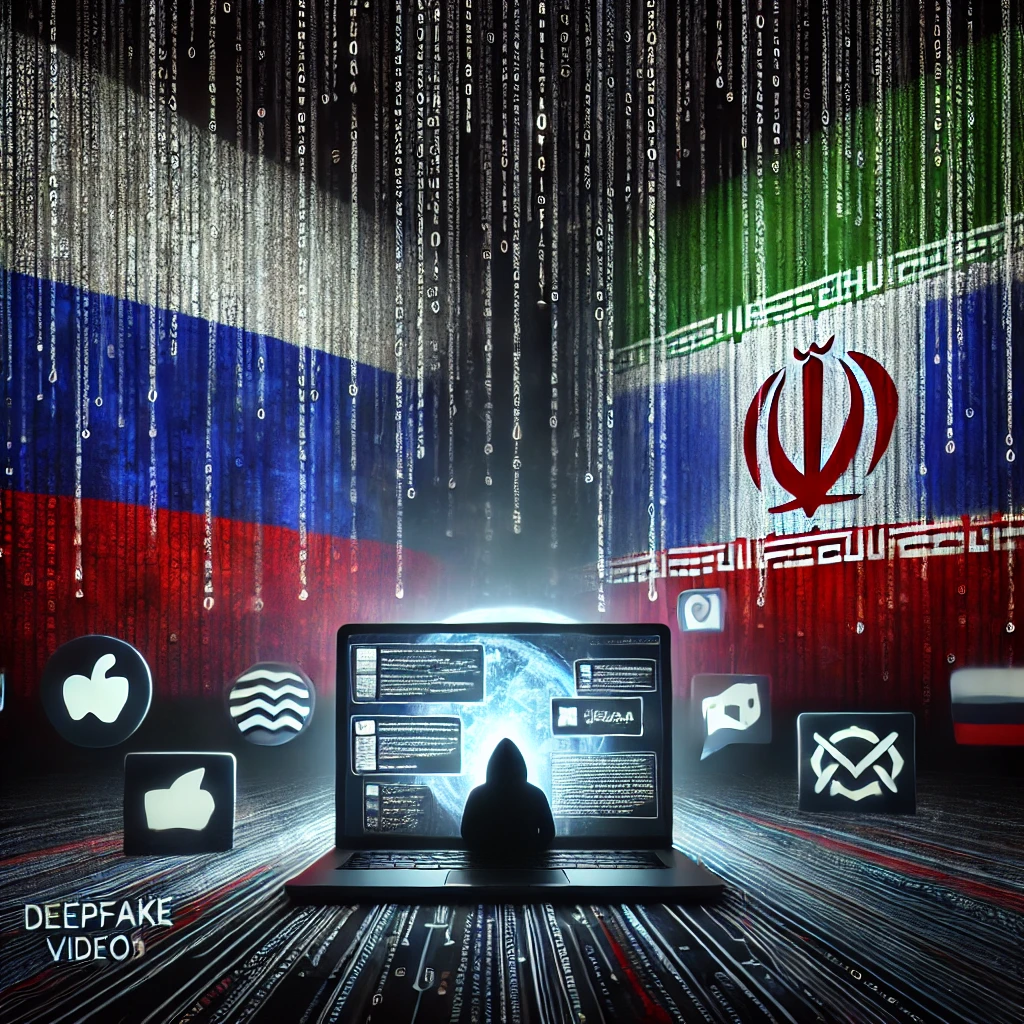
    As the 2024 U.S. presidential election approaches, intelligence agencies have raised alarms over sophisticated attempts by foreign powers, specifically Russia and Iran, to influence the political landscape using artificial intelligence (AI). These efforts mark an evolution from traditional disinformation tactics, reflecting the increasingly potent role of AI in shaping global political outcomes.

    AI-Driven Influence Campaigns

    U.S. officials have observed a surge in disinformation and propaganda campaigns originating from Russian and Iranian operatives, using AI to generate highly convincing and tailored content. These efforts primarily target social media platforms, aiming to manipulate voter opinions and sow discord among the electorate.

    AI tools allow these foreign actors to rapidly create deepfake videos, highly personalized fake news articles, and even synthetic commentary that mimics genuine political discussions. What makes AI particularly dangerous in this context is its ability to refine messaging based on real-time feedback from online engagement, creating a self-sustaining cycle of influence that is more precise and harder to detect than past attempts.

    Russia’s Renewed Influence Strategy

    Russia has long been accused of meddling in U.S. elections, notably in 2016. In the current election cycle, Russia’s use of AI technology signals a shift from their previous approaches. Rather than relying on human troll farms and fake accounts, Russia is reportedly employing AI systems to create authentic-looking social media profiles that interact with voters in a seemingly genuine manner. These AI-generated accounts are harder to track due to their ability to adapt quickly, mirroring the behaviors of actual users and evading detection by social media platforms.

    The Kremlin’s primary goals appear to be amplifying divisive issues, undermining trust in the electoral process, and destabilizing the political atmosphere. Analysts note that Russia’s AI influence operations are increasingly sophisticated, deploying deepfakes and AI-generated media to distort the statements of political candidates and generate confusion about their positions.

    Iran’s Role and Motivations

    Iran’s involvement in AI-powered election interference represents a significant development. U.S. intelligence reports suggest that Iran is also leveraging AI tools to spread false narratives and inflame social tensions, although its motivations may differ from Russia’s. Tehran is reportedly focusing on stoking discontent within specific communities, such as religious and ethnic minorities, to provoke disunity and distract from U.S. foreign policy objectives in the Middle East.

    Iranian influence campaigns also use AI to push targeted misinformation about U.S. foreign policy and economic conditions, aiming to exploit vulnerabilities in domestic public opinion. While less sophisticated than Russia’s efforts, Iran’s AI capabilities have grown significantly in recent years, with the country investing in its own AI research and development programs.

    Challenges in Countering AI-Driven Disinformation

    The use of AI in disinformation poses a formidable challenge for U.S. officials and social media platforms, who are struggling to keep up with the speed and scale of these operations. Traditional methods for identifying and removing fake accounts or misleading content are becoming less effective as AI systems become better at evading detection.

    “AI is a game-changer in disinformation campaigns,” said a U.S. intelligence official familiar with ongoing investigations. “These systems can quickly adapt, producing content that is more believable and harder to fact-check in real-time. The problem is not just identifying disinformation but doing so before it has a chance to go viral.”

    Social media companies, including Facebook, X (formerly Twitter), and TikTok, have ramped up their efforts to combat foreign interference by improving AI-driven content moderation tools. However, the sophistication of Russia and Iran’s tactics is putting these systems to the test.

    Heightened Awareness and Policy Responses

    In response to the growing threat, U.S. lawmakers are calling for stronger measures to safeguard the 2024 election. Some are urging for more stringent oversight of social media platforms and AI technologies that can be weaponized by foreign actors. Proposed legislation would require greater transparency in AI-generated content and impose penalties on tech companies that fail to detect and remove malicious AI-driven disinformation.

    “Protecting our democracy is an urgent priority, and we cannot allow foreign adversaries to use advanced AI tools to undermine the integrity of our elections,” said Senator Maria Cantwell, a key proponent of AI regulation. “The government, tech companies, and the public must work together to stop this evolving threat.”

    As the election draws near, U.S. intelligence agencies are ramping up monitoring efforts, coordinating with allies, and working with technology firms to track and mitigate AI-driven foreign interference. Nonetheless, the rapidly advancing capabilities of AI pose a daunting challenge for those trying to defend the democratic process.

    A New Era of Election Interference

    The use of AI by Russia and Iran in election influence campaigns underscores the arrival of a new era in geopolitical manipulation. With the ability to produce increasingly sophisticated content at scale, AI is reshaping the landscape of political disinformation, raising concerns not only for the U.S. but for democracies worldwide.

    While the full impact of these AI-driven efforts on the 2024 election remains uncertain, one thing is clear: foreign interference has evolved, and the tools used to combat it will need to evolve even faster.

    Share. Facebook Twitter Pinterest LinkedIn Tumblr Email
    Admin

    Related Posts

    Avnet Brings AI Ecosystem Together to Scale Edge AI in Singapore

    June 30, 2026

    AI Could Unlock $79 Billion for the Philippines by 2030, Accenture Says

    June 30, 2026

    From AI to AGI: Should Nations Build Intelligence as Critical Infrastructure?

    June 30, 2026

    Comments are closed.

    Latest News

    Avnet Brings AI Ecosystem Together to Scale Edge AI in Singapore

    June 30, 2026

    AI Could Unlock $79 Billion for the Philippines by 2030, Accenture Says

    June 30, 2026

    From AI to AGI: Should Nations Build Intelligence as Critical Infrastructure?

    June 30, 2026

    From Digital Transformation to AI Transformation: Enterprise Leadership Enters Its Next Phase at AI Vision 2030

    June 30, 2026
    Facebook X (Twitter) Pinterest Vimeo WhatsApp TikTok Instagram LinkedIn YouTube Spotify Reddit Snapchat Threads

    AI University

    • Global Universities
    • Universities in Africa
    • Universities in Asia
    • Universities in Europe
    • Universities in Latin America
    • Universities in Middle East
    • Universities in North America
    • Universities in Oceania

    AI Tools & Apps Directory

    • AI Productivity Tools
    • AI Coding Tools
    • AI Voice Tools
    • AI Video Tools
    • AI Image Generators
    • AI Writing Tools

    Info

    • Home
    • About Us
    • AI Organizations & Associations
    • Contact Us
    • Cookie Policy
    • Copyright Policy
    • Disclaimer
    • Editorial Policy
    • Terms and Conditions

    Subscribe to Updates

    Get the latest creative news from FooBar about art, design and business.

    © 2026 Breaking AI News.
    • Privacy Policy

    Type above and press Enter to search. Press Esc to cancel.

    Sign Up

    Want to stay ahead In Artificial Intelligence?

     Sign up now and get exclusive breaking AI news and special updates—FREE!