


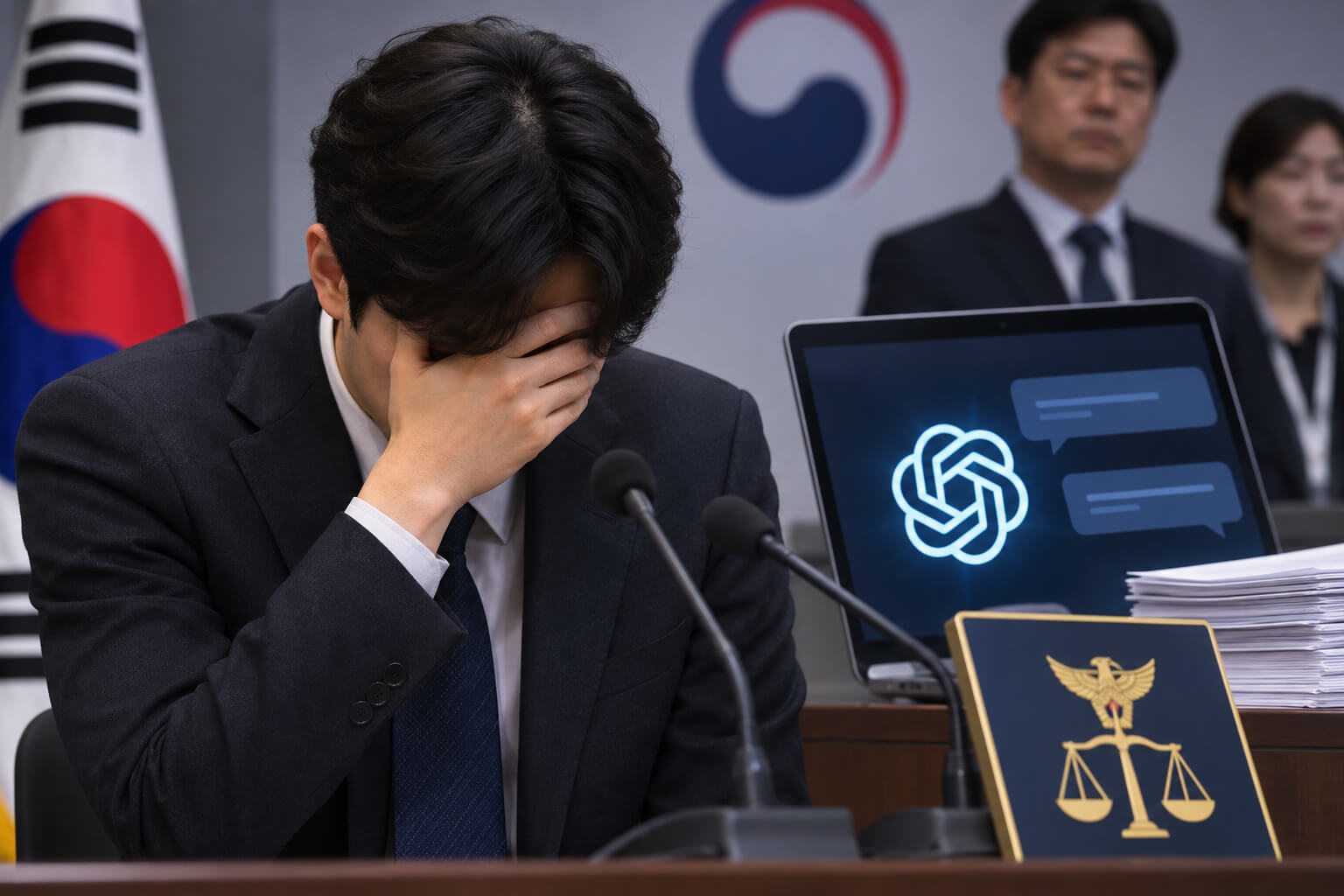
South Korea’s examination system is facing uncomfortable questions after the country’s highest-scoring tax accountant candidate admitted using artificial intelligence to cheat during a national qualification exam.
The candidate, identified by local media as Han Won-seok, confessed on November 15, 2026, that he had used generative AI and electronic devices during examinations held earlier this year. His performance had initially attracted attention for all the right reasons. He answered 159 out of 160 questions correctly in the first round, earning an extraordinary 397.5 points out of 400.
Those numbers eventually became a source of suspicion. Other candidates questioned how someone could achieve such remarkable results in one of South Korea’s demanding professional examinations. What followed was a confession, a police investigation and renewed debate over whether traditional exam security can keep up with AI technology.
How South Korea’s Top Tax Exam Scorer Used AI to Cheat
Han admitted using a miniature camera to capture examination questions before submitting them to a generative AI system. He then accessed the AI-generated responses through his smartphone, allowing him to receive assistance while completing a test intended to measure his own professional knowledge.
The method was relatively straightforward, but its implications are serious. Instead of relying entirely on preparation and subject expertise, Han reportedly used connected devices to obtain answers during the examination. The combination of a small camera, a smartphone and generative AI gave him access to information that other candidates were not permitted to use.
His confession appeared in a video published through the YouTube channel of his lawyer, Lee Don-ho. Han apologized for his actions and acknowledged that his results did not reflect an honest examination performance. He also submitted a written confession to the Seoul Metropolitan Police Agency.
The admission reportedly extended beyond the tax accountant examination. Han acknowledged using a similar approach during the first stage of South Korea’s certified public accountant examination, raising further questions about how frequently AI-assisted cheating may have gone undetected.
Near-Perfect Examination Results Sparked Online Suspicion
Han’s examination scores were difficult to overlook. During the first round, he achieved perfect marks in three subjects and missed only one question across the entire 160-question test. His second-round performance was equally impressive, with a reported score of 663 out of 800 points.
For candidates who had spent months studying complex accounting and taxation subjects, the results seemed almost unbelievable. Discussions began circulating online, with some questioning whether unauthorized technology could have contributed to his performance.
Speculation initially focused on AI-powered smart glasses and other discreet electronic devices that could potentially provide answers without attracting attention. Han denied the allegations before eventually admitting that he had used AI and electronic equipment during the examinations.
His confession turned what had been an online controversy into a formal investigation. It also exposed a troubling weakness in examination supervision, as the unauthorized assistance apparently went unnoticed while the tests were taking place.
Police Investigation Raises Questions About Exam Security
South Korean police began investigating after Han submitted his confession, with the Seoul Metropolitan Police Agency taking responsibility for examining the circumstances surrounding the alleged misconduct.
Investigators are expected to determine how the devices were used, whether examination regulations were violated and whether additional offenses occurred. Authorities must also establish whether the same methods were used during other professional qualification tests.
The consequences could be substantial. South Korea’s Ministry of Finance and Economy reportedly plans to invalidate Han’s examination qualification. Candidates found responsible for cheating may also face restrictions preventing them from taking certain national examinations for five years.
The case has placed examination organizers under scrutiny. Professional certification tests depend on strict supervision and consistent rules, particularly when passing results determine eligibility for careers involving financial reporting, taxation and public trust.
If a candidate can secretly photograph questions and obtain AI-generated responses during an examination, the effectiveness of existing monitoring procedures becomes difficult to defend.
AI Cheating Scandal Comes Before South Korea’s College Entrance Exam
The controversy emerged just days before South Korea’s College Scholastic Ability Test, widely known as the Suneung, scheduled for November 19, 2026.
The national examination is among the country’s most important academic events, influencing university admissions and future career opportunities for hundreds of thousands of students. Any suggestion that AI-assisted cheating could undermine its fairness is likely to attract serious public concern.
Government officials have acknowledged growing anxiety about unauthorized AI use in examination settings. The presidential office has also announced plans to examine suspected AI-related misconduct across national qualification tests, while education authorities face pressure to strengthen supervision.
Reports involving AI-enabled smart glasses and other electronic devices have already raised concerns about the changing nature of examination cheating. Han’s confession adds another example of how readily available technology can challenge systems built around conventional monitoring methods.
Why Generative AI Is Making Exam Cheating Harder to Detect
Generative AI has introduced a different kind of challenge for examination authorities. Candidates no longer need another person to supply answers or access to lengthy reference materials. A connected device can send questions to an AI system and receive responses within seconds.
Miniature cameras make the process even more difficult to identify. Combined with smartphones or wearable technology, they can create a discreet channel between an examination room and an external AI service.
That creates problems for supervisors who primarily watch for visible misconduct, suspicious behavior or prohibited materials. A candidate using compact electronic equipment may not display the obvious warning signs associated with traditional cheating.
The South Korean case also raises questions about professional competence. Tax accountants handle sensitive financial information and must demonstrate a reliable understanding of complicated regulations. An examination result obtained through unauthorized AI assistance cannot provide the same assurance of individual expertise.
AI itself is not the problem in every educational setting. Many institutions already use the technology for studying, research and professional training. The concern arises when candidates secretly rely on it during assessments that explicitly prohibit outside assistance.
South Korea Faces Pressure to Strengthen AI Exam Regulations
Han’s confession could accelerate efforts to update examination security across South Korea. Authorities may need to reconsider how electronic devices are screened, how supervisors identify suspicious behavior and whether existing regulations adequately address AI-assisted misconduct.
More sophisticated detection equipment could help, although technology-based safeguards come with practical challenges. Examination organizers must balance security, cost, privacy and the need to maintain a reasonable testing environment.
The bigger issue is confidence. Candidates expect professional qualification examinations to reward preparation, knowledge and legitimate performance. When someone reaches the top of the rankings through unauthorized assistance, that trust can disappear quickly.
For South Korea, the immediate challenge is investigating the case and protecting upcoming examinations. For educational institutions and licensing authorities elsewhere, the incident offers a warning about how quickly AI can change the risks surrounding traditional assessments.
Generative AI is becoming more capable and accessible. Examination systems designed for an earlier generation of technology may have to change just as quickly.
Sources
- Reuters – Top Scorer on South Korean Tax Exam Confesses to Cheating With AI – November 15, 2026.
- Yonhap News Agency – South Korean News Coverage – November 15, 2026.
- The Korea Times – South Korea News and Legal Affairs – November 15, 2026.
