


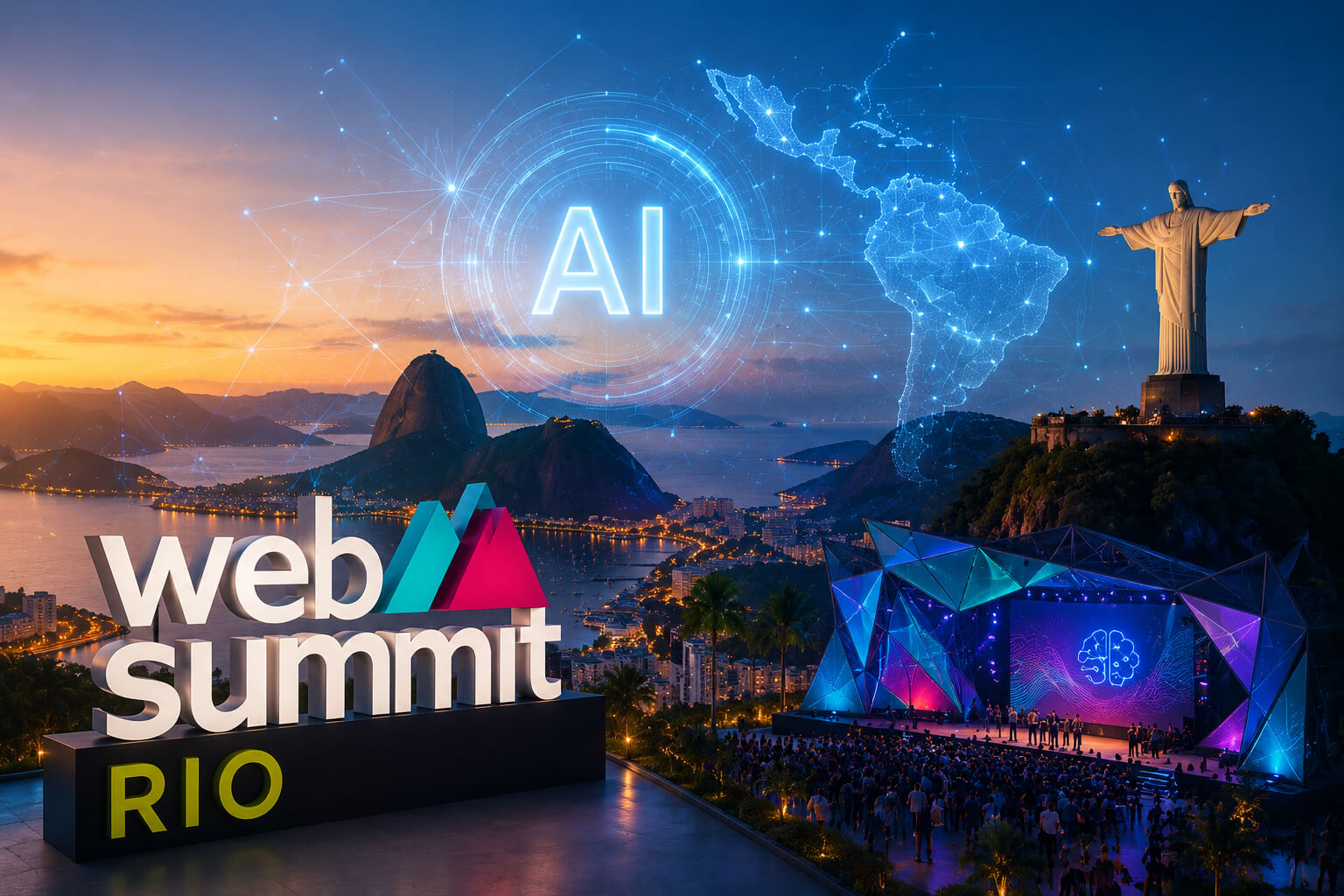
Rio de Janeiro is making a major push to become one of Latin America’s leading artificial intelligence hubs. This comes as Web Summit Rio opens in the city, bringing together thousands of technology founders, investors, executives, and policymakers.
The event arrives at a pivotal moment for Brazil’s tech ambitions. Beyond its global reputation for tourism, culture, beaches, and major international events, Rio is now working to position itself as a serious player in the AI economy.
At the center of that strategy is Rio AI City, a large-scale artificial intelligence infrastructure project planned for the city’s Olympic Park. The project is set to combine AI-ready data centers with offices, retail, hospitality and public spaces. In doing so, it will form a new technology district to meet the rising demand for AI computing power.
Rio AI City Could Transform the City’s Tech Future
Rio AI City is a major digital infrastructure project designed for the next phase of artificial intelligence growth. Developers plan to build more than 30 modular data center buildings across a 900,000-square-meter site.
The project also prioritizes renewable energy. This focus is becoming increasingly important as AI companies face greater scrutiny over the environmental impact of large-scale data centers. The first phase could deliver 1.5GW of energy capacity. Over time, developers could expand that capacity to 3.2GW.
For Rio, this is more than a real estate or technology development. It signals an effort to move the city beyond its traditional image as a tourism destination. Instead, it aims toward a new role as a regional platform for AI, digital infrastructure, investment, and global business events.
Web Summit Rio Strengthens the City’s AI Ambitions
Web Summit Rio gives the city a powerful stage to present that vision. As Latin America’s largest technology event, the summit brings international attention to Brazil’s startup ecosystem. It also highlights the region’s role in the future of technology.
The timing is important. Artificial intelligence is driving demand for new computing infrastructure, renewable energy partnerships, skilled talent, and policy coordination. Cities that can combine those elements are increasingly competing to become the next major AI hubs.
Rio’s pitch is that it can offer both global visibility and hard infrastructure. With major events, international connectivity, and a planned AI district, the city is building a stronger case for investors and technology companies looking at Latin America.
Why Rio’s AI Push Matters for Latin America
Latin America is generally perceived as an emerging technology market, not a global innovation hub. Rio’s AI strategy is a challenge to that perception.
Should it be built, Rio AI City may provide the region with a stronger physical infrastructure for AI development. Instead of relying only on imported infrastructure or overseas data centers, Latin America could begin building more of its own AI backbone.
That could have long-term implications for startups, enterprise AI adoption, cloud services, research, tourism technology, fintech, logistics, and public-sector innovation across the region.
From Tourism Icon to AI Infrastructure Hub
Rio is already one of the world’s most recognizable cities. But in the AI era, global destinations are competing on more than visitor numbers. They are competing on connectivity, sustainability, digital capacity, investment appeal, and their ability to host conversations that shape the future.
By merging Web Summit Rio with the Rio AI City vision, the city is positioning itself as more than a tourist destination. It is aiming to become a platform city where tourism, aviation, business events, artificial intelligence, and digital infrastructure intersect.
The success of that ambition will depend on execution, investment, energy access, talent development, and long-term policy support. But Rio’s message is clear: it wants to be at the center of Latin America’s AI future.
The Bottom Line
Rio de Janeiro’s move into artificial intelligence signals a major shift in how the city wants to be seen globally. With Web Summit Rio bringing the global tech community and Rio AI City promising to build large-scale AI infrastructure, the city is positioning itself as a strong contender for Latin America’s next AI capital.
Rio is betting that its mix of global appeal, renewable energy capacity, marquee events and digital infrastructure can help write the next chapter of technology growth in the region. This comes as AI reshapes economies around the world.
