


AI in healthcare is not just about faster reports or smarter dashboards anymore. The rise of AI health tech is transforming patient care in ways we’ve never seen before.
That part is already happening.
The harder question now is this: how does AI actually become useful at the point of care? Not in a boardroom. Away from the demo stage. Beyond the slide deck. Inside the hospital, beside the clinician, when a decision has to be made.
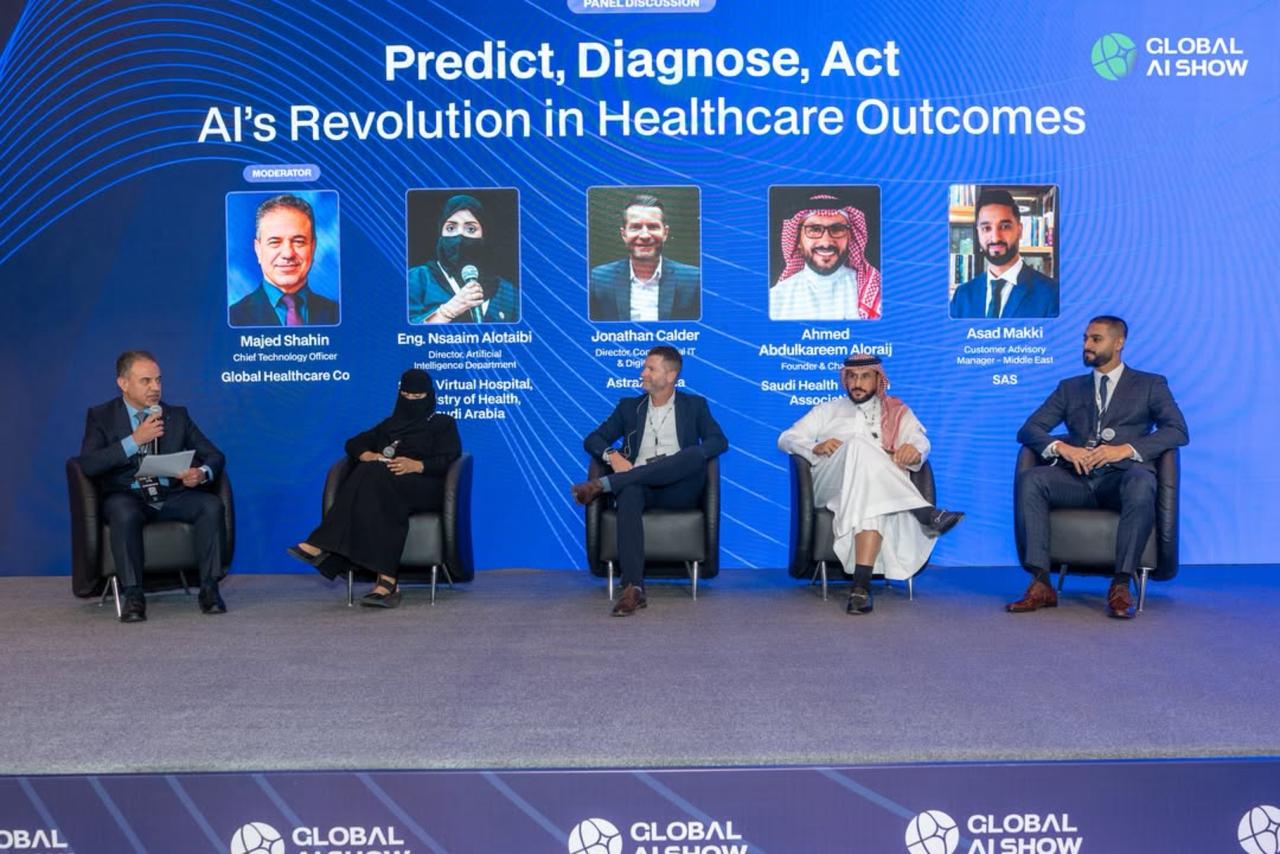
That was the heart of the panel discussion “Predict, Diagnose, Act: AI’s Revolution in Healthcare Outcomes.” The session brought together healthcare technology leaders, AI specialists, and industry experts to examine how AI health tech is changing clinical outcomes, diagnostic quality, and the future of patient care.
The discussion has already taken place, but the issues raised remain very current as hospitals, ministries, and health systems accelerate their adoption of artificial intelligence.
Moving AI Prediction Into Daily Clinical Workflows
One of the biggest challenges in AI health tech is not prediction itself.
Many healthcare systems can already generate predictive insights. They can identify patient risk, highlight patterns, and show early warning signals through dashboards.
But dashboards do not treat patients.
For AI to make a real impact, predictive intelligence has to move into daily clinical workflows. It has to reach doctors, nurses, specialists, and care teams at the right moment. The insight must arrive on time. It should not be buried in another system. Most importantly, it cannot be delivered in a way that adds more work to an already overloaded hospital environment.
This is where implementation becomes more important than the algorithm.
A model may predict deterioration, read scans, or detect risk. But if that result does not fit naturally into clinical routines, it may be ignored. If it interrupts the wrong person at the wrong time, it becomes noise. If it is not trusted, it becomes another unused tool.
The panel discussion highlighted that the next stage of AI in healthcare depends on workflow integration. Prediction has to become action.
From Treating Illness to Anticipating Risk
Healthcare has traditionally been reactive.
A patient feels symptoms. A test is ordered. A diagnosis is made. Treatment begins.
AI changes that sequence.
With enough clinical data, AI systems can help identify risk before symptoms appear. This could support earlier intervention, better resource planning, and more personalized care. In some cases, it may help providers shift from responding to illness to preventing serious complications before they happen.
That is a major shift.
Instead of only asking, “What disease does this patient have now?” healthcare teams can begin asking, “What risk is building, and what can we do before it becomes critical?”
This is one of the strongest promises of AI health tech. It gives healthcare systems a chance to act earlier, especially in areas such as chronic disease management, hospital readmission risk, diagnostic imaging, population health, and emergency care.
Still, prediction alone is not enough.
A risk score must lead to a clear next step. Otherwise, it is just another number.
Making Diagnostic Quality More Consistent
Another major theme of the discussion was diagnostic consistency.
Healthcare quality can vary between hospitals, regions, and skill levels. A patient in a major urban hospital may have access to experienced specialists and advanced diagnostic tools. A patient in a remote area may not.
AI can help narrow that gap.
By supporting image analysis, clinical decision support, pattern recognition, and triage, AI can help raise the baseline level of diagnostic quality across different healthcare settings. It can assist less experienced clinicians. The technology can also help reduce missed signals. In addition, it can support faster review of complex cases.
This does not mean replacing doctors.
It means giving clinicians another layer of support, especially in high-pressure environments where speed and accuracy matter.
Used properly, AI can help make healthcare less dependent on location and uneven access to expertise. That matters for large health systems, rural care, telemedicine, and cross-region healthcare delivery.
The Explainability Gap Is Still a Trust Problem
One of the toughest questions raised during the panel was around explainability.
How do clinicians trust AI-driven diagnostic recommendations if they cannot understand how the system reached its conclusion?
This is not a small issue.
In healthcare, trust is not optional. A doctor cannot simply accept a black-box answer when a patient’s diagnosis, treatment, or safety is involved.
AI systems need to explain their reasoning in a way that clinicians can use. That does not mean flooding doctors with technical model details. It means showing relevant evidence, confidence levels, clinical context, risk factors, and why a recommendation was made.
The explainability gap is both a technical and human problem.
Technically, AI systems must become more transparent, auditable, and clinically interpretable. Humanly, they must fit the way healthcare professionals think and make decisions.
If clinicians do not trust the output, AI adoption will stall.
If they trust it too blindly, that becomes dangerous too.
The balance is not simple.
AI in the Care Loop
The discussion made one thing clear: AI’s role in healthcare is becoming more active.
Healthcare AI is no longer just about analyzing old data. Instead, it helps clinicians make better decisions in real time. More importantly, it connects prediction, diagnosis, and action inside the care loop.
That requires stronger data systems, better governance, clinical validation, explainable models, and close collaboration between technology providers and healthcare professionals.
The panel was moderated by Majed Shahin, Chief Technology Officer at Global Healthcare Co.
Panelists included Eng. Nsaaim Alotaibi, Director of the Artificial Intelligence Department at SEHA Virtual Hospital, Ministry of Health – Saudi Arabia; Jonathan Calder, Director of Commercial IT and Digital KSA at AstraZeneca; Ahmed AlOraij, Founder and Chairman of the Saudi Health Tourism Association; and Asad Makki, Customer Advisory Manager – Middle East at SAS.
Their discussion reflected the direction healthcare AI is heading: less hype, more clinical usefulness.
The future of AI health tech will not be judged by how impressive the model sounds. It will be judged by whether it helps healthcare teams make better decisions, detect risks earlier, improve diagnostic consistency, and deliver better outcomes for patients.
That is where the real revolution begins.
