


The AI conversation is getting less theoretical.
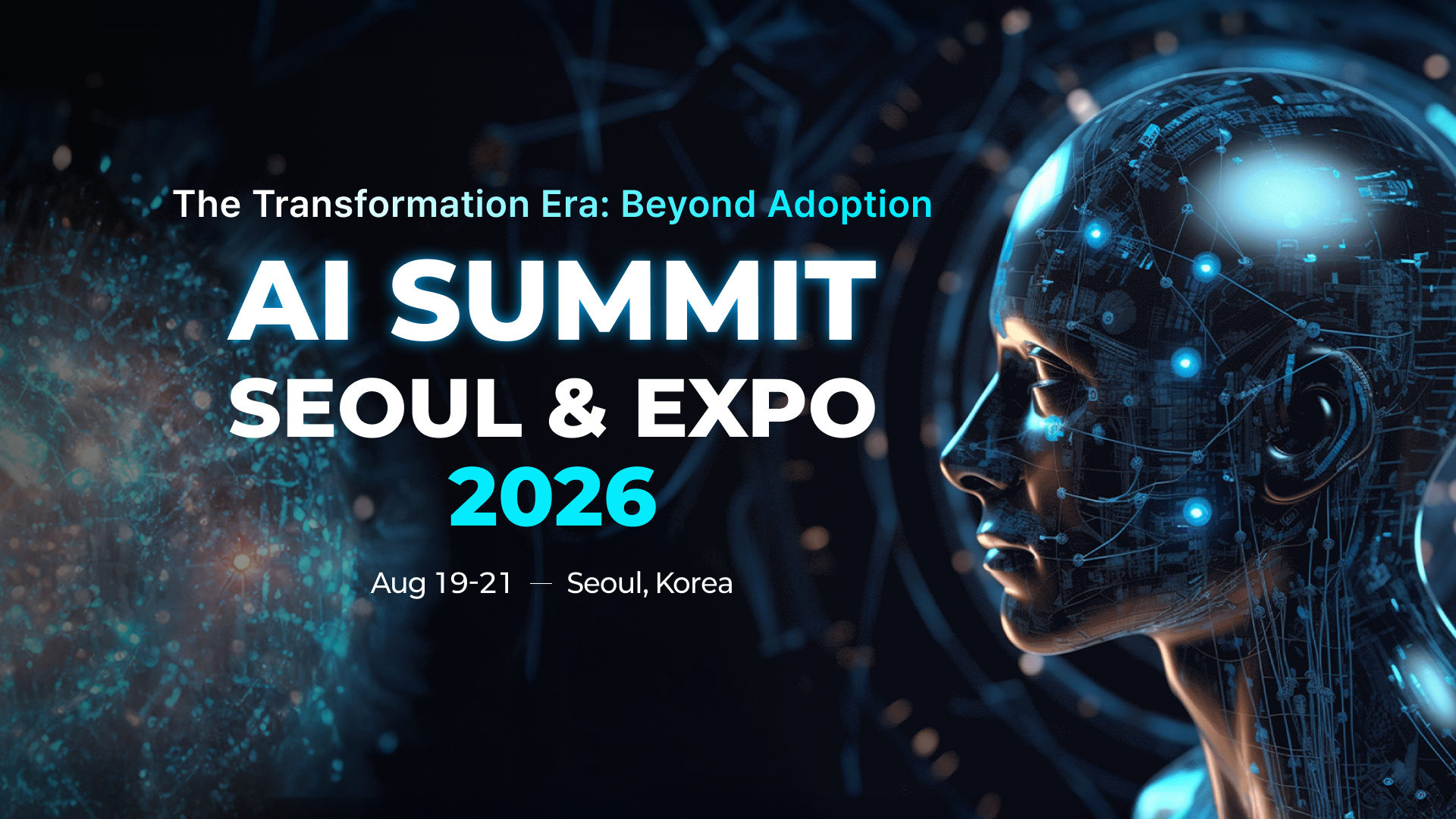
That shift will be hard to miss at AI Summit Seoul 2026, which returns to Seoul from August 19 to August 21, 2026, at the COEX Grand Ballroom and Exhibition Hall B. The event is positioning itself around applied AI — not simply bigger models or another round of chatbot demos, but what happens when companies actually try to put AI into factories, healthcare systems, enterprise workflows, infrastructure and everyday products.
Hosted by the publisher of MIT Technology Review Korea and organized by DMK Global, COEX and KITA, the summit brings together international researchers, technology companies, enterprise leaders and AI builders at a moment when the industry is moving quickly toward agents and increasingly autonomous systems.
Agentic AI Moves From Buzzword to Deployment Problem
Agentic AI is one of the clearest themes running through the 2026 program.
The first conference day, August 19, is built around AI frontiers, agentic AI and connected intelligence. The agenda does not treat AI agents as a single topic tucked into one panel. They show up repeatedly: enterprise agents, agent orchestration, agentic commerce, data infrastructure for agents and the practical limits of autonomous systems.
That makes sense. Companies are no longer asking only whether an AI model can generate a useful answer. They are asking whether software can retrieve information, make decisions, call tools, coordinate other agents and complete actual work without creating an operational mess.
One session from You.com COO Alex Triplett focuses on a surprisingly basic weakness: an AI agent is only as useful as the information it can actually see. NVIDIA Platform Architect Michael Albada is scheduled to discuss building enterprise AI agents from foundation models through real-world deployment. Other sessions move deeper into orchestration, Agentic RAG, payments and enterprise execution.
The AI agent era sounds futuristic until companies have to connect those agents to messy databases, permissions, security policies and existing software. Then it becomes an engineering problem.
Physical AI Is Becoming Harder to Ignore
Software agents are only part of the story in Seoul.
Physical AI has its own place in the program, including discussions around robotics, digital twins, manufacturing and AI systems that interact directly with the physical world.
LIG Nex1 CTO Seungyoung Lee is scheduled to speak about how physical AI could transform industry, while former Google DeepMind robotics lead Pannag Sanketi will address the difficult parts of building physical AI at scale. Hyundai Motor is also represented in a session examining how robots and embodied AI could reshape factories and cities.
This is where the AI race gets more complicated.
A language model can fail inside a browser and produce a bad response. An AI-controlled system operating around machines, vehicles or industrial equipment has very different consequences. Reliability, sensing, latency, hardware and safety all start mattering at once.
The industry’s next major AI platforms may not live entirely behind a chat window.
Hyundai, LG, Samsung and Other Enterprises Bring AI Into the Real World
AI Summit Seoul 2026 also has a strong industrial flavor.
Hyundai AutoEver’s Tony Jang is scheduled to discuss Hyundai Motor’s move from the smart factory toward what the company describes as an AI factory. LG Energy Solution will examine AI in battery research and smart manufacturing, while Samsung Electronics is represented in a session exploring self-evolving data and how AI systems could learn to create more of the data they need.
Other scheduled participants span organizations including Google DeepMind, Microsoft Research, NVIDIA, DHL, HP Korea, Adobe, GitLab, Seagate, ClickHouse and Miro.
That mix matters. AI events can easily become model showcases. Seoul’s program looks more interested in what happens after the model exists.
How do you run it reliably? Who controls the data? Can it survive inside a large company? Does it produce enough value to justify the AI infrastructure bill?
Those questions aren’t as glamorous as announcing another benchmark record. They may be considerably more important.
AI for Scientific Discovery and Healthcare Gets a Bigger Stage
Healthcare is another area where the agenda reaches beyond generic generative AI.
Microsoft Research General Manager Hoifung Poon is scheduled to present a keynote on AI for scientific discovery, including virtual patients and AI-powered medicine. Another session examines the transition from AI assistants toward increasingly autonomous healthcare systems.
The idea of autonomous healthcare will inevitably raise difficult questions about oversight and reliability. Still, the direction is notable.
AI is being pushed beyond helping someone write an email or summarize a document. Researchers and companies increasingly want models to reason over scientific information, assist discovery and participate in complex professional workflows. Other applications are already moving in that direction, including AI-powered healthcare and wearable systems designed to identify injury risk.
Healthcare may become one of the clearest tests of how far that ambition can safely go.
The AI Model Race May Be Becoming Less Important
One of the more interesting questions appearing in the program is whether AI models themselves are becoming commoditized.
For the last several years, much of the industry has revolved around model announcements: larger context windows, better reasoning scores, multimodal capabilities and increasingly aggressive benchmark comparisons.
That competition isn’t disappearing. But businesses eventually care about what those models allow them to build.
The Seoul agenda reflects that shift. There are sessions on open-source models and generative AI, but they sit alongside infrastructure, sales, manufacturing, collaboration, data stacks, commerce, finance and operations.
The competitive advantage may gradually move away from simply owning access to a powerful model. Recent developments such as Gemini 3.7 Flash’s focus on coding and AI agents also show how model competition is increasingly being judged by what systems can accomplish in real workflows.
Data matters. Distribution matters. Integration matters. The workflow around the model may matter even more.
Seoul Is Building a Large AI Exhibition Around the Conference
The conference itself runs primarily through August 19 and 20, while the accompanying exhibition continues through August 21 at COEX Exhibition Hall B.
Organizers say the 2026 expo is planned for more than 150 exhibitors and 300 booths, with over 30,000 expo visitors expected across the three-day event. Conference materials separately point to more than 2,500 conference attendees and over 100 global speakers.
The exhibition also gives the event a different character from a keynote-only technology conference. Vendors, infrastructure companies and AI startups get a physical space to demonstrate what they have actually built.
There are side events too — including private roundtables, partner gatherings, networking receptions and other smaller sessions running around the main summit.
Why AI Summit Seoul 2026 Matters
There is no shortage of AI conferences in 2026.
What makes AI Summit Seoul 2026 worth watching is where its attention appears to be moving.
Agentic AI is leaving the demo phase. Physical AI is creeping into factories and robotics strategies. Enterprises are working out whether autonomous systems can operate inside existing organizations. AI infrastructure is becoming its own competitive layer. And companies that spent the last few years experimenting with generative AI now have to prove that those experiments can turn into durable businesses.
Seoul sits at an interesting intersection of all of this. South Korea already has major positions in semiconductors, electronics, automotive manufacturing, batteries and consumer technology. Putting increasingly capable AI into those industries could have consequences well beyond Korea.
Not every idea discussed at the summit will survive contact with the real world.
That may be exactly why the event is interesting.
AI Summit Seoul 2026 Event Details
Event: AI Summit Seoul & Expo 2026
Dates: August 19–21, 2026
Conference: August 19–20, 2026
Expo: August 19–21, 2026
Venue: COEX Grand Ballroom and Exhibition Hall B, Seoul, South Korea
Main themes: Agentic AI, AI agents, physical AI, generative AI, enterprise transformation, AI infrastructure, manufacturing, healthcare and applied AI
Sources
- AI Summit Seoul & Expo — Official Website
https://www.aisummitseoul.com/ - AI Summit Seoul 2026 — Official Agenda
https://www.aisummitseoul.com/agenda - AI Summit Seoul — Exhibition Information
https://www.aisummitseoul.com/exhibition-application - AI Summit Seoul — Expo Visitor Information
https://www.aisummitseoul.com/expo-visitor - AI Summit Seoul — Side Events
https://www.aisummitseoul.com/side-events
