


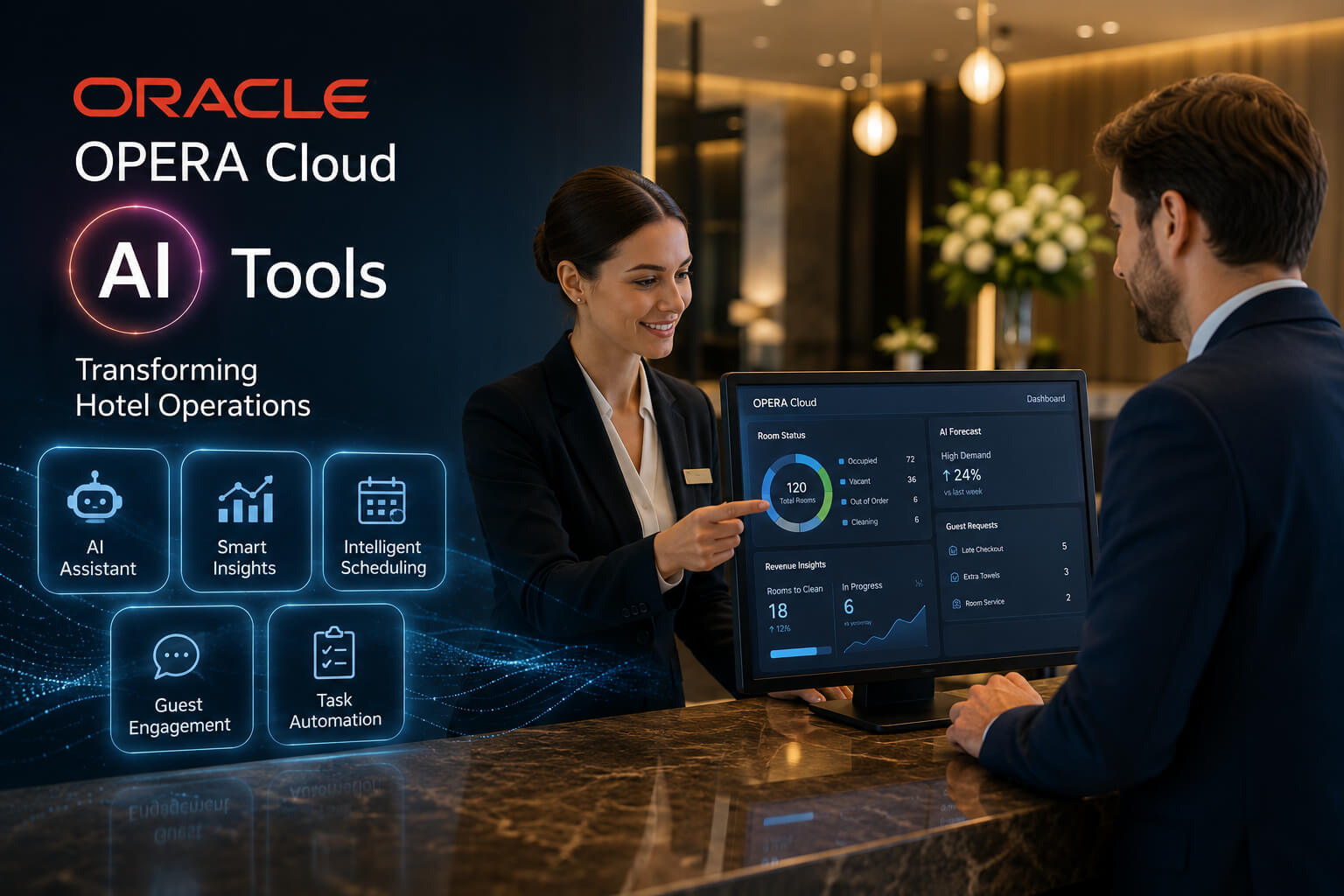
Oracle is bringing more artificial intelligence directly into hotel operations with the launch of new AI-powered capabilities inside Oracle OPERA Cloud. This is its hospitality management platform used by hotels, resorts, casinos, and cruise operators worldwide.
The new tools, introduced as part of Oracle OPERA Cloud Assistant, are designed to help hotel teams work faster and standardize processes across properties. Additionally, they aim to improve guest experiences and support revenue management without requiring a separate AI system.
According to Oracle, the new AI features are now available to OPERA Cloud customers worldwide at no additional cost.
AI Built Directly Into Hotel Workflows
Instead of forcing hotel staff to switch between systems, Oracle is embedding AI into existing OPERA Cloud workflows used by front desk, revenue, and operations teams.
The goal is to make AI more useful to hotel staff by putting help inside tools they’re already using every day. For example, staff can ask the system natural-language questions like how to run a report, complete a process or solve a guest issue.
This can help associates receive real-time assistance without having to sift through documentation or wait for a manager to become available. This feature could be particularly useful during busy check-in periods or staff onboarding, says Oracle.
More intelligent room assignments for better guest experiences
A key feature of the new Oracle OPERA Cloud AI update is AI-assisted room assignment.
The system suggests suitable rooms for each guest based on reservation details, guest preferences, stay history and operational requirements. This could help hotels better match travelers with preferred room features while reducing manual work for front desk teams.
For hotels this means quicker check-ins and a more personalized guest experience. For guests it can mean a better chance of getting a room that matches their expectations.
Rate Descriptions Created by AI
Oracle is also adding AI-created rate code descriptions to OPERA Cloud.
This feature leverages package details, rate attributes and structured information already available on the platform to create standard rate descriptions. It aims to improve consistency across all booking channels while reducing the administrative burden for hotel teams.
Having consistent rate information for hotel groups with multiple properties can help facilitate clearer pricing and better communication. As a result, it also helps support stronger revenue management practices.
AI-powered translation for international hotel brands
The update also features AI-powered translation for configuration descriptions and operational content.
This is aimed at global hotel brands that need to maintain consistent standards across multiple countries, regions, and languages. Oracle says the translation tools can help teams create ready-to-use multilingual content while supporting brand alignment and operational consistency.
Oracle Hospitality says its technology serves customers in more than 230 countries and territories. Therefore, multilingual support is a major part of its hotel technology strategy.
Wyndham Backs AI Push in Hospitality
Wyndham Hotels & Resorts is one of the major hotel groups highlighted in Oracle’s announcement. The company has more than 2,100 properties running on OPERA Cloud.
Scott Strickland, chief commercial officer at Wyndham Hotels & Resorts, said AI is changing how hotels operate and serve guests. Especially when it helps teams make better decisions, reduce complexity, generate revenue through upsells, and respond to changing guest needs.
Wyndham’s use of OPERA Cloud Assistant also reflects a broader push by hotel companies to bring AI into day-to-day operations. This differs from limiting it to experimental pilots.
Why it matters
Hotels are looking to AI to help address labor shortages, improve service quality and remove repetitive tasks. In response, Oracle is embedding the AI directly into hotel management workflows, which could make it easier to adopt for hotel teams already using OPERA Cloud.
Hotel operators may see the biggest benefit in practical efficiency. For example, AI tools can answer staff questions, suggest rooms, write rate descriptions, and translate content. These features can reduce manual work and help teams deliver more consistent service.
Meanwhile, Oracle’s rollout shows how enterprise AI is moving beyond chatbots and into specialized business software. Instead of working as a standalone product, AI is becoming a built-in layer across hotel operations.
The Bottom Line
For OPERA Cloud, Oracle’s latest AI features demonstrate that artificial intelligence is evolving into a central element of hospitality technology. With features that include operational guidance, smart room assignment, rate description generation, and multilingual support, Oracle is positioning OPERA Cloud as an AI-enabled platform for modern hotel management.
As hotels seek ways to improve productivity and guest satisfaction, embedded AI tools like Oracle OPERA Cloud Assistant could be an important part of how large hospitality businesses operate.
