


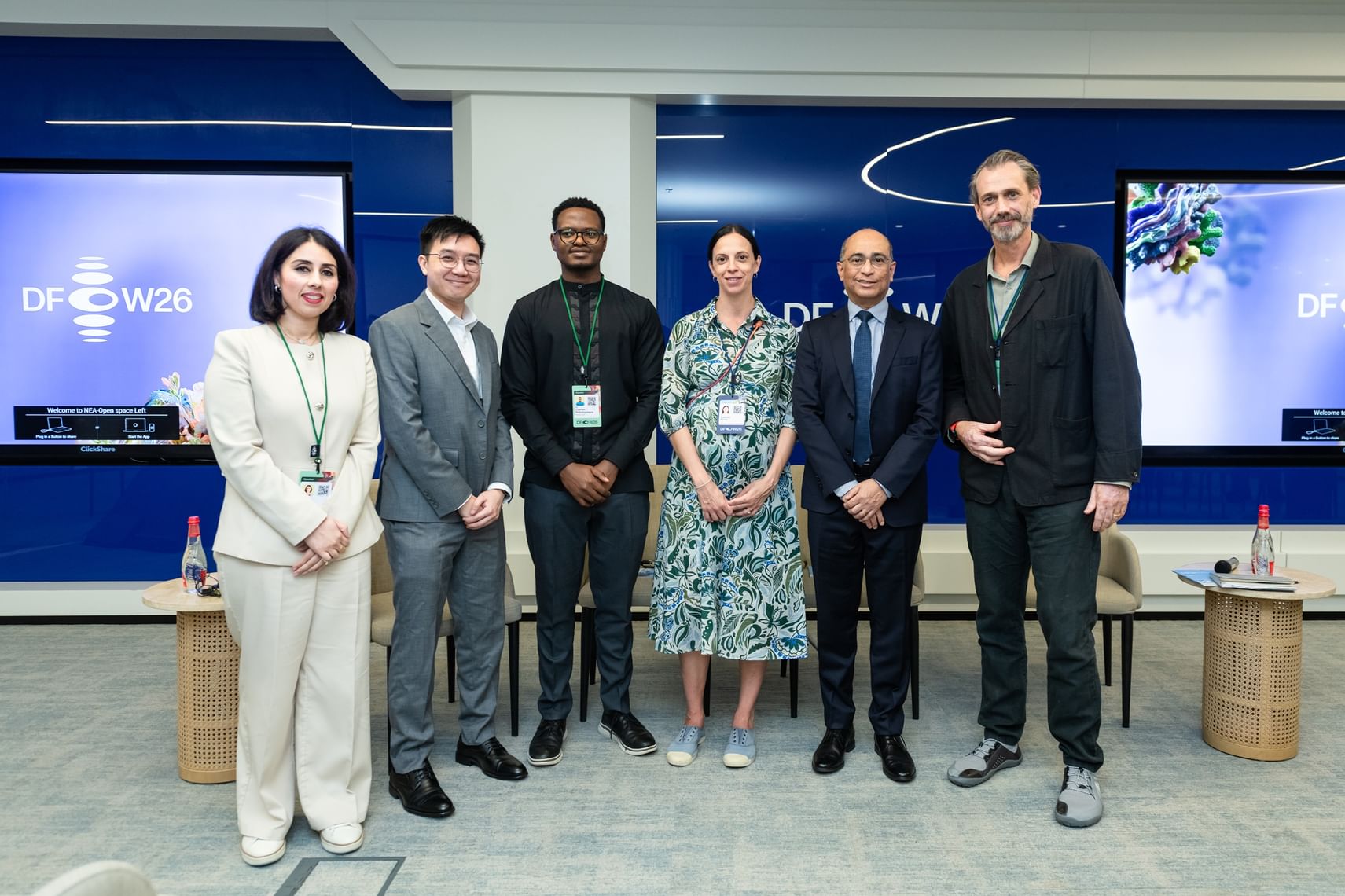
Artificial intelligence is moving quickly, but governments are still figuring out how to manage its growing influence on economies, public services and everyday life. At Dubai Future Week 2026, the United Arab Emirates, Malaysia and Rwanda offered a closer look at how different countries are approaching responsible AI development.
During a session titled “The Many Futures of AI Across Borders,” experts from the three countries’ Centres for the Fourth Industrial Revolution (C4IR) discussed their experiences in building AI ecosystems that support innovation without overlooking transparency, public trust and human oversight.
The discussion drew on a jointly developed report, AI in Practice: Highlights from UAE, Malaysia, and Rwanda, which examines how each country is turning AI strategies into practical applications. Although their approaches differ, all three share a common ambition: making artificial intelligence useful beyond research laboratories and technology companies.
UAE Advances AI Governance Through Government Innovation
The UAE is taking an experimental approach to artificial intelligence, using government institutions as testing grounds for emerging technologies. Its “Living Lab” model encourages rapid experimentation while allowing policymakers to examine how AI systems perform in real-world environments.
This approach supports the country’s broader ambition to diversify its economy and modernise public services. Rather than treating AI as a separate technology initiative, the UAE is exploring how intelligent systems can become part of government operations, administrative processes and service delivery.
Dubai has played an important role in these efforts, particularly through initiatives that connect government agencies, technology developers and research institutions. The goal is to accelerate innovation while developing governance frameworks that can address the risks associated with increasingly capable AI systems.
The challenge is maintaining accountability as adoption expands. Government-led experimentation may help identify practical applications, but transparency, oversight and public confidence remain essential to ensuring that AI delivers meaningful improvements.
Malaysia Prioritises Inclusive AI Development and Local Languages
Malaysia’s AI strategy focuses on a different concern: ensuring that artificial intelligence works for people from different linguistic, cultural and socioeconomic backgrounds.
One example presented during the Dubai Future Week discussion was ILMUchat, an AI assistant powered by a locally developed multimodal language model. The platform is designed to understand Malay, regional dialects and cultural nuances, addressing limitations that users may encounter with AI systems developed primarily for international markets.
According to the report discussed at the event, ILMUchat attracted more than 10,000 users during its pilot phase. The early response highlights interest in AI tools that reflect local communication patterns and everyday needs.
Malaysia’s approach also raises a wider issue facing the global AI industry. Many advanced systems perform well in widely represented languages, but their usefulness can decline when users communicate through regional dialects or culturally specific expressions.
By investing in locally relevant AI technologies, Malaysia is attempting to make digital transformation more inclusive. The emphasis is not simply on expanding access to AI, but on ensuring that people can interact with these systems naturally and effectively.
Rwanda Uses AI to Support Agriculture and Rural Communities
Rwanda is connecting artificial intelligence with national development priorities, particularly in agriculture, healthcare and education. Its strategy focuses on practical applications that can address challenges faced by communities with limited access to advanced digital infrastructure.
An agricultural advisory platform highlighted during the discussion demonstrates this approach. The AI-powered system provides farmers with voice-based guidance in local languages, allowing them to access agricultural information through basic mobile phones.
This matters in rural areas where smartphones and reliable internet connections may not be widely available. Instead of requiring farmers to adopt expensive devices or unfamiliar technology, the platform is designed around communication tools they already use.
Following a pilot across four regions, the initiative aims to reach one million farmers over the next three years, with support from the Bill & Melinda Gates Foundation. The figure represents a future programme target rather than an achieved user count.
Rwanda’s experience shows how AI development can follow a different path from the technology-intensive models often associated with major global markets. For communities facing agricultural and infrastructure challenges, accessible information and practical assistance may provide greater immediate value than sophisticated consumer-facing applications.
Responsible AI Governance Requires Different National Approaches
The experiences of the UAE, Malaysia and Rwanda highlight why a universal AI governance model may be difficult to implement. Countries have different economic priorities, institutional capabilities, infrastructure requirements and social needs.
The UAE’s emphasis on rapid experimentation reflects its investment in government transformation and technological innovation. Malaysia is concentrating on accessibility and cultural inclusion, while Rwanda is directing AI toward development challenges that affect essential services and livelihoods.
These differences do not necessarily represent competing strategies. They demonstrate how governments can adapt emerging technologies to their circumstances rather than adopting identical policies or implementation methods.
Transparency, public trust and human oversight remain common concerns. However, the mechanisms used to address them may vary depending on where and how AI systems operate.
The discussion also reinforced the importance of international cooperation. Sharing experiences across countries can help policymakers understand which initiatives are working, identify potential risks and develop more informed approaches to responsible AI adoption.
Dubai Future Week 2026 Strengthens Global Discussions on AI Policy
Organised by the Dubai Future Foundation, Dubai Future Week 2026 is taking place from November 18 to 21 at Emirates Towers and the Museum of the Future under the theme “For the Human of the Future.”
The four-day event brings together policymakers, technology experts, researchers, entrepreneurs and innovators to examine how emerging technologies could transform society over the coming decades.
Artificial intelligence is among the major topics being explored, alongside robotics, scientific research, digital transformation and future industries. Discussions also examine how governments can prepare for technological changes while maintaining appropriate regulatory safeguards.
The UAE Centre for the Fourth Industrial Revolution, established in 2019 through cooperation between the UAE government and the World Economic Forum, contributes to these conversations by promoting collaboration on emerging technologies and responsible innovation.
Its engagement with Malaysia and Rwanda reflects growing international interest in exchanging practical experiences rather than relying exclusively on theoretical AI policy discussions.
The event provides an opportunity for countries at different stages of AI adoption to examine how technology can support economic development, improve government services and respond to public needs.
AI Governance Is Becoming as Important as AI Innovation
The discussion at Dubai Future Week 2026 points to a broader shift in the global artificial intelligence conversation. Developing advanced AI models remains important, but governments are increasingly focused on how those technologies perform once they enter public services, businesses and communities.
For the UAE, the priority includes modernising institutions and accelerating innovation. Malaysia is examining how AI can become more accessible across languages and cultures. Rwanda is demonstrating how relatively simple interfaces can connect emerging technologies with practical development needs.
These examples suggest that technological sophistication alone may not determine whether an AI initiative succeeds. Accessibility, institutional readiness, public confidence and measurable benefits also matter.
The next stage of AI development will likely bring more questions about accountability, regulation and the responsibilities of governments deploying intelligent systems.
Dubai Future Week’s discussion offers a reminder that countries do not need identical strategies to pursue responsible AI. What matters is whether their approaches address genuine needs while protecting the people who rely on the technology.
The real measure of AI progress may ultimately be how effectively countries turn innovation into improvements in people’s everyday lives.
Sources
- Big News Network – Dubai Future Week Showcases AI Governance Experiences from UAE, Malaysia, Rwanda
- Arabian Reseller – UAE, Malaysia and Rwanda Share Different Approaches to Responsible AI at Dubai Future Week 2026
- Dubai Future Week 2026 – Official Website
- Emirates News Agency – Dubai Future Week 2026 to Begin on November 18
- Malaysia Ministry of Digital – Malaysia, UAE and Rwanda Seek to Boost AI Adoption
