


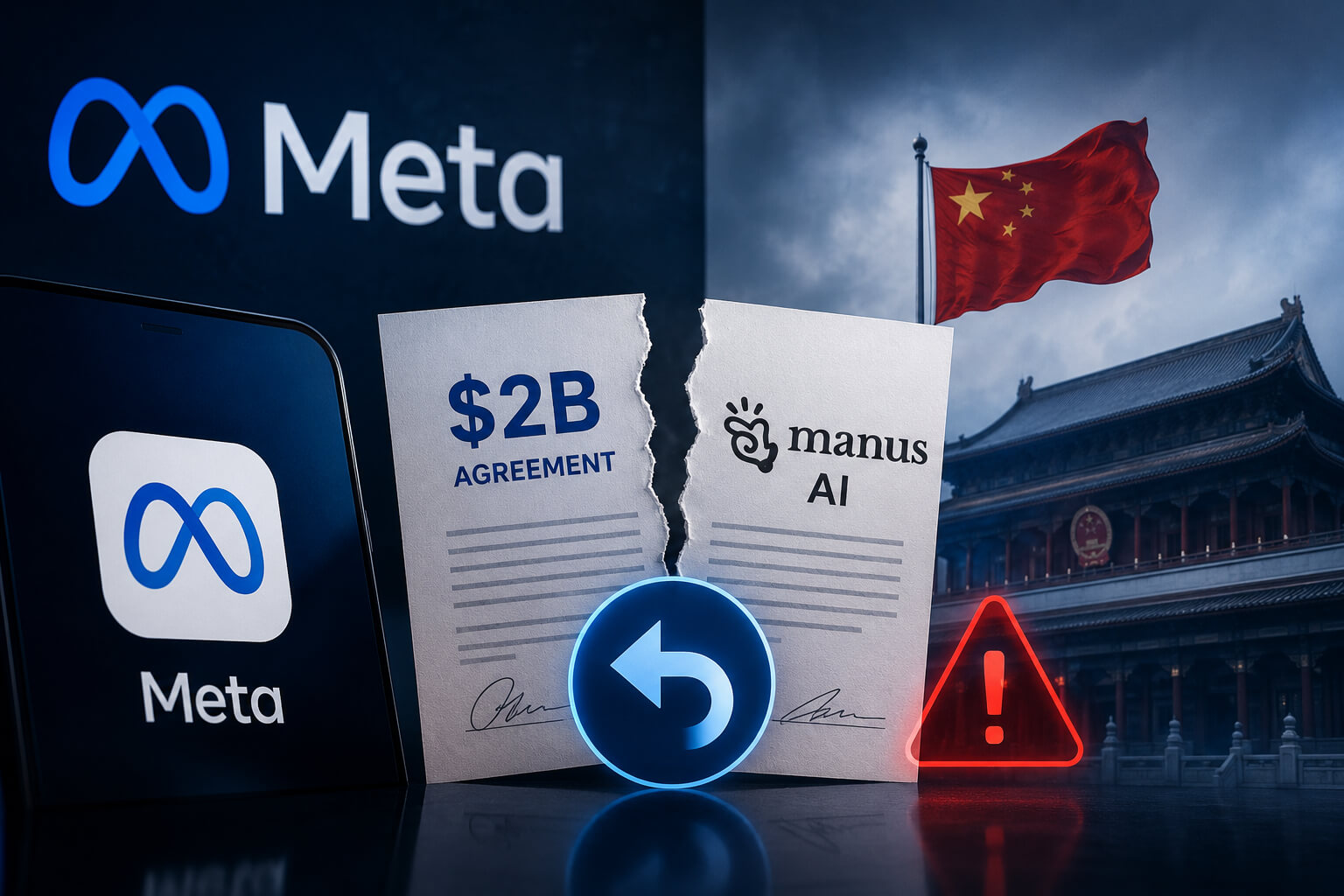
Meta is reportedly moving to unwind its $2 billion deal with Manus, the Chinese-founded AI startup known for its agentic AI tools. This comes after pressure from Beijing over national security concerns.
According to a TechCrunch report citing Bloomberg, Meta has begun an operational separation from Manus and has stopped data sharing between the two companies. In addition, the move marks one of the clearest signs yet that the high-profile AI acquisition is being pulled apart under regulatory pressure from China.
The reported separation includes cutting Manus off from Meta’s internal systems. This means Meta employees can no longer use Manus tools for internal projects as both companies move toward a full split.
Why Beijing Is Pushing Back
Chinese regulators reportedly ordered the divestiture roughly two months ago, citing national security concerns. Moreover, the case highlights Beijing’s growing focus on controlling strategically important AI technology. This is happening even when companies are structured offshore or have expanded outside mainland China.
Manus, originally tied to Chinese parent company Butterfly Effect, had already attracted attention because of its Chinese origins and its role in the fast-growing agentic AI market. Notably, agentic AI systems are designed to complete complex tasks with less human direction. This makes them increasingly valuable to large technology companies.
For Beijing, the reported unwinding of the Meta-Manus deal appears to fit into a broader push to keep tighter control over advanced AI companies, sensitive research, and foreign investment in the sector.
Manus Co-Founders May Seek Outside Funding
The report also says Manus co-founders have held early discussions about raising around $1 billion from outside investors. That funding could help them reclaim the startup from Meta and potentially restructure the company through a Chinese joint venture.
A future Hong Kong listing has also reportedly been discussed. Meanwhile, China’s AI startup scene continues to attract investor interest despite increased government oversight.
What it means for Meta
The Manus deal would be a big blow to Meta’s AI strategy if it falls apart as reported. Meta has been pouring money into artificial intelligence as it battles it out with OpenAI, Google, Anthropic, xAI and other big players.
A $2 billion acquisition of Manus would have given Meta deeper access to agentic AI capabilities and talent. Instead, the company now appears to be navigating a difficult regulatory split. This could limit its ability to use Manus technology across internal AI projects.
The situation also shows how geopolitical risk is becoming a bigger factor in AI deals. As a result, there could be increased scrutiny of big tech companies trying to acquire startups associated with countries that view AI as a strategic national asset.
Wider Implications For AI Investment
Meta-Manus’ reported split could be a cautionary tale for investors and founders in the AI industry. Furthermore, cross border AI acquisitions could become more difficult as governments take a greater role in deciding who can own, fund or access advanced AI tech.
China has been tightening restrictions around foreign investment in top AI firms, and expanding oversight of researchers and executives in private tech companies, according to reports. This suggests that the path for AI startups with Chinese ties to global acquisitions or overseas listings may be more complicated.
At the same time, U.S. lawmakers have also raised concerns about American capital flowing into Chinese-linked AI companies. That means startups operating between the U.S. and China could face pressure from both sides.
Manus Continues to Roll Out Product Integrations
Despite reports of a Meta break, Manus has been busy rolling out new product integrations. The startup recently announced integrations with Similarweb and Shopify. This indicates that it remains active and is building out new features while the ownership situation remains murky.
The company first gained major attention after a viral agentic AI demo, then moved staff to Singapore in 2025. Later, Meta announced the acquisition that year.
The Big Picture
The reported unwinding of Meta’s $2 billion Manus AI deal shows how quickly major AI transactions can become entangled in global politics. As artificial intelligence becomes more important to national security and economic competition, governments are likely to take a more active role in shaping who controls powerful AI systems.
For Meta, the situation could slow part of its AI expansion strategy. For Manus, it may open the door to a new investor-backed structure and a possible future listing. On a broader level, it is another sign that the next phase of AI competition will not be shaped by technology alone. Instead, it will also be shaped by regulation, capital controls, and geopolitical tension.
