


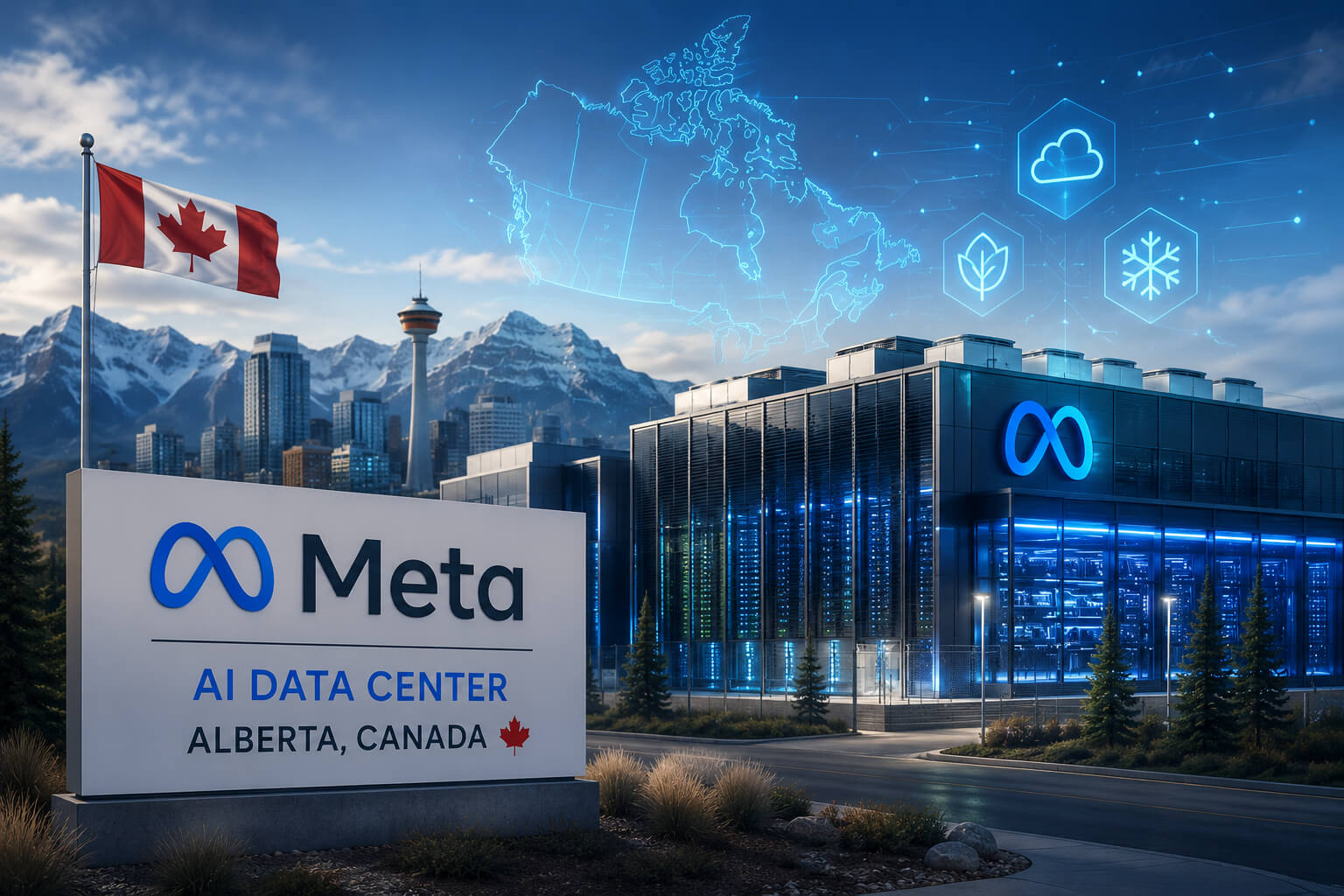
Meta is making a big Canadian move, and Alberta won the prize.
The company is planning its first AI data center in Canada, choosing Sturgeon County for a massive new facility designed to support its growing artificial intelligence infrastructure. The investment is valued at around CA$13 billion, with the site expected to start at one gigawatt and potentially expand to 1.8 gigawatts. It will also become Meta’s 33rd data center globally.
That is not a small server farm. That is serious AI infrastructure.
And because it is AI infrastructure, the energy debate arrived almost immediately.
Why Alberta Was Attractive to Meta
Alberta had a few things Meta wanted.
Cheap and available energy. A colder climate that can help reduce cooling needs. A government that has been actively trying to attract large technology investments. For companies building AI data centers, those things matter a lot.
Training and running modern AI systems requires enormous computing power. That means electricity. Lots of it. The source article notes that Meta’s Alberta campus could use roughly as much electricity as 800,000 homes, which explains why this project is already being discussed as an energy story, not only a technology story.
Meta has said it will fully fund new electricity generation and grid infrastructure linked to the project. The company has also partnered with Pembina Pipeline, with power expected from a natural gas-fired generation facility scheduled to begin operations in late 2030. Until then, Capital Power is expected to supply 250 megawatts from its natural gas-fired fleet.
That detail is where the climate debate gets louder.
AI Growth Is Running Into the Power Problem
AI companies want more data centers. Governments want the investment. Local regions want jobs and infrastructure.
But the machines need power every hour of the day.
Meta has said it will invest in clean and renewable energy projects to offset electricity use. It also plans to use a closed-loop liquid cooling system, which is designed to reduce water consumption compared with more water-heavy cooling setups.
Still, the early power story is tied heavily to natural gas. That makes Alberta a complicated choice.
Canada often presents itself as a strong location for AI infrastructure because of its relatively clean electricity grid. Alberta is different. Around half of the province’s electricity comes from natural gas, and its grid emissions intensity is much higher than the Canadian average, according to the source report.
So yes, Alberta gives Meta reliable and affordable energy.
But clean? That part is harder to sell.
Environmental Groups Are Not Impressed
Environmental groups are already questioning whether mega AI data centers should keep expanding before stronger rules are in place.
Greenpeace Canada has called for a moratorium on mega data centers until better environmental and human rights protections around artificial intelligence are introduced, according to the report.
That sounds dramatic, but the concern is not random. AI infrastructure is becoming one of the biggest new pressure points on electricity systems. The more companies race to build frontier models, AI assistants, video generators, enterprise agents, and real-time tools, the more physical infrastructure they need behind the scenes.
The public sees the chatbot. The grid sees the bill.
Alberta Wants to Be an AI Infrastructure Hub
For Alberta, the Meta project is a major win.
The province has been working to diversify beyond oil and gas, and attracting a hyperscale AI data center gives it a stronger position in the global technology infrastructure race. It also sends a message to other major tech firms: Alberta wants this business.
Provincial officials have said more projects are in development, which suggests Meta may not be the last major AI infrastructure announcement in the region.
That could bring investment, jobs, and new grid construction.
It could also bring more scrutiny.
Meta’s Canadian Data Center Shows Where AI Is Heading
The Meta Alberta AI data center is not just about one company building one facility.
It shows where the AI race is moving now. The biggest AI companies are not only competing over models, apps, and assistants. They are competing over land, power contracts, cooling systems, grid access, and political support.
That is the less glamorous side of artificial intelligence.
A new model gets the headline. A new data center makes the model possible.
Meta’s Alberta project gives the company more room to expand its AI infrastructure ambitions in North America. It also puts a spotlight on a question the industry cannot keep dodging: how much fossil-fuel-powered infrastructure should be accepted in the name of AI progress?
For now, Alberta gets the investment.
The climate argument is coming with it.
