


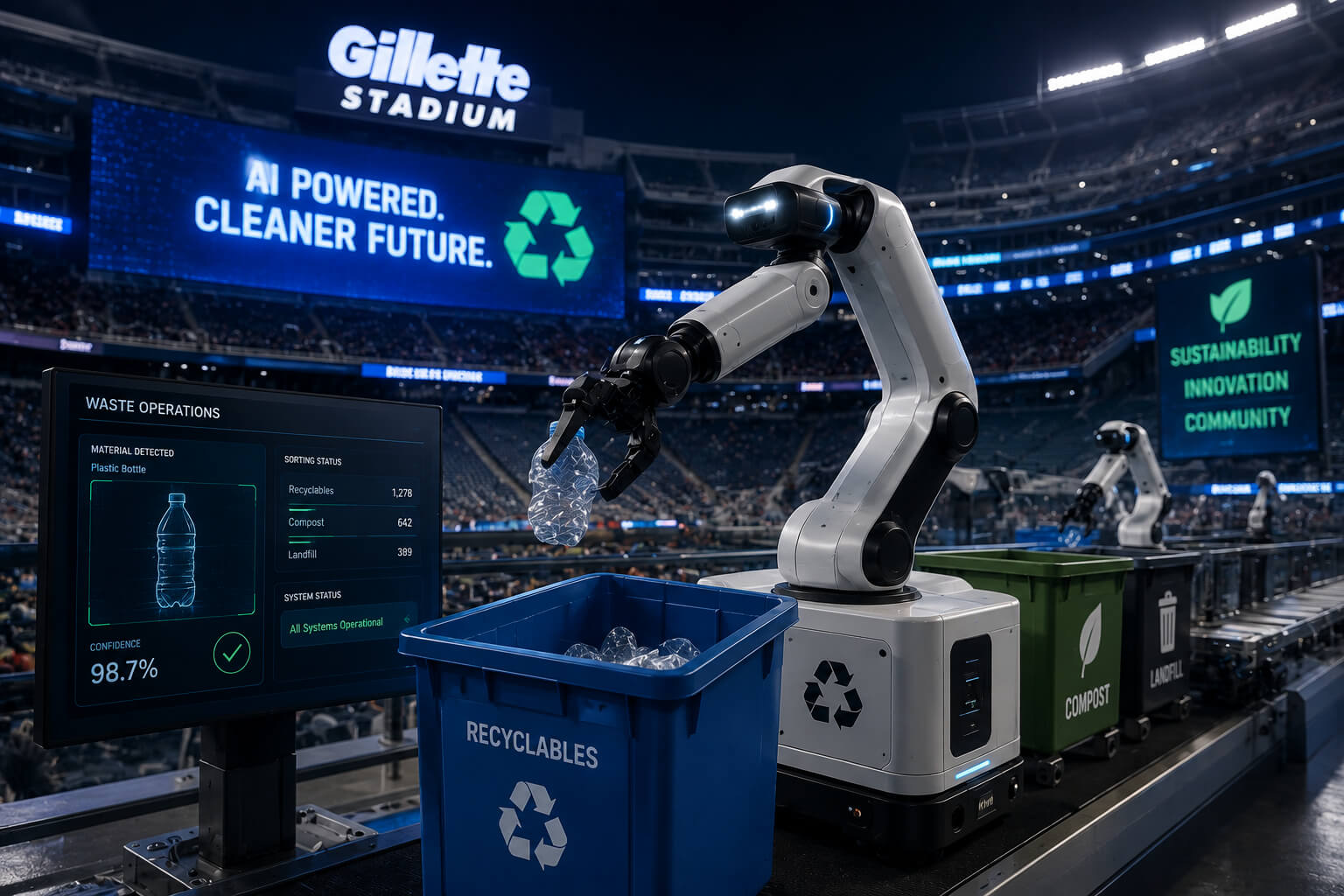
Artificial intelligence has found its way into another overlooked corner of stadium operations: the mountain of rubbish left behind after the crowd goes home. One recent example is the Gillette Stadium AI waste sorting initiative, which uses innovative technology to improve how rubbish is managed after events.
Gillette Stadium has partnered with waste technology company rStream to introduce an on-site sorting system that combines computer vision, machine learning and precision robotics. The technology processes mixed waste generated after football games, concerts and other large events, separating recyclable materials, compostable items and general trash.
It is not the flashiest use of AI. There are no humanoid robots greeting fans or delivering food to their seats. Instead, the system tackles one of the venue’s messiest and most labour-intensive jobs.
AI Cameras Identify Waste Moving Along a Conveyor
The centre of the operation is a 30-foot integrated conveyor and sorting platform installed at the stadium. Waste moves along conveyor belts while AI-powered cameras analyse individual objects. Machine-learning software determines whether each item belongs in recycling, compost or the general waste stream. Precision actuators then physically direct the material into the appropriate category.
According to rStream, the system can separate materials with approximately 99% accuracy. It processes the stadium’s full waste stream on-site and completes the sorting process within 24 hours after an event.
An operator remains stationed near the end of the line to monitor the output and check its quality. The setup is automated, though not entirely unattended. That human oversight matters when the system encounters crushed containers, food-covered packaging or materials that look similar but require different disposal methods.
Nearly Half a Million Recyclable Objects Recovered
The early numbers show the scale of the work taking place behind the scenes. Across seven recent full-stadium events, rStream’s system identified and separated approximately 479,000 recyclable objects. The recyclable and organic materials were recovered, while the remaining post-sorted waste was directed to waste-to-energy facilities.
A packed stadium can produce tons of mixed waste during a single event. Cups, food containers, bottles, napkins and leftover meals frequently end up inside the same collection bags, even when separate bins are available around the venue.
Sorting that material by hand is slow and physically demanding. It also becomes harder to recover valuable materials once food, liquids and general rubbish have mixed together. The rStream system does not prevent that contamination from happening. What it changes is the stadium’s ability to examine and separate the resulting waste stream at scale.
The Partnership Started With a Stadium Waste Audit
The rollout did not begin with a robot arriving at the loading dock. rStream started working with the Gillette Stadium team in 2024 after the venue had completed a detailed audit of its waste operations. That review helped identify where recyclable and compostable materials were being lost and where automation could improve diversion rates.
The companies then worked through the stadium’s existing waste infrastructure rather than replacing the entire process at once.
Ethan Walko, co-founder and chief operating officer of rStream, said the stadium already understood that valuable materials were effectively buried inside its mixed waste. The challenge was finding a practical way to recover more of them without making post-event operations even more complicated.
That detail makes the project more interesting than a typical robotics demonstration. The system is operating inside an active venue, working with inconsistent materials and tight turnaround times rather than carefully arranged objects inside a laboratory.
Waste Data Could Be as Valuable as the Sorting
The physical separation of materials is only one part of the platform. As the system identifies objects, it also creates a digital record of what appeared in the stadium’s waste stream. Operations teams can use that information to understand which products are frequently discarded, where contamination occurs and whether waste-diversion programmes are actually improving.
The collected data can also support environmental reporting, including requirements connected to Massachusetts Department of Environmental Protection regulations and LEED certification through the U.S. Green Building Council.
For stadium managers, this could lead to decisions that happen long before an item reaches the conveyor. A venue might change its food packaging, adjust bin placement or work with vendors whose products are easier to recycle or compost. A recycling robot can deal with the mess. The data may help reduce that mess in the first place.
Stadiums Present a Difficult Test for Waste Robotics
Waste-sorting technology has already appeared in recycling facilities, warehouses and smaller commercial environments. A stadium brings a different level of disorder.
The material changes depending on the event. A football game, international match and major concert may attract different audiences, vendors and packaging types. Waste also arrives in large bursts rather than at a steady pace.
Ian Goodine, rStream’s co-founder and chief executive, described a packed stadium as one of the most difficult waste environments to manage. Most venues still rely heavily on manual sorting after events, making Gillette Stadium a useful test of whether robotics can handle this work at commercial scale.
The technology still has to prove itself over a longer period. An accuracy figure from a controlled system does not automatically reveal how much waste ultimately avoids disposal, how often equipment requires maintenance or whether the economics work for smaller venues.
Still, processing hundreds of thousands of objects across real stadium events is more meaningful than a brief pilot built around carefully selected samples.
AI Moves Into the Less Visible Parts of Venue Operations
Much of the conversation around stadium technology focuses on what fans can see: facial recognition, smart ticketing, personalised promotions, automated security and cashierless concessions. The Gillette Stadium deployment points in another direction.
AI may create some of its most practical value in operations that audiences never notice. Waste handling, equipment maintenance, energy use, cleaning schedules and food inventory rarely generate headlines. They can, however, consume a substantial amount of labour and money.
John Flaherty, senior vice president of operations at Kraft Sports + Entertainment, said delivering a high-quality event also includes what happens after guests have left. That is exactly where rStream’s system enters the picture.
The crowd sees a clean stadium at the next event. Behind that result sits a conveyor belt, a collection of cameras and an AI model making thousands of small decisions about discarded cups and food containers. Not glamorous. Quite useful.
Sources
- Waste Today – rStream partners with Gillette Stadium to bring AI robotics to stadium waste
- MassRobotics – rStream and Gillette Stadium partnership announcement
- Yahoo Finance – rStream and Gillette Stadium bring AI robotics to stadium waste
- The Stadium Business – Gillette Stadium rolls out rStream system
