


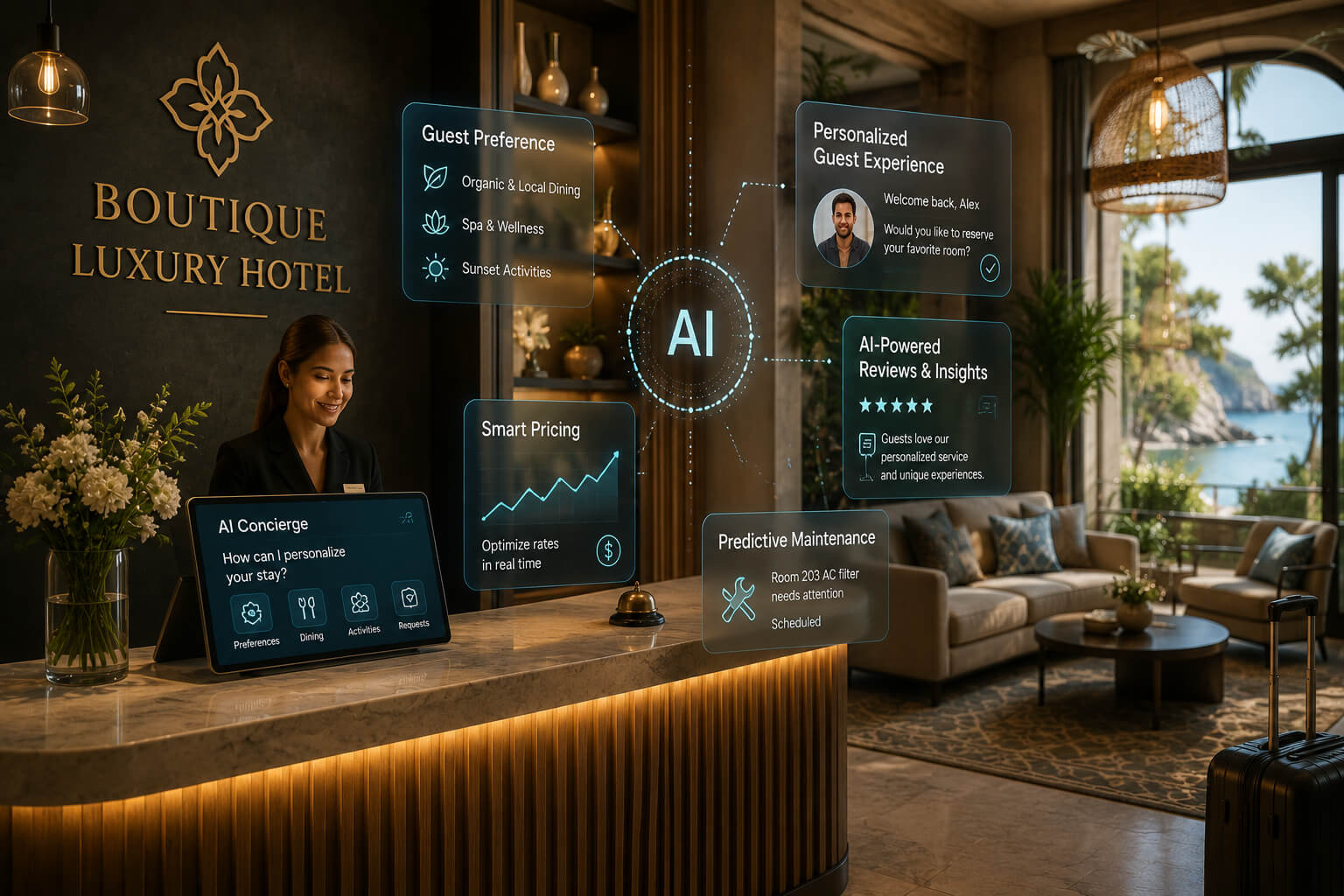
Artificial intelligence is quietly changing how people choose luxury hotels. The change does not begin at the reception desk or inside a hotel room. It starts much earlier, often with a traveller typing a detailed request into ChatGPT or another AI assistant.
Instead of searching for “luxury hotels in Siem Reap,” someone might ask for a quiet independent property near Angkor Wat, with local character, strong environmental values and personalised service.
That kind of request suits boutique hotels rather well. Jaya House River Park, an independently owned luxury hotel in Siem Reap, Cambodia, says this shift has become increasingly visible in its guest booking data. As the property marks its tenth anniversary, it reports that 60% of its guests now use ChatGPT or another AI platform at some point during travel planning.
Travellers Are Moving Beyond Basic Hotel Searches
For years, hotel discovery revolved around Google results, online travel agencies and paid listings. Those channels still matter, but they no longer control every stage of the journey. AI travel tools allow people to search in a more conversational and oddly specific way.
A traveller can ask for a hotel that avoids the atmosphere of a large resort. Another might prioritise sustainable operations, local food, privacy or easy access to cultural sites. The search is no longer limited to a location, star rating and nightly price.
This creates an opening for properties that do not have the advertising budgets of international hotel groups. Christian de Boer, managing director of Jaya House River Park, said travellers are increasingly asking AI tools to identify hotels that fit particular values, interests and priorities. In his view, this gives independent hotels a chance to compete through the substance of their guest experience rather than the size of their marketing spend.
That is an important distinction. Boutique hotels rarely win by offering the most rooms or the biggest loyalty programme. They win when travellers want something precise. AI is becoming better at handling that precision.
Strong Guest Reviews Now Feed AI Discovery
AI has not erased the old rules of hospitality. In some ways, it has made them harder to fake. Independent hotels still need enthusiastic reviews, consistent service and a clear identity. Word of mouth remains valuable. The difference is that AI systems can help surface those signals when answering detailed travel questions.
A hotel known for attentive staff, local experiences or environmentally responsible practices may now appear in a conversation that would previously have started and ended on a booking platform. This means years of positive reviews can carry fresh value.
Jaya House built its reputation through guest experiences, recommendations and online feedback. Those familiar signals now help the property appear in a newer kind of discovery process, where an AI assistant filters options based on what a traveller actually describes.
There is no guarantee that an AI platform will recommend a particular hotel. Still, properties with clear information and consistent feedback have more useful material around them for AI-powered search systems to interpret. A vague hotel identity gives the technology little to work with.
AI Research Can Still Lead to Direct Hotel Bookings
The rise of AI travel planning does not necessarily mean travellers will complete the entire booking through an AI platform.
Jaya House reports an 11% year-on-year increase in direct bookings. The hotel believes guests may use AI during the early research stage but still prefer to book directly when confirming an expensive or long-haul journey. That behaviour makes sense.
AI can narrow the field, compare experiences and suggest properties that match a traveller’s preferences. Once the decision becomes real, however, guests may want direct confirmation from the hotel. They may also have questions about airport transfers, room arrangements, dietary requirements or special occasions. For boutique hotels, this creates a useful split.
AI handles part of the discovery. The hotel’s own website, booking team and communications then need to convert that interest into a reservation. A property can appear in an AI recommendation and still lose the guest through a slow website, unclear room information or a complicated booking process. Discovery is only one part of the job.
Some Guests Choose the Hotel Before the Destination
One of the more interesting findings from Jaya House concerns how travellers choose where to go. The property says between 10% and 12% of its guests discovered the hotel before deciding to visit Siem Reap. In those cases, the accommodation did not merely support the trip. It helped create the trip. That turns the usual travel-planning sequence around.
People traditionally choose a destination, compare hotels and then book a room. AI recommendations can make the process less orderly. A traveller may discover an unusual hotel, become curious about its surroundings and build an itinerary from there. Distinctive properties stand to benefit most.
A generic hotel room rarely inspires an international journey. A property with a recognisable point of view, memorable design and close ties to its location has a better chance. The hotel becomes part of the reason to travel rather than somewhere to sleep after arrival.
Boutique Hotels Need Clearer Digital Identities
The opportunity also comes with a warning. Hotels cannot expect AI platforms to understand what makes them different when their websites rely on vague luxury language. Words such as “exceptional,” “unforgettable” and “world-class” appear almost everywhere. They reveal very little.
Boutique properties need to explain what they actually offer. That could mean describing how the hotel supports local organisations, where its ingredients come from, what personalised services guests receive or how its design connects to the destination. Accurate room details, updated policies and useful destination information matter too.
AI systems work with available information. If that information is inconsistent, outdated or buried inside decorative marketing copy, the hotel becomes more difficult to interpret. The goal is not to write content solely for machines. It is to publish clearer information for travellers, which also gives AI tools better material to process.
Human Service Remains the Real Luxury Product
AI may help travellers find a hotel, but it cannot deliver the stay. It cannot replace the employee who remembers a guest’s preference, solves an unexpected problem or recommends a place that never appears in standard itineraries. For a boutique property, those moments are still the product.
Technology changes the route to the hotel. It does not remove the need for hospitality once the guest arrives.
That may be why independent luxury properties have an unusual advantage in the AI era. Their businesses already depend on personality, detail and experiences that are difficult to standardise. AI can make those qualities easier to discover. It cannot manufacture them.
AI Could Reshape Competition in Luxury Hospitality
Large hotel groups retain enormous advantages, including global marketing operations, established loyalty programmes and extensive distribution networks. Boutique hotels now have another way into the conversation.
When a traveller asks an AI assistant for a highly specific experience, the biggest brand will not always be the most relevant answer. A smaller hotel can compete when its identity closely matches the request and its online reputation supports the recommendation.
That does not make AI a magic booking channel. Recommendation systems can make mistakes, rely on outdated information or overlook worthy properties. Even so, the direction is becoming clearer.
Travellers are using AI to move past broad search results and find hotels that feel personally suited to them. For independent luxury properties, being small may no longer mean being difficult to discover. It may simply mean having a more specific story for AI-powered hotel discovery to find.
Source: Breaking Travel News – The Impact of AI on Boutique Luxury Hotels
