


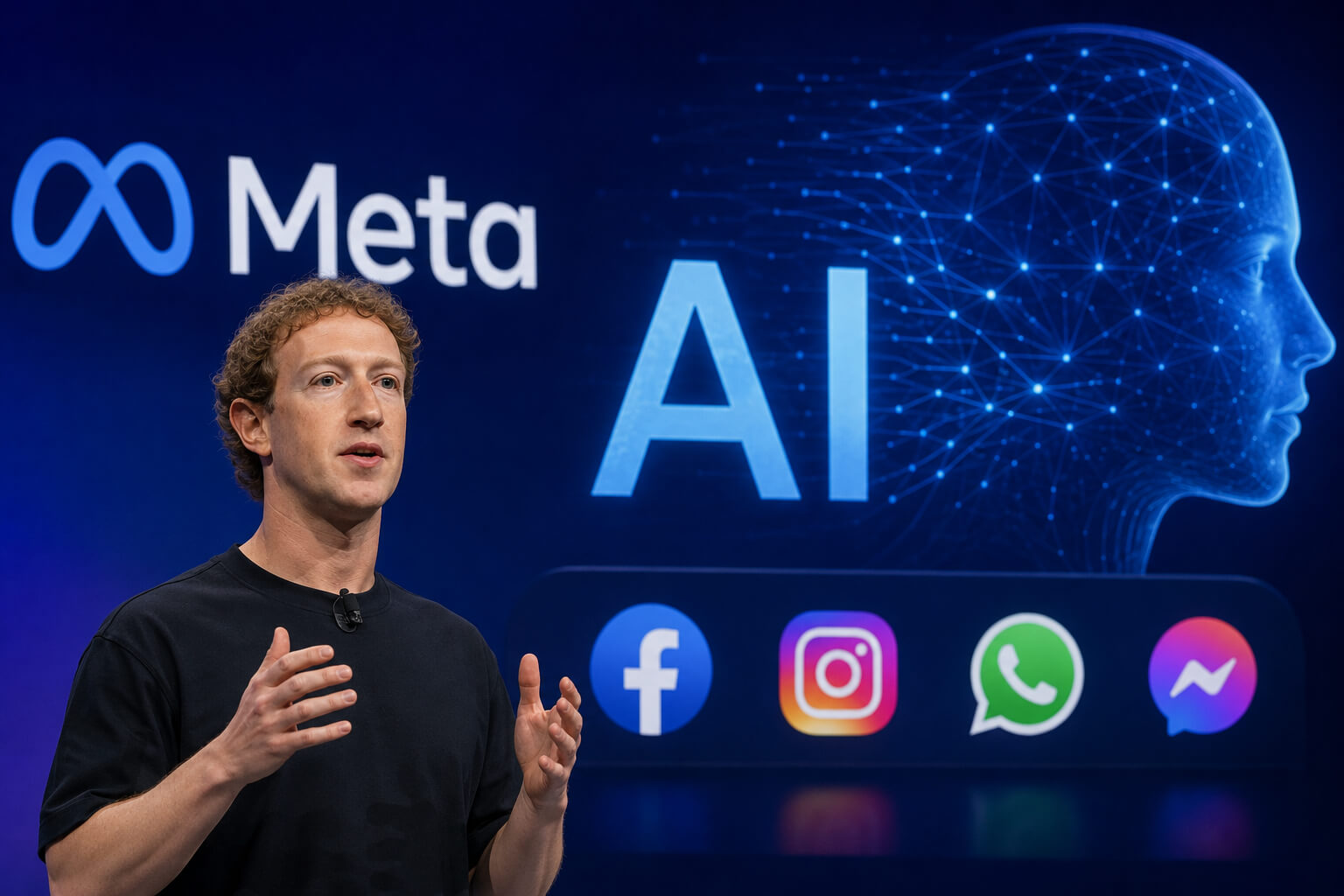
Meta CEO Mark Zuckerberg has acknowledged that the company has made mistakes during its rapid artificial intelligence transformation, highlighting the challenges facing one of the world’s biggest technology companies as it reorganizes around AI.
According to an internal memo reported by Reuters, Zuckerberg said Meta’s AI shift has involved complex changes across the business. Meta owns Facebook, Instagram, WhatsApp, and Threads. The company has moved aggressively to become a major force in artificial intelligence. However, that transition appears to have created internal disruption.
Zuckerberg Acknowledges Challenges in Meta’s AI Push
In the memo, Zuckerberg reportedly admitted that Meta has not handled every part of its AI transformation perfectly. He also suggested that more mistakes may happen as the company continues adjusting to the fast-moving AI race.
The comments are notable because Meta has spent the past several years reshaping its identity around artificial intelligence. After heavy metaverse investment, the company is now focusing on AI assistants and AI-powered advertising tools. It is also investing in large language models, automation, and infrastructure for advanced AI systems.
This shift has affected Meta’s workforce, product strategy, and long-term business priorities.
Meta Looks for Stability After Major AI Changes
Zuckerberg also said Meta is focused on creating more stability for employees going forward. The company has reportedly been reassigning some workers into roles related to training AI models and supporting its broader AI initiatives.
Importantly, Zuckerberg said Meta does not expect additional company-wide layoffs this year. That statement may provide some reassurance to employees after a period of uncertainty tied to restructuring and AI investment.
Still, the memo suggests that Meta’s AI transformation is far from simple. As the tech industry heats up in competition, companies are being squeezed to act fast. But they are facing pressure to do so while keeping a lid on costs, talent, infrastructure and product development.
Why Meta’s AI pivot matters
Meta’s AI pivot matters because the company runs some of the world’s biggest social platforms. Any major change in how Meta builds, moderates, recommends, or monetizes content can affect billions of users, advertisers, creators, and businesses.
AI is already central to Meta’s platforms. The company uses machine learning for content ranking, ad targeting, recommendation systems, safety tools, and creator features. Its newer AI ambitions go further, including consumer-facing AI assistants, generative AI tools, and internal automation.
If Meta can pull it off, AI could make its platforms more personalized, efficient and profitable. But if it bungles the transition, it could result in employee dissatisfaction, product risks and reputational challenges.
Big Tech Is Feeling the Pressure to Win the AI Race
Meta isn’t the only one racing toward AI. Companies such as Google, Microsoft, OpenAI, Amazon, Apple and xAI are all racing to define the next generation of digital products.
The stakes are particularly high for Meta, which relies heavily on digital advertising and could benefit from AI in areas like ad performance, content discovery and engagement. But the cost of AI development is also enormous, requiring big investments in chips, data centers, research teams and infrastructure.
It’s a difficult balancing act: Meta has to make a big investment in AI while trying to keep its existing social media empire stable.
What’s Next for Meta
Zuckerberg’s confession shows that even the biggest tech companies are still adapting to the AI shift. Building advanced AI systems is not only a technical challenge. It is also an organizational challenge involving employees, leadership, culture, costs, and long-term planning.
Meta’s next phase will likely focus on adding more structure to its AI work. At the same time, the company will continue competing at the top of the industry. Its success will depend on turning AI investment into useful products and stronger business performance.
For now, Zuckerberg’s message is clear. Meta remains committed to AI, but becoming an AI-first company is proving difficult.
