


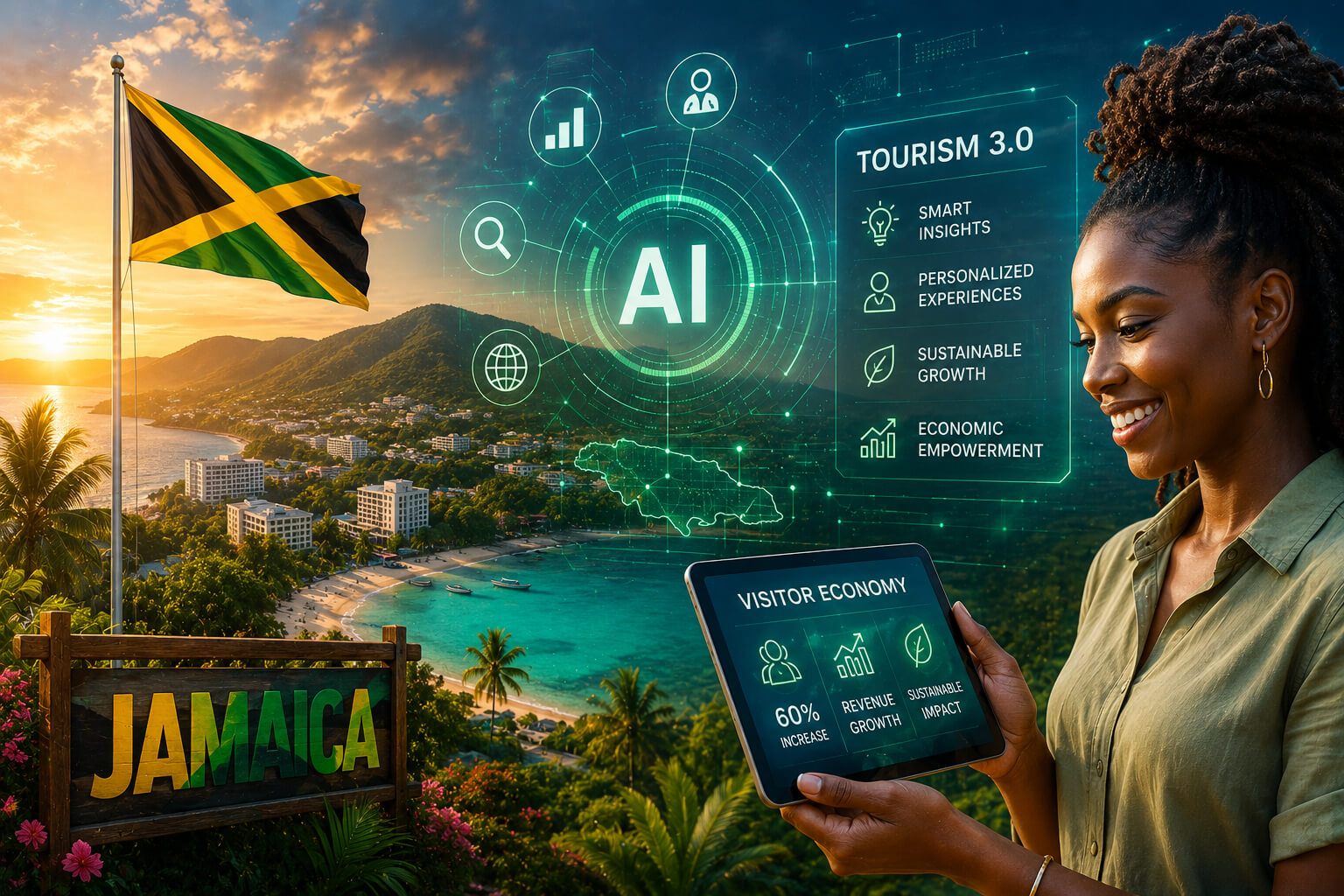
Jamaica Tourism 3.0 is setting a new direction for the country’s tourism industry by moving beyond traditional visitor arrivals and hotel occupancy. Instead, the strategy positions tourism as a national development platform supported by artificial intelligence, innovation, workforce training, stronger regulation, and deeper local participation.
The new framework reflects Jamaica’s ambition to turn tourism into a broader economic engine. While the country remains one of the Caribbean’s most recognized destinations, the next phase of growth focuses on how tourism can create more value for local communities, workers, entrepreneurs, and national industries.
Jamaica Tourism 3.0 Signals a New Era for the Tourism Economy
For decades, tourism success has often been measured by visitor numbers, room capacity, and foreign exchange earnings. However, Jamaica Tourism 3.0 introduces a more advanced model. It looks at tourism as a connected national system that can support agriculture, culture, manufacturing, transportation, technology, education, and small businesses.
This shift is important because modern tourism is no longer limited to travel experiences. Today, destinations must compete through data, digital services, personalization, sustainability, workforce quality, and authentic local value. As a result, Jamaica is moving toward a model that combines tourism growth with national resilience.
Under the Tourism 3.0 vision, artificial intelligence can help improve destination management, visitor services, marketing, skills development, and decision-making. More importantly, AI can help the country understand visitor behavior, forecast demand, improve service delivery, and support smarter planning across the tourism ecosystem.
How AI Can Support Jamaica Tourism 3.0
Artificial intelligence is expected to play a central role in Jamaica’s tourism transformation. AI-powered tools can help tourism authorities and businesses analyze travel patterns, improve customer support, personalize visitor experiences, and strengthen destination marketing.
For example, AI chatbots and digital assistants can support travelers before, during, and after their trips. These systems can answer questions, recommend attractions, provide safety updates, and guide visitors toward local businesses. In addition, AI-driven analytics can help policymakers understand where tourism spending is going and how more of that value can remain inside Jamaica.
AI can also support training for tourism workers. Digital learning platforms can help employees improve customer service, language skills, operational knowledge, and technology readiness. This is especially important as the global tourism industry becomes more digital and competitive.
Strengthening Local Ownership and Value Retention
A major goal of Jamaica Tourism 3.0 is to ensure that more tourism revenue benefits Jamaican workers, entrepreneurs, and communities. This includes stronger support for local suppliers, cultural businesses, small enterprises, farmers, artisans, and community-based tourism operators.
By connecting tourism more closely with local industries, Jamaica can reduce economic leakage and increase domestic value creation. Hotels, restaurants, tour operators, and travel companies can source more products and services from Jamaican businesses. At the same time, digital platforms can give smaller operators better access to visitors and international markets.
This approach can help tourism become more inclusive. Instead of concentrating benefits in a few major destinations or large businesses, Tourism 3.0 aims to spread opportunities across communities and sectors.
Workforce Development Becomes a Core Priority
Jamaica Tourism 3.0 also places strong emphasis on human capital development. As tourism becomes more technology-driven, workers need new skills to remain competitive. Training, certification, digital literacy, and professional development will be essential to the industry’s long-term success.
AI can support this effort by making training more accessible and personalized. Workers can use digital tools to learn at their own pace, improve specific skills, and prepare for higher-value roles. In turn, this can help improve service quality while creating better career pathways within the tourism sector.
The focus on workforce development also supports national competitiveness. Destinations that invest in skilled people are more likely to deliver better visitor experiences and adapt to changing global travel trends.
Building a Smarter and More Resilient Tourism Sector
Tourism is highly sensitive to global disruptions, including economic uncertainty, climate risks, health crises, and changing consumer behavior. Jamaica Tourism 3.0 responds to this challenge by promoting a smarter, more resilient model of growth.
AI and data-driven systems can help tourism leaders make faster and more informed decisions. Predictive analytics can support planning for visitor demand, infrastructure needs, emergency response, and destination management. Meanwhile, digital platforms can improve coordination between government agencies, private businesses, and local communities.
This is particularly important for island economies where tourism plays a major role in employment and foreign exchange. By using AI responsibly, Jamaica can strengthen its ability to respond to shocks while building a more sustainable tourism future.
Regulation and Governance in the AI Tourism Era
As Jamaica expands the use of AI in tourism, governance will become increasingly important. Data privacy, ethical AI use, digital inclusion, cybersecurity, and responsible automation must be addressed carefully.
Tourism authorities will need to ensure that AI tools support people rather than replace the human connection that defines Jamaica’s hospitality sector. Strong regulation can help protect visitors, workers, and businesses while encouraging innovation.
The success of Jamaica Tourism 3.0 will depend not only on adopting new technologies but also on using them in ways that are transparent, inclusive, and aligned with national development goals.
Why Jamaica Tourism 3.0 Matters for the Caribbean
Jamaica’s strategy could become a model for other Caribbean destinations. Many tourism-dependent economies face similar challenges, including revenue leakage, climate vulnerability, workforce gaps, and the need for digital modernization.
By positioning tourism as an AI-enabled development platform, Jamaica is showing how destinations can move beyond traditional tourism metrics. The focus is no longer only on attracting more visitors. It is also about creating better jobs, supporting local businesses, improving public planning, and building long-term economic resilience.
This approach could influence how the wider Caribbean uses AI to modernize tourism while preserving culture, community identity, and local ownership.
Conclusion
Jamaica Tourism 3.0 represents a major step in the country’s tourism evolution. By combining artificial intelligence, workforce development, local ownership, smarter regulation, and stronger value retention, Jamaica is working to transform tourism into a broader national development engine.
The strategy highlights a growing global trend: tourism is becoming more digital, data-driven, and connected to national economic planning. For Jamaica, the opportunity is clear. If implemented effectively, Tourism 3.0 can help the country build a smarter, more inclusive, and more resilient tourism economy for the future.
