


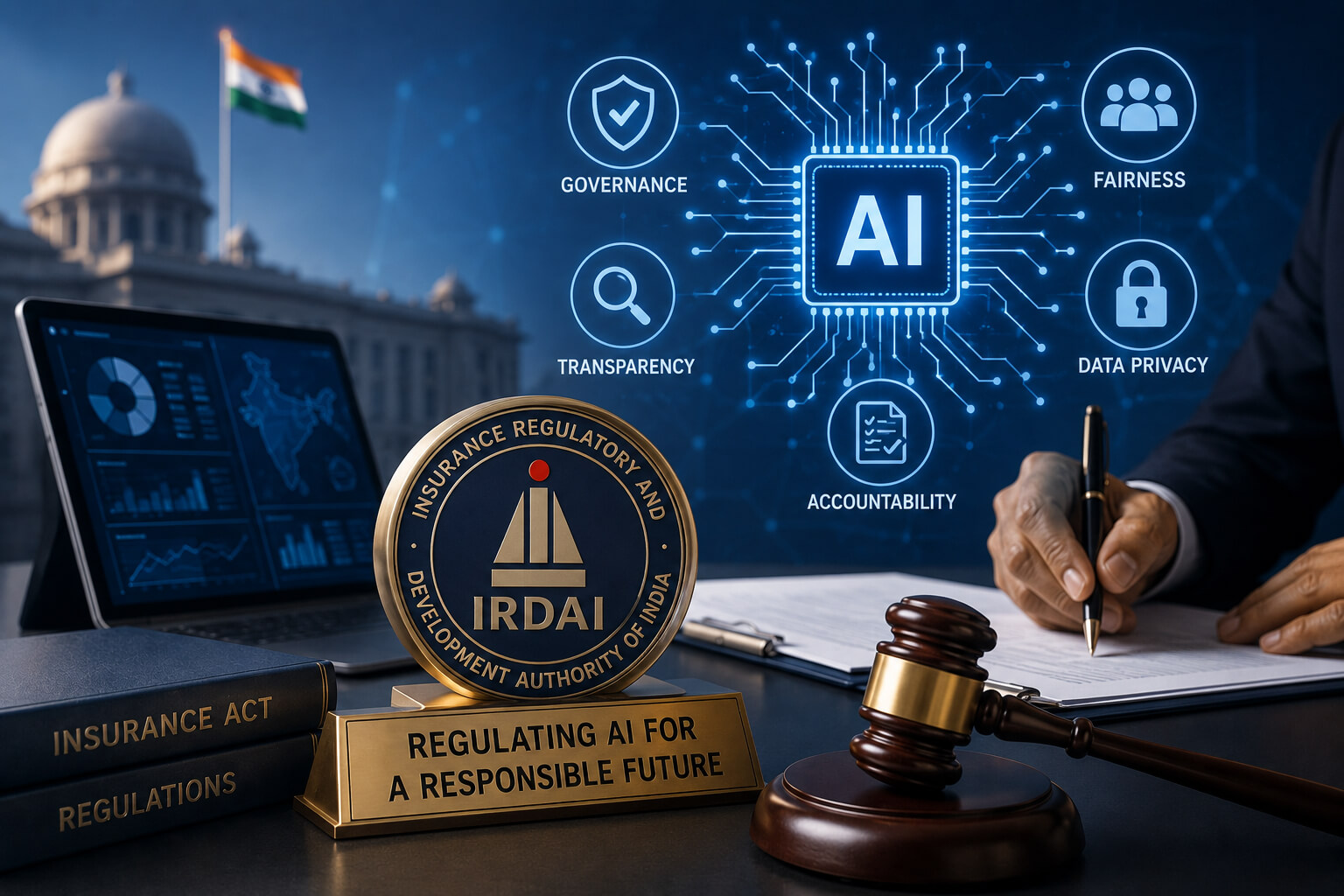
India’s Insurance Regulator Steps Up AI Oversight India’s insurance industry is on the cusp of a new era in artificial intelligence oversight. The Insurance Regulatory and Development Authority of India, or IRDAI, seeks to piece together a formal framework for AI adoption across the industry. As India AI insurance regulation continues to evolve, these efforts mark a significant shift for the sector.
The regulator has set up a seven-member working group on artificial intelligence to study the use of the technology by insurers and recommend safeguards for its responsible use. The group has been asked to submit its recommendations within three months. This indicates that AI governance in Indian insurance could soon shift from the discussion stage to formal regulatory action.
This is part of a growing trend among insurers. Many are using AI for customer service, claims processing, fraud detection, underwriting, cyber risk assessment, and operations automation.
These technologies can increase speed and efficiency. However, they also raise concerns about transparency, accountability, data security, and automated decisions that could disadvantage policyholders.
IRDAI Wants to Develop AI Governance Framework
The working group will likely also look at the extent of AI usage among regulated insurance entities in India. This includes reviewing what systems are already in use and how insurers govern those systems. Furthermore, it includes examining whether existing controls are enough to manage the risks created by automated decision-making.
A central part of the group’s mandate is to propose a framework for ethical, transparent, and explainable AI. These principles are particularly pertinent in the insurance space. AI-driven systems could impact claims outcomes, fraud alerts, risk scores, pricing, and customer interactions.
Claims processing and fraud detection will likely receive close attention. These are high-impact areas where automated errors can directly impact customers. For example, an AI system incorrectly flagging a claim as suspicious could delay payments or create reputational risk for an insurer. Also, a system that cannot explain how it arrived at a decision could create compliance challenges.
Audits and stress tests could be a key requirement
One of the most important areas under consideration is the creation of an audit framework for AI systems. This would involve checking an AI tool before it is used and monitoring it once it is in use.
Pre-deployment audits can check whether an AI model is accurate, fair, secure, and explainable. They do this before companies use the model in business operations.
In addition, post-deployment audits can identify model drift, error rates, bias, and security vulnerabilities. They can also check whether the system continues to perform as expected over time.
The working group is also expected to consider whether insurers should carry out stress tests for AI failures. This could help firms understand how exposed they are to system errors, cyber attacks, automated fraud or failures from over-reliance on AI.
For insurers, this means AI governance may soon become a board-level and compliance-level priority, not just a technology issue.
Cybersecurity and AI-Driven Threats Are Also in Focus
The IRDAI initiative follows the regulator’s updated information and cybersecurity guidelines issued earlier in 2026. Those guidelines already pushed insurers toward stronger security governance, risk management, and compliance requirements.
The new AI working group expands that focus into the risks created by intelligent automation and frontier AI tools. These risks may include AI-powered cyberattacks, automated phishing, model manipulation, data leakage, and misuse of generative AI systems.
As insurers digitize more of their operations, the link between cybersecurity and AI governance becomes harder to separate. AI tools can help identify fraud and threats faster; however, they can also create new vulnerabilities if they are poorly managed.
Why it matters to policyholders
For customers, IRDAI’s move could mean better protection in cases where insurers use AI to make policy, claims or fraud review decisions.
A transparent governance framework may require insurers to explain how AI systems are used to ensure that automated decisions are fair. Also, there should be human oversight in sensitive cases. This may be particularly important when AI tools are used to determine whether a claim is accepted, refused, delayed or referred for investigation.
The key question is accountability. If an AI system makes an incorrect decision, who is responsible: the insurer, the technology vendor, the data team, or the business unit using the tool? IRDAI’s proposed framework may help close that gap by defining oversight and audit expectations.
Insurers May Need to Prepare Before Rules Arrive
Although the working group’s recommendations will not automatically become binding rules, insurers are unlikely to treat the process as optional. IRDAI’s recent cybersecurity updates show that the regulator is prepared to move quickly when it identifies emerging digital risks.
Insurance companies may need to begin reviewing their AI systems now. That includes mapping AI use, documenting governance processes, checking vendor arrangements, identifying data risks, and making sure teams have the expertise to manage AI responsibly.
Skills gaps are also expected to be part of the working group’s review. Many insurers are hiring AI talent, but the pace of AI adoption may be moving faster than internal governance capabilities. It could be difficult for companies without AI expertise to demonstrate that their systems are safe, fair and compliant.
India’s Insurance Sector Moves into a New AI Age
IRDAI’s move is part of a larger change in the way regulators are looking at AI. Rather than waiting for problems to emerge, sector-specific regulators are beginning to build frameworks around the most sensitive use cases.
For India’s insurance sector, the message is clear: AI adoption is welcome, but it must be explainable, secure, ethical, and accountable.
As the working group prepares its recommendations, insurers should expect closer scrutiny of AI tools used in claims, fraud detection, underwriting, customer service, and cybersecurity. The next few months could shape how artificial intelligence is governed in one of India’s most important financial sectors.
