


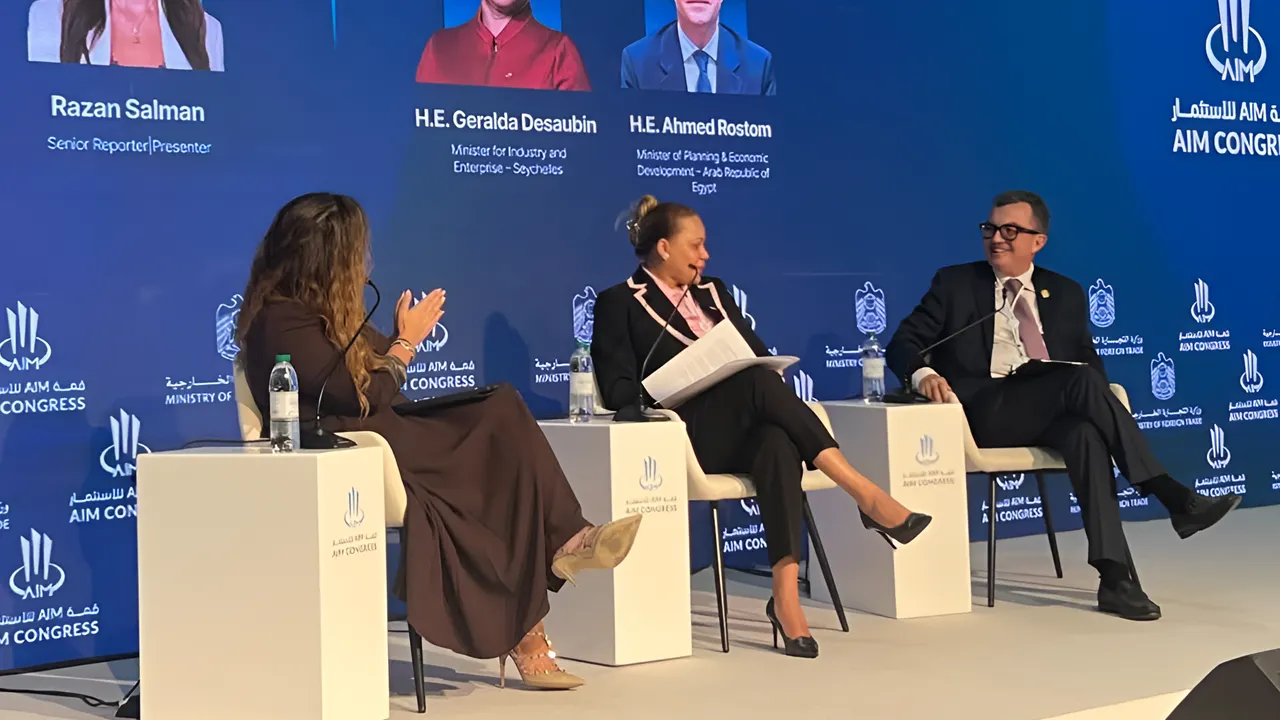
Egypt is working with the Organisation for Economic Co-operation and Development (OECD) on a new five-year artificial intelligence strategy. The country is pushing deeper into AI adoption while trying to manage the risks that come with it.
Ahmed Rostom, Egypt’s Minister of Planning and Economic Development, revealed the cooperation during the 15th AIM Congress in Dubai. The work is expected to cover responsible AI adoption, public awareness, government systems, regulation and secure data exchange.
There is one important question still hanging over the announcement. Egypt already has a National AI Strategy covering 2025 to 2030. However, it has not yet been made clear whether the OECD partnership will update that strategy. It is also unclear if it will replace parts of it or help Egypt prepare the next phase of its AI policy beyond 2030.
Egypt and OECD Build a Five-Year AI Vision
The cooperation with the OECD gives Egypt another international partner as it works out how artificial intelligence should fit into government, industry and the wider economy. Rather than focusing only on deploying more AI systems, the five-year vision is expected to address the less visible but equally important pieces that determine whether adoption works in practice. These include regulation, secure information exchange, common government standards and public understanding of the technology. Furthermore, Rostom also called for frameworks that strengthen transparency and accountability. At the same time, cybersecurity is expected to become more important as AI systems and autonomous agents interact with one another with less direct human involvement.
Jobs Are Becoming a Bigger Part of Egypt’s AI Debate
Egypt’s AI ambitions come with a concern policymakers cannot ignore: employment. A July survey from Egypt’s Information and Decision Support Centre found that 56% of Egyptians believe wider adoption of artificial intelligence will eliminate jobs. This shows that public anxiety around automation remains strong. Rostom approached the issue differently. He argued that the focus should be on giving people the skills needed to supervise and control AI systems rather than treating the technology as a simple replacement for human workers. That does not mean jobs will stay unchanged. Some tasks will disappear and others will become automated. Many roles will evolve. Egypt appears to be leaning toward workforce preparation instead of pretending disruption will not happen.
Workforce Reskilling Moves Alongside AI Adoption
Rapid AI deployment without enough investment in skills could create a wider digital divide, particularly between workers who know how to use AI systems and those who do not. Rostom warned that technological progress without matching improvements in workforce capabilities could eventually become a structural employment challenge. Additionally, he also pushed for stronger investment in science and technology programmes at universities, along with broader access to AI education for disadvantaged communities. For Egypt, this makes AI training an economic priority rather than a side project. Government agencies need employees who can supervise automated systems. Private companies need workers who understand AI tools. Startups need engineers, researchers and developers capable of building products around the technology.
Egypt Already Has an AI Strategy
The OECD cooperation is particularly notable because Egypt is not starting from zero. The country already launched the second edition of its National AI Strategy for 2025 to 2030, covering areas such as governance, infrastructure, technology, data, ecosystem development and talent. Additionally, Egypt has also been expanding access to computing resources, developing digital skills and working on policy frameworks designed to support wider AI adoption. The strategy includes ambitious economic targets. These targets include increasing the ICT sector’s contribution to GDP, supporting the growth of hundreds of AI startups and building a much larger pool of AI professionals. Egypt is also pursuing an Arabic-language foundation model, another sign that the government wants local capabilities rather than relying entirely on foreign AI systems.
Egypt Wants a Larger Place in the Regional AI Market
Egypt’s ambitions go beyond government modernisation. Cairo has been positioning itself as an increasingly important technology and AI hub linking the Middle East and Africa. The government sees artificial intelligence as part of a broader plan to attract investment, build startups, expand digital exports and strengthen the local technology industry. That requires more than software. It also depends on computing infrastructure, data access, regulation, universities and a workforce capable of building and operating AI systems. Cooperation with the OECD fits into that strategy because it gives Egypt access to international policy experience. At the same time, it allows the country to shape its approach around local economic, language and employment priorities.
Responsible AI Is Becoming an Economic Requirement
Responsible AI is no longer simply a regulatory discussion that happens after deployment. For governments such as Egypt, questions around cybersecurity, transparency, data governance and accountability increasingly determine whether AI systems can be trusted enough to operate at scale. A poorly secured AI platform can create major risks. Automated public services without clear accountability can undermine confidence. Rapid automation without retraining workers can create a separate set of economic problems. Accordingly, Egypt’s approach suggests that these issues are being treated as part of the same AI agenda rather than as separate policy debates.
What Comes Next for Egypt’s AI Strategy
More detail will be needed before the full impact of the OECD cooperation becomes clear. One of the biggest questions is how the five-year plan will fit with Egypt’s existing National AI Strategy for 2025 to 2030. The partnership could lead to an updated policy framework, a more detailed implementation roadmap or the early development of a post-2030 strategy. Whatever form it takes, the direction is becoming clearer. Egypt wants faster AI adoption, but it also wants stronger safeguards, better workforce preparation, more secure data systems and greater public confidence around the technology. The next challenge will be turning those policy goals into practical programmes that businesses, government agencies and workers can actually use.
Sources
Middle East AI News — Egypt developing AI strategy in cooperation with OECD
https://www.middleeastainews.com/p/egypt-developing-ai-strategy-in-cooperation
Information Technology Industry Development Agency (ITIDA) — Egypt’s National AI Strategy and AI ambitions
https://itida.gov.eg/English/PressReleases/Pages/ai-everything-mea-egypt-2026-launch.aspx
