


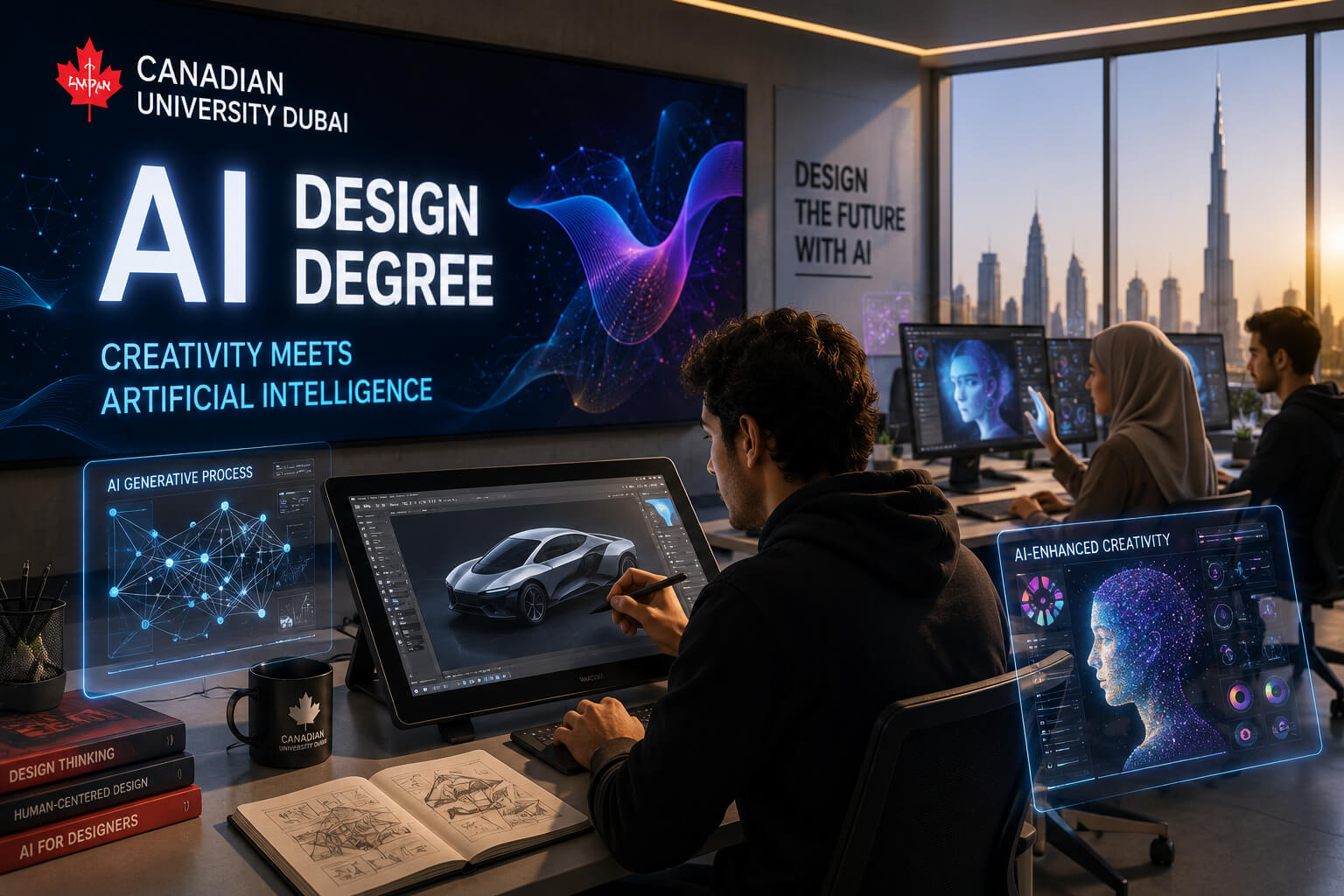
Artificial intelligence is beginning to reshape design just as much as it has transformed software development. That shift is now reaching university classrooms, with the launch of the Canadian University Dubai AI design degree providing a new way for students to prepare for the future of the field.
Canadian University Dubai (CUD) has announced a new Bachelor of Science in Design and Artificial Intelligence (BScDAI), a program that blends traditional design education with AI technologies. Rather than teaching students to compete with AI, the university is positioning them to build alongside it.
A Degree Built Around Human Creativity and AI
Design schools have traditionally focused on creativity, visual communication, and problem-solving. Those skills remain important, but AI is changing how designers work every day.
CUD’s new interdisciplinary degree reflects that reality. Students will study design principles while learning how artificial intelligence can support ideation, digital experiences, product development, and emerging creative workflows. The university says graduates will be prepared to solve increasingly complex design challenges in industries where technology and creativity continue to overlap.
The move also signals that AI is becoming a core competency rather than a specialist subject. Future designers may need to understand prompt engineering, intelligent automation, generative tools, and data-driven design decisions alongside typography, branding, and user experience.
More Universities Are Rethinking Design Education
The announcement fits into a broader trend across Dubai’s higher education sector.
Universities throughout the emirate have steadily introduced AI-focused degrees, research initiatives, and specialized programs as demand grows for graduates with both technical and creative capabilities. Educational institutions are increasingly aligning their programs with Dubai’s long-term economic and digital transformation strategies.
Instead of treating AI as a standalone discipline, many universities now integrate it into business, engineering, media, healthcare, and creative industries. Design is becoming another major field where AI literacy is expected rather than optional.
Preparing Students for Jobs That Are Still Emerging
One challenge universities face is preparing students for careers that may not fully exist yet.
Creative industries are changing rapidly as generative AI tools become part of daily production workflows. Companies are looking for professionals who understand design thinking but can also collaborate with machine learning systems and automation platforms.
By combining these disciplines, CUD appears to be targeting roles that bridge human creativity and intelligent technology instead of replacing one with the other. Graduates could eventually work in UX design, product innovation, digital experiences, creative technology, AI-assisted branding, or interactive media where both artistic judgment and technical knowledge matter.
Dubai Continues to Invest in AI Talent
Dubai has spent the last several years expanding its AI ecosystem through government initiatives, technology partnerships, and education.
New academic programs like the BScDAI contribute to a growing pipeline of local talent that can support the UAE’s ambitions in artificial intelligence, digital transformation, and innovation. While much attention often focuses on AI engineers and data scientists, creative professionals with AI expertise may become just as valuable as organizations rethink how products, services, and digital experiences are designed.
The launch of this degree suggests universities are already preparing students for that future.
