


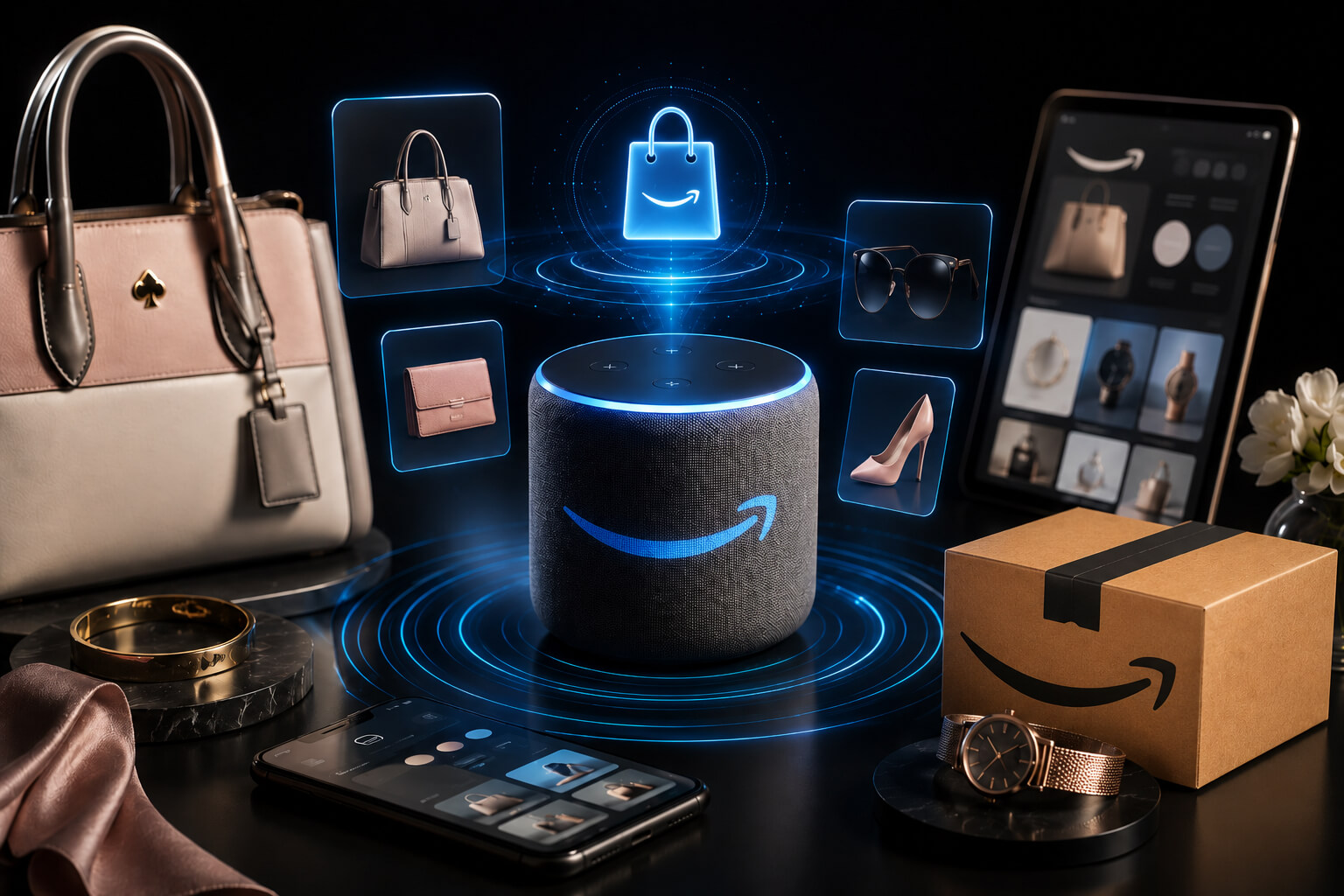
Amazon is taking its AI shopping ambitions beyond its own marketplace.
The company is now offering retailers access to technology behind its Alexa for Shopping experience through a new AWS solution called the Agentic Shopping Assistant. The move signals a major shift in Amazon’s AI strategy: instead of using conversational shopping only to strengthen Amazon.com, the company wants to power AI shopping tools across other online stores as well.
One of the first major examples is Kate Spade, which has deployed an AI-powered gift concierge on its website. The assistant is designed to help shoppers find products through natural conversation, asking about the occasion, recipient, style preferences, and other details before recommending items.
Amazon Turns Alexa for Shopping Into a Retail AI Product
Amazon recently introduced Alexa for Shopping as a more personalized, agentic AI assistant for U.S. customers across the Amazon Shopping app, Amazon.com, and Echo Show devices. The assistant combines Amazon’s Rufus shopping technology with Alexa+ to answer product questions, compare items, build carts, track prices, and automate certain shopping tasks.
Now, AWS is packaging parts of that technology for retailers through the AWS Agentic Shopping Assistant. According to Amazon, the system brings the learnings behind Alexa for Shopping to outside retail customers, allowing brands to build AI-powered shopping experiences on their own websites.
This matters because online shopping is moving beyond traditional search bars and product filters. Instead of typing “black leather handbag” and scrolling through pages of results, customers may soon ask an AI assistant for “a stylish birthday gift under $300 for someone who likes minimalist fashion” and receive curated recommendations.
Kate Spade’s AI Gift Concierge Shows the Strategy
Kate Spade’s deployment gives a clear look at how Amazon’s retail AI could work outside Amazon.com.
The brand’s AI Gift Concierge uses conversational prompts to understand what a shopper is looking for, then turns that information into personalized product suggestions. The goal is to reduce browsing friction and make online shopping feel closer to speaking with an in-store associate.
For fashion and lifestyle brands, this could be especially useful. Gift shopping often depends on context: who the gift is for, what the occasion is, what style the recipient likes, and how much the buyer wants to spend. A conversational AI assistant can collect those details faster than a traditional product category page.
Why Amazon Wants AI Agents Across Retail
Amazon’s broader goal appears to be positioning itself at the center of agentic commerce, a new phase of online shopping where AI tools do more than answer questions. These assistants can compare products, remember preferences, monitor prices, schedule purchases, and even take action on behalf of users.
Alexa for Shopping already includes features such as product comparisons, AI-generated shopping guides, year-long price history, scheduled actions, and cart-building through conversation. Amazon says Rufus helped more than 300 million customers in 2025 before being folded into the Alexa for Shopping experience.
By offering similar technology through AWS, Amazon can compete in two ways at once. It can keep improving its own shopping experience while also selling the underlying AI infrastructure to retailers that do not want to build their own shopping agents from scratch.
The AI Shopping Race Is Heating Up
Amazon is not alone in this race. AI shopping is becoming a major battleground for tech companies, retailers, and search platforms.
Google, OpenAI, Perplexity, Walmart, and others have all moved toward AI-powered product discovery or shopping assistance. GeekWire noted that Amazon’s Alexa for Shopping launch came as consumers increasingly use AI assistants such as ChatGPT and Gemini for shopping advice.
That trend creates both an opportunity and a threat for retailers. If shoppers rely on third-party AI agents to choose products, brands may lose control over product discovery, customer relationships, and merchandising. But if retailers use their own AI assistants, they may be able to keep shoppers engaged directly on their websites.
Amazon’s AWS offering appears designed for that second scenario.
What This Means for Shoppers
For consumers, the rise of Amazon-powered shopping assistants could make online retail more personalized and less time-consuming.
Instead of manually filtering products, reading long descriptions, and comparing reviews across tabs, shoppers could describe what they need in plain language. The assistant could then recommend products, explain differences, answer policy questions, and help complete the purchase.
However, AI-powered shopping also raises familiar concerns. More personalization often depends on more customer data. Shoppers may want to know how much information these assistants store, how recommendations are ranked, and whether paid placement or retailer priorities influence the results.
Amazon says Alexa for Shopping lets users view and update personal details such as family members, pets, interests, and dietary needs, and it also references privacy controls through Alexa’s privacy tools.
Why It Matters
Amazon’s move could reshape e-commerce in the same way cloud computing changed enterprise software. The company first built powerful internal systems for itself, then turned them into AWS products for other businesses.
Now, Amazon appears to be applying that same playbook to AI shopping.
If retailers adopt AWS-powered shopping assistants widely, Amazon could influence how millions of consumers discover and buy products even when they are not shopping directly on Amazon.com. Kate Spade’s AI Gift Concierge may be an early example of a much larger shift: online stores becoming conversational, personalized, and increasingly agent-driven.
For shoppers, that could mean faster product discovery. For retailers, it could mean a new competitive requirement. And for Amazon, it could turn AI shopping from a marketplace feature into a broader retail infrastructure business.
For more Breaking AI news visit: https://breakingai.news
