


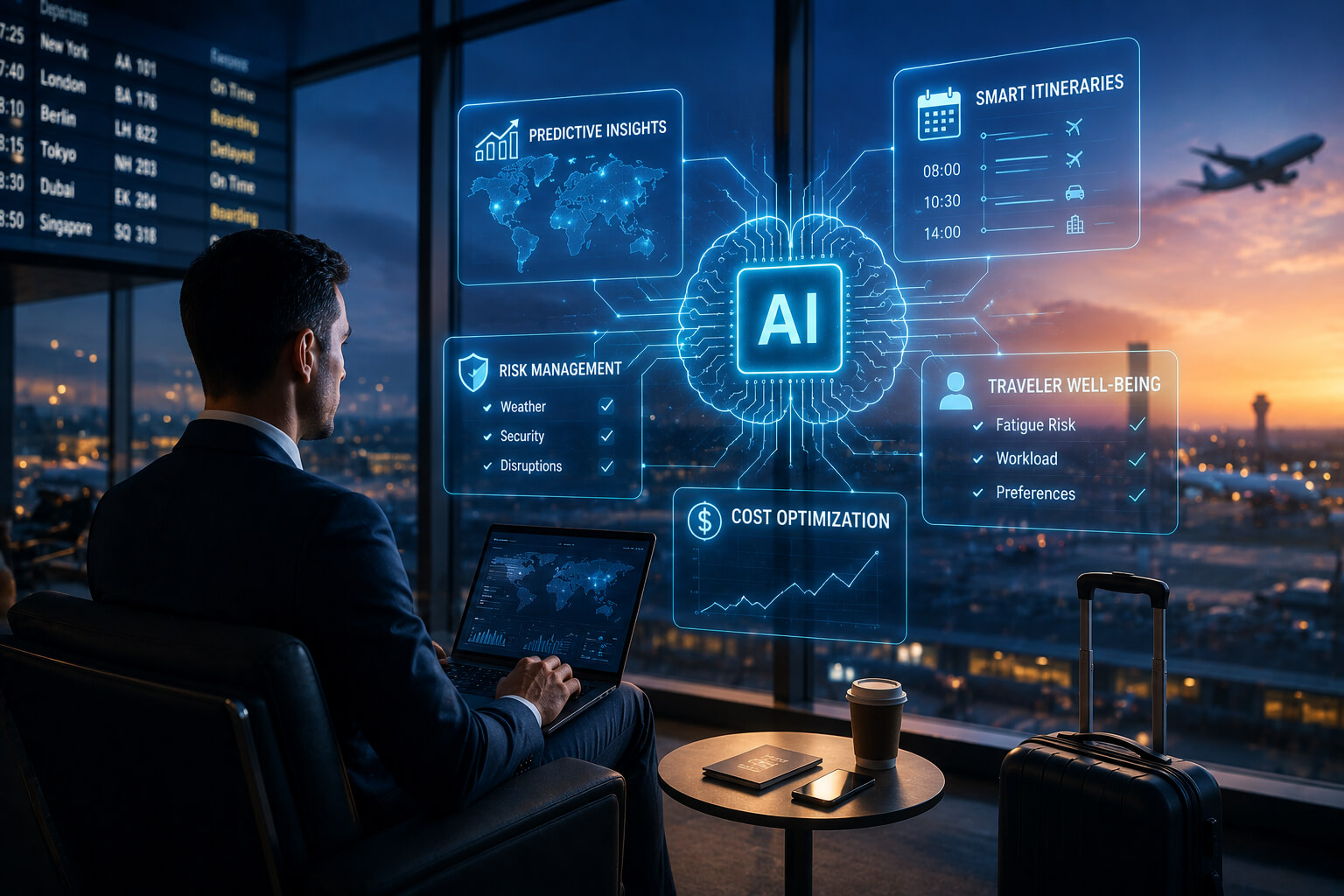
Artificial intelligence was everywhere at Business Travel Show Europe, but the more interesting message was not really about AI itself. The bigger point was uncertainty. How do travel managers help people make better decisions when business travel keeps getting messier, more expensive, and more exposed to disruption?
That question sat underneath the event’s discussions on travel management, procurement, supplier relationships, traveller safety, geopolitical pressure, data, and technology. Business travel has always cared about savings and compliance. Those still matter. But the industry now seems to be moving toward something more human: making travel feel clearer, safer, and less frustrating for the person actually taking the trip.
AI Has to Solve Real Travel Problems
The article from Breaking Travel News noted that AI appeared across the Business Travel Show Europe agenda, but the tone was practical rather than overly excited. Speakers were not treating AI as magic. They focused on where it can actually help, especially by speeding up existing processes, connecting data sources, identifying patterns, and supporting better decisions.
That matters because corporate travel does not need another shiny platform that looks clever in a demo but fails during a real itinerary change. It needs tools that reduce confusion. A delayed flight, a sudden policy question, a risky destination, a budget issue, a supplier limitation — these are the moments where AI can be useful, if it gives people clearer options instead of more noise.
Reducing Uncertainty Is Becoming the Real Advantage
The most useful way to understand AI in business travel is not automation. It is uncertainty reduction. AI can help travellers understand what choices are available. Data can show travel managers what is happening across a programme. Better communication can help employees follow policy because they understand it, not because someone buried a rule inside a long document.
This is where business travel is shifting. The old model was built around control: control the booking, control the supplier, control the policy, control the cost. The newer model still needs discipline, but it also needs confidence. Travellers need to know why a rule exists. Managers need visibility before problems become expensive. Companies need travel programmes that can flex when the world changes without falling apart.
Trust Is Replacing Blind Control
One of the stronger themes from the event was trust. Buyers called for more transparency in how travel management companies make recommendations, how suppliers are incentivised, and how content reaches travellers. Breaking Travel News reported that the discussions around buyer and TMC relationships repeatedly came back to openness, not just price pressure.
That is a big deal. In corporate travel, uncertainty often comes from not knowing how a decision was made. Why was this hotel recommended? Why is this flight outside policy? Why does one supplier appear and another disappear? AI can either improve that trust or damage it. If algorithms hide the logic, people will push back. If AI explains choices clearly, it can make the travel programme feel more reliable.
Compliance Starts With Communication
Travel policy is not useful if employees do not understand it. That sounds obvious, but many corporate travel programmes still treat compliance like a rulebook problem. The discussion at Business Travel Show Europe pointed in another direction: communication first.
The phrase “compliance through communication” captured the mood well. Instead of simply enforcing policy, organisations are involving travellers, listening to regional teams, running education sessions, and explaining the purpose behind travel rules. That approach feels less rigid, but it may work better. People are more likely to follow a policy when they understand what it is trying to protect: budget, safety, visibility, duty of care, or all of the above.
Data Is Becoming Part of the Traveller Experience
Data used to sit behind the scenes in corporate travel. Reports, dashboards, supplier negotiations, programme reviews. Important, yes, but not always visible to the traveller.
That is changing. Data is now becoming part of the experience itself. When used properly, it can help travellers make better decisions, help managers see risk earlier, and help organisations understand where friction is building. The point is not to collect more information for the sake of it. The point is to make information useful at the moment someone needs it.
For AI, this is where the opportunity gets serious. AI systems are only as helpful as the data they can interpret. If travel data is fragmented, outdated, or hidden across different suppliers, AI will struggle to deliver reliable answers. If the data is visible and structured, AI can become a decision-support layer rather than just another chatbot.
Travel Managers Are Becoming Strategic Operators
The role of the travel manager is changing quickly. It is no longer just about booking tools, preferred suppliers, and policy compliance. Travel managers are now expected to think about geopolitics, risk, traveller wellbeing, supplier resilience, cost pressure, sustainability, and executive confidence.
That is a lot.
AI may help with parts of it, especially by spotting patterns and surfacing risks faster. But the strategic value still comes from human judgment. The travel manager of the future will not simply approve trips. They will help the business understand when travel is worth it, when it is risky, when costs make sense, and when employees need more support.
Traveller Safety Goes Beyond Physical Security
Another important point from the event was that traveller experience is not only about reaching the destination on time. It includes safety, confidence, belonging, accessibility, communication, and wellbeing. Breaking Travel News noted that conversations around women’s safety, psychological safety, flexibility, and support all fed into the wider theme of reducing uncertainty.
This is where AI in business travel needs to be careful. A faster booking process is helpful, but it is not enough. Travellers want to feel informed before they leave, supported while they are moving, and protected if something changes. AI tools that can provide timely updates, risk alerts, policy guidance, and personalised support may become more valuable than tools that simply automate admin tasks.
The AI Opportunity Is Smaller and Bigger Than the Hype
The easy version of the story is that AI will transform business travel. Maybe it will. But the more believable version is that AI will remove small pockets of uncertainty across the journey, one by one.
A clearer recommendation. A faster answer. A better risk signal. A more transparent supplier choice. A policy explanation that actually makes sense. A warning before disruption spreads. None of that sounds as dramatic as “AI revolutionises travel,” but it is probably more useful.
Business Travel Show Europe showed an industry becoming more realistic about technology. The question is no longer just what AI can automate. The better question is what uncertainty AI can remove.
For corporate travel, that may be the real competitive advantage.
