

Close Menu
    What's Hot
    Technology & Innovation

    Uzbekistan Tests the US-China AI Divide With Bid to Join Both Tech Blocs

    By Art RyanAugust 29, 20260

    Uzbekistan does not seem interested in choosing one side of the global AI race. The…

    Japanese Companies Open AI Training School for Humanoid Robots

    August 29, 2026

    AI Is Now Central to the US Travel Experience, Amadeus Finds

    August 29, 2026

    Atlas Open-Sources Flight Booking Skill So AI Agents Can Actually Book Flights

    August 29, 2026
    Facebook X (Twitter) Instagram
    Facebook X (Twitter) Instagram
    Breaking AI News
    Saturday, August 29
    • Home
    • Events
    • Videos
      • Machine Can Think Summit 2026
      • Step Dubai Conference 2026
    • Technology & Innovation

      Uzbekistan Tests the US-China AI Divide With Bid to Join Both Tech Blocs

      August 29, 2026

      Japanese Companies Open AI Training School for Humanoid Robots

      August 29, 2026

      AI Is Now Central to the US Travel Experience, Amadeus Finds

      August 29, 2026

      Atlas Open-Sources Flight Booking Skill So AI Agents Can Actually Book Flights

      August 29, 2026

      Banks Are Using AI to Stop Overstocking ATMs With Cash

      August 29, 2026
    • Business & Marketing

      Banks Are Using AI to Stop Overstocking ATMs With Cash

      August 29, 2026

      Bayut Launches AI-Powered Property Search in UAE, Bringing Conversations Into Home Hunting

      August 28, 2026

      AI Becomes Core Infrastructure for UAE Law Firms

      August 28, 2026

      Riyadh Launches Digital Innovation District With AI at the Center of Its Tech Ambitions

      August 28, 2026

      UAE and Saudi Telcos Bet Big on AI Networks as New Revenue Race Takes Shape

      August 28, 2026
    • Industry Applications

      Japanese Companies Open AI Training School for Humanoid Robots

      August 29, 2026

      Banks Are Using AI to Stop Overstocking ATMs With Cash

      August 29, 2026

      AI Becomes Core Infrastructure for UAE Law Firms

      August 28, 2026

      Qatar Adds AI and Data Science to School Curriculum for 2026-2027

      August 28, 2026

      Lam Research Breaks Ground on Oregon AI Chip Lab as Semiconductor R&D Race Accelerates

      August 27, 2026
    • Trends & Insights

      Gemini 4 Leaks Hint at Google’s Next Big AI Push in Coding and Agentic Workflows

      August 20, 2026

      AI Companies Are Looking to the Ocean for Their Next Data Centers

      August 18, 2026

      Alibaba’s Qwen Surges Past Google and Meta With 3 Billion AI Model Downloads

      August 17, 2026

      UK’s AI Boom Is Starting to Show Up in the Economy

      August 17, 2026

      Oracle Says $165 Billion Project Jupiter AI Data Center Is Still on Schedule

      August 15, 2026
    • AI in Travel

      AI Is Now Central to the US Travel Experience, Amadeus Finds

      August 29, 2026

      Atlas Open-Sources Flight Booking Skill So AI Agents Can Actually Book Flights

      August 29, 2026

      AI Search Is Changing How Travelers Find Hotels — and Visibility May Become the New Booking Battleground

      August 25, 2026

      LuggageToShip Expands AI-Powered Travel Platform for Smarter Global Luggage Shipping

      August 21, 2026

      Agoda Launches AI Room Grid Bot to Make Hotel Room Selection Less Frustrating

      August 21, 2026
    Breaking AI News
    Home » Meta Removes Instagram Muse Image Feature After Users Push Back on AI Photo Use
    Ethics & Society

    Meta Removes Instagram Muse Image Feature After Users Push Back on AI Photo Use

    Art RyanBy Art RyanJuly 12, 2026No Comments5 Mins Read
    Facebook Twitter Pinterest LinkedIn Tumblr Email
    Meta Muse Image Instagram
    Share
    Facebook Twitter LinkedIn Pinterest Email

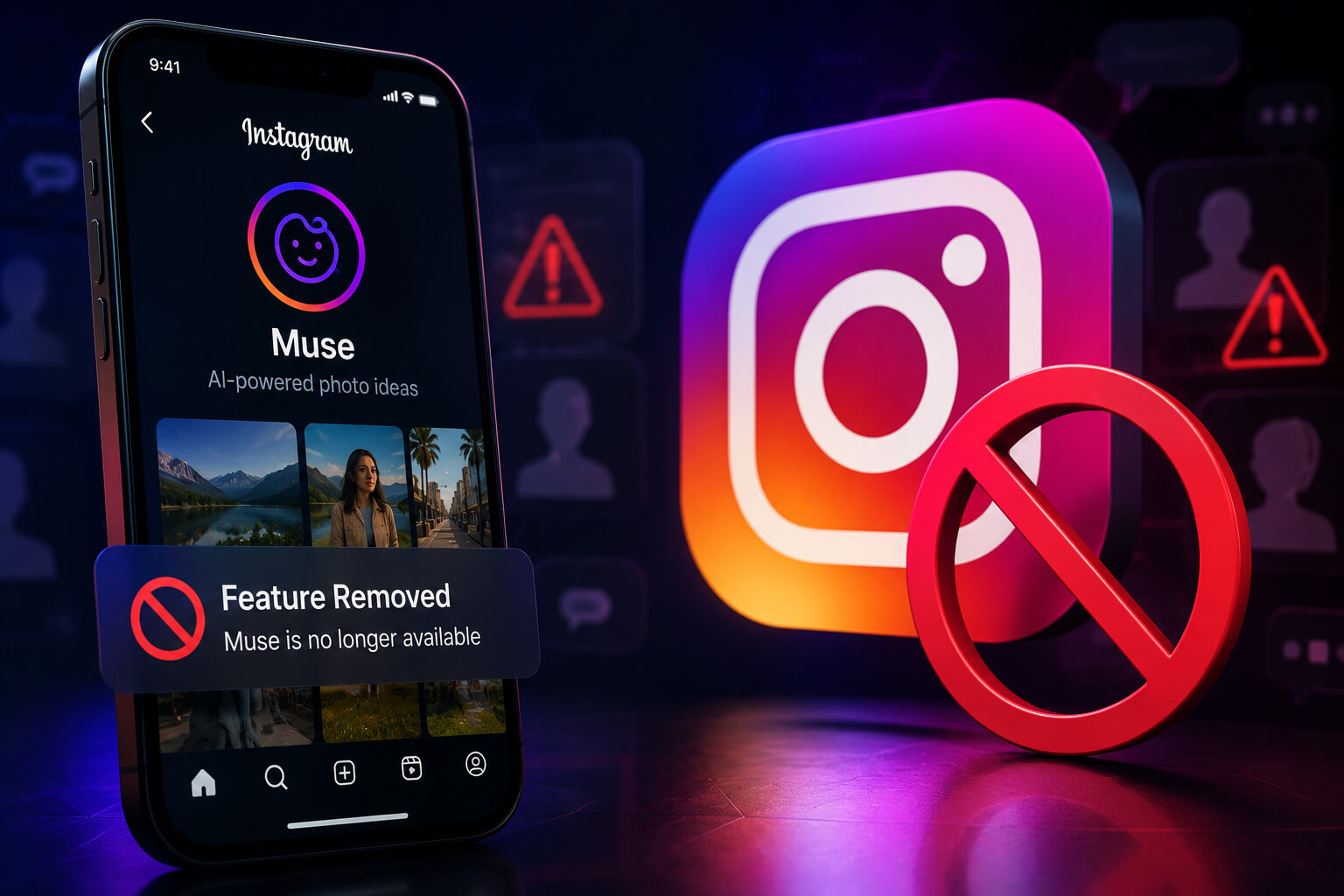
    Meta has pulled back one of the most controversial parts of its new Muse Image rollout on Instagram, and it did not take long.

    The feature allowed people to tag public Instagram accounts and use those profiles as a reference for AI-generated images. Public accounts were included unless users opted out, which quickly turned the launch into a privacy argument instead of a clean AI product debut.

    Meta has now deactivated that capability, saying the feature “missed the mark.”

    What Meta Muse Image Was Supposed to Do

    Muse Image is Meta’s new AI image-generation model. The company introduced it as a creative tool for making and editing images across its platforms, including Instagram and WhatsApp, with plans to bring it to more Meta products later.

    On paper, that sounds familiar. Another AI image tool enters the market. Prompts remain central. Editing gets more attention. Social content becomes part of the pitch.

    The problem came from one specific Instagram feature.

    Users could @-mention a public Instagram profile, and the AI system could generate images using that account’s public posts as a reference. That meant a public creator, influencer, business owner, journalist, artist, or regular user could suddenly become part of someone else’s AI image prompt.

    No direct permission request. No clear opt-in moment.

    That is where the mood changed.

    Instagram Users Were Automatically Pulled Into the AI Feature

    The backlash grew because public Instagram profiles were reportedly included by default, except for users under 18. People who did not want their content used as a reference had to turn the setting off or make their account private.

    That may sound like a small settings issue, but for many users it felt bigger than that.

    Instagram is full of personal photos, work portfolios, family moments, fashion posts, travel content, fitness videos, creator branding, and public-facing professional images. A lot of it is public because people need visibility. That does not mean they want strangers using those posts to generate AI versions of them.

    And yes, users noticed fast.

    Tutorials started spreading online, showing people how to opt out. Advocacy groups and entertainment organizations also criticized the feature, with concerns around consent, digital replicas, and possible misuse.

    Meta Says the Feature Missed the Mark

    Meta did not drag the issue out for weeks.

    After the public criticism, the company disabled the Instagram feature that allowed users to generate AI images by referencing public accounts. Meta said its intent was to give people a useful creative tool while also giving users control over whether their public content could be referenced. Still, the company admitted the approach did not land properly.

    That wording matters.

    It suggests Meta is not abandoning AI image generation. Not even close. Muse Image is still part of the company’s broader AI push. What changed is the account-reference feature that made public Instagram profiles feel too available, too quickly.

    Why This Became a Bigger AI Privacy Moment

    The reaction was not only about one button inside Instagram settings.

    It touched a bigger anxiety around AI platforms: who gets to decide when someone’s face, style, posts, or online identity becomes usable AI material?

    Public content is not the same as free creative fuel. That is the line users keep drawing, especially as AI-generated images and video generators become more realistic.

    For creators, the concern is obvious. Their face and personal brand are part of their livelihood. For actors and performers, the issue connects directly to digital likeness and unauthorized replicas. For everyday users, it is simpler: people do not want to discover that their vacation photos, selfies, or lifestyle posts can help generate synthetic images without them clearly agreeing first.

    Meta’s quick reversal shows how sensitive this space has become.

    The Opt-Out Problem Keeps Coming Back

    Tech companies often frame these systems as “user controlled” because there is a setting somewhere. But users do not always see it that way.

    An opt-out model puts the burden on the person whose content is being used. They have to know the feature exists, find the setting, understand what it means, and switch it off before anything happens. That is a lot to ask when the feature involves identity, images, and AI-generated content.

    An opt-in model would feel very different.

    It would ask first.

    That is the point many critics are making now. AI tools that touch personal likeness, creator content, or public identity cannot be treated like another harmless engagement feature.

    Meta Still Has Bigger AI Plans

    Muse Image is not disappearing. Meta said the model powers creative experiences on Instagram and WhatsApp, and the company plans to expand it to more surfaces, including Facebook, Messenger, and advertiser tools through Meta Advantage+ creative.

    So this is not the end of Meta’s AI image ambitions.

    It is more like a warning shot.

    The company wants AI creation baked into social media, messaging, advertising, and probably every other corner of its platforms. But users are making it clear that AI convenience does not erase consent. Especially when the tool can pull from real people’s public posts.

    Meta moved fast. The backlash moved faster.

    And for Instagram users, that may be the real lesson: AI features are no longer small experiments hidden in a lab. They are landing directly inside the apps people use every day, sometimes before people fully understand what they have been included in.

    Share. Facebook Twitter Pinterest LinkedIn Tumblr Email
    Art Ryan

    Related Posts

    Uzbekistan Tests the US-China AI Divide With Bid to Join Both Tech Blocs

    August 29, 2026

    Japanese Companies Open AI Training School for Humanoid Robots

    August 29, 2026

    AI Is Now Central to the US Travel Experience, Amadeus Finds

    August 29, 2026

    Comments are closed.

    Latest News

    Uzbekistan Tests the US-China AI Divide With Bid to Join Both Tech Blocs

    August 29, 2026

    Japanese Companies Open AI Training School for Humanoid Robots

    August 29, 2026

    AI Is Now Central to the US Travel Experience, Amadeus Finds

    August 29, 2026

    Atlas Open-Sources Flight Booking Skill So AI Agents Can Actually Book Flights

    August 29, 2026
    Facebook X (Twitter) Pinterest Vimeo WhatsApp TikTok Instagram LinkedIn YouTube Spotify Reddit Snapchat Threads

    AI University

    • Global Universities
    • Universities in Africa
    • Universities in Asia
    • Universities in Europe
    • Universities in Latin America
    • Universities in Middle East
    • Universities in North America
    • Universities in Oceania

    AI Tools & Apps Directory

    • AI Productivity Tools
    • AI Coding Tools
    • AI Voice Tools
    • AI Video Tools
    • AI Image Generators
    • AI Writing Tools

    Info

    • Home
    • About Us
    • AI Organizations & Associations
    • Contact Us
    • Cookie Policy
    • Copyright Policy
    • Disclaimer
    • Editorial Policy
    • Terms and Conditions

    Subscribe to Updates

    Get the latest creative news from FooBar about art, design and business.

    © 2026 Breaking AI News.
    • Privacy Policy

    Type above and press Enter to search. Press Esc to cancel.

    Sign Up

    Want to stay ahead In Artificial Intelligence?

     Sign up now and get exclusive breaking AI news and special updates—FREE!