


Key Takeaways
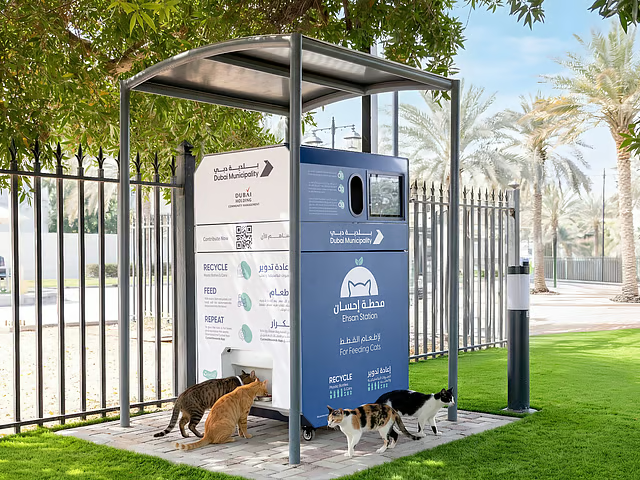
- Dubai has launched AI-powered feeding stations to support and monitor stray animals throughout the city.
- These stations automatically dispense food and water while sensors track usage and feeding schedules.
- The stations maintain cleanliness by preventing scattered feeding that often causes sanitation issues.
- Community volunteers help maintain the stations, ensuring a stable food supply without needing constant human presence.
- Data collected from the stations aids authorities and organizations in planning effective animal welfare programs.
Dubai has introduced AI-powered feeding stations to support stray animals across the city. The initiative aims to provide controlled feeding for cats and other stray animals. The smart stations automatically dispense food and water. Sensors monitor usage and manage feeding schedules. The system helps reduce food waste and improves feeding consistency.
Stray animals often depend on volunteers who place food in public areas. This practice can create sanitation concerns. The AI-powered feeding stations offer a structured alternative. Food is contained within designated devices. This prevents scattered feeding and helps maintain cleaner surroundings.
How AI-Powered Feeding Stations Work
Each AI-powered feeding station uses sensors and automated dispensing technology. The system detects when animals approach the station. Food portions are released according to programmed schedules. Water is also provided through automated systems.
Some stations include cameras and monitoring sensors. These tools record visits by animals. Data is collected on feeding times and animal activity. Authorities and animal welfare groups can review this information. The data helps identify patterns and estimate stray animal populations.
Many stations operate using solar power. Solar panels supply electricity for sensors and dispensers. This allows the units to function outdoors without constant electrical connections. The equipment is designed to withstand heat and environmental conditions common in the region.
Monitoring Stray Animals with AI Feeding Technology
The AI-powered feeding stations help track stray animal behavior. Monitoring tools collect data on how frequently animals visit the stations. The information helps organizations plan animal welfare programs.
Dubai also uses trap-neuter-return programs to control stray populations. Cats are captured, sterilized, and returned to their original locations. Feeding stations create stable feeding points where these animals can be monitored after release.
Role of Community in AI-Powered Feeding Stations
Volunteers and caretakers help maintain the AI-powered feeding stations. They refill food supplies and check the equipment. The automated systems reduce the need for constant human presence.
The stations are installed in areas where stray animals are commonly found. Parks, residential areas, and open spaces are typical locations. The technology supports ongoing efforts to manage stray animals while maintaining organized feeding practices.
