


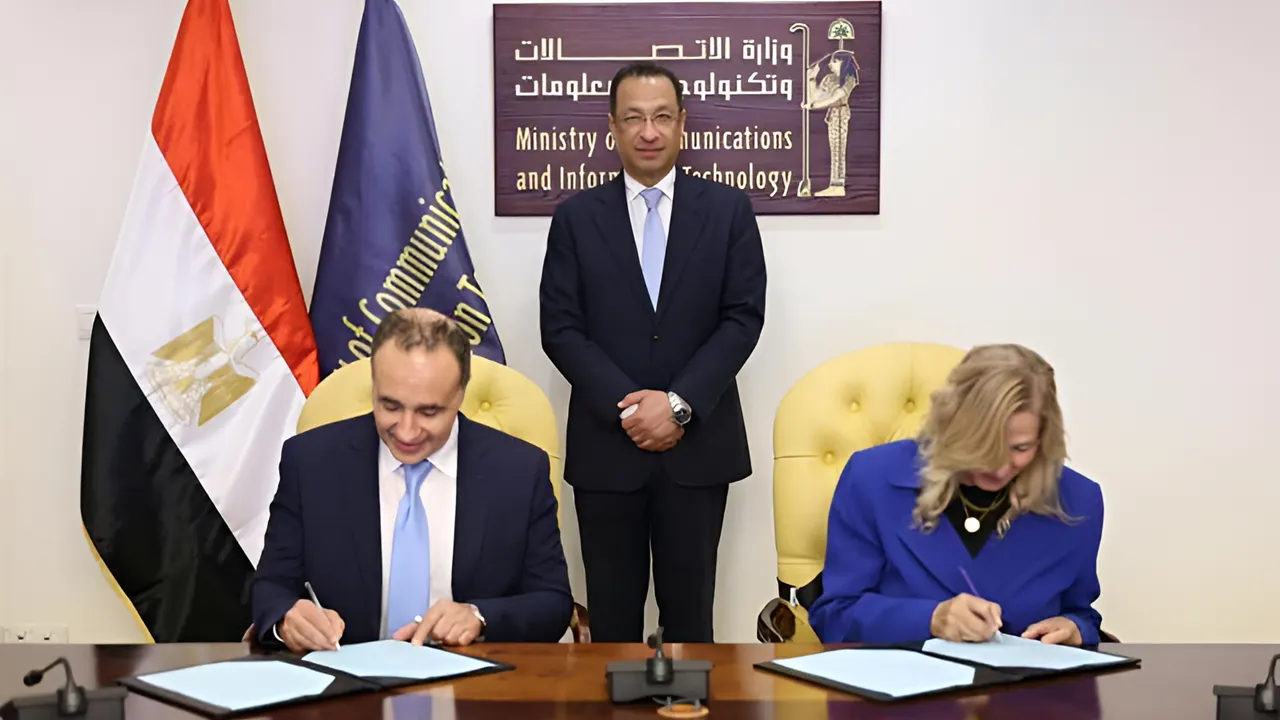
Egypt is scaling up its national artificial intelligence training efforts with a new partnership involving Intel. Together, they aim to train one million citizens every year.
The Ministry of Communications and Information Technology has signed a memorandum of understanding with Intel covering a three-year training programme focused on artificial intelligence, digital trust and responsible technology use. Moreover, the initiative is designed to reach a wide section of Egyptian society. It does not limit access to developers or technology professionals.
Students, workers, jobseekers, young people and government employees are expected to be among the main participants. Therefore, the scale of the programme also shows how Egypt is beginning to treat AI literacy as a broader economic and workforce issue. It is not simply a specialist technology skill.
One Million Egyptians Could Receive AI Training Every Year
Under the agreement, Egypt and Intel plan to provide artificial intelligence training to one million citizens annually over the next three years. The programme is expected to rely heavily on digital learning platforms. This ensures participants can access training regardless of where they are based.
The initiative is not designed to turn every participant into an AI engineer. Instead, much of the programme will focus on helping people understand how artificial intelligence works. It will also teach where it is being used and how AI tools can be applied in everyday work and education.
That broader approach gives the programme a much larger potential audience. Technical students can use it as an entry point into more advanced AI skills. At the same time, workers and jobseekers may use the training to adapt to changing employment requirements. Additionally, government employees could gain a better understanding of how AI may be used across public services.
Intel’s AI for Citizens Programme Will Support the Initiative
Intel’s AI for Citizens programme is expected to play a central role in the training effort. The initiative was developed to introduce artificial intelligence concepts to people who may not have a technical or programming background.
Rather than beginning with coding, participants are introduced to the basic ideas behind AI, machine learning and intelligent systems. The programme also looks at how artificial intelligence affects daily life, workplaces and digital services.
That kind of introductory training fits Egypt’s goal of reaching millions of people. Large-scale AI literacy programmes need to be accessible to participants with very different educational and professional backgrounds. Furthermore, Intel’s existing training framework gives the government a ready-made starting point.
Digital Trust Will Be Included Alongside AI Skills
The partnership will also include Intel’s Digital Trust for All programme. This adds another layer to the training beyond basic artificial intelligence knowledge.
The digital trust component focuses on responsible technology use, online identity, ethics, privacy and the risks people may encounter when using digital platforms. These issues are becoming more important as generative AI tools spread into workplaces, education and everyday communication.
For Egypt, combining AI literacy with digital trust could help participants understand not only how to use new tools but also when to question them. Concerns around misinformation, data privacy and responsible AI use are increasingly becoming part of basic digital literacy. They are no longer specialist cybersecurity topics.
Egypt and Intel Plan to Prepare 1,500 Certified Trainers
The agreement also includes plans to prepare 1,500 certified trainers during the three-year programme. Around 500 trainers are expected to qualify each year.
These trainers will help expand the reach of the programme across educational institutions and training centres. Building a local network of instructors could make it easier to deliver the same core AI training across different regions. Furthermore, this reduces reliance on a central team.
The trainer programme could also give the initiative more long-term value. Once local instructors are certified, they can continue delivering AI education beyond the initial partnership period. Importantly, they can potentially adapt the training for different groups.
Technical Workshops Will Cover AI Computing and Infrastructure
The partnership will not stop at introductory AI concepts. Intel and the Egyptian government also plan to organize technical workshops focused on AI computing, infrastructure and related technologies.
These sessions are expected to target participants who want a deeper understanding of the hardware and computing systems that support modern artificial intelligence applications. This could be especially relevant for university students, engineers and technology professionals. It may help those looking to move into more advanced AI roles.
The agreement also includes support for an annual artificial intelligence hackathon. Participants who perform strongly may get the opportunity to showcase their projects through Intel’s global AI Impact Festival. This gives Egyptian developers and students more exposure to international AI communities.
Egypt Is Expanding AI Training Through Multiple Partnerships
The Intel agreement is part of a much wider skills push already underway in Egypt.
The country has previously announced AI and digital training programmes with major technology companies including IBM, Microsoft, Huawei and Oracle. These initiatives cover areas such as artificial intelligence, cloud computing, digital skills and technology development.
What makes the Intel partnership different is its scale. Many earlier programmes focused on tens of thousands of students or professionals. Training one million citizens every year moves the conversation toward national AI literacy rather than specialist workforce development alone.
Egypt has also dramatically increased the number of people receiving digital-skills training over recent years. That growth suggests the government is trying to build a larger pipeline of technology-ready workers. This is important as digital services and AI adoption expand across the economy.
The Programme Supports Egypt’s National AI Strategy
The partnership also aligns with Egypt’s National Artificial Intelligence Strategy for 2025 to 2030.
The strategy focuses on several areas, including AI infrastructure, governance, research, private-sector development and human capital. One of the country’s long-term goals is to expand the number of professionals capable of building and deploying artificial intelligence systems.
Egypt is targeting the development of around 30,000 AI specialists by 2030. At the same time, it is encouraging wider public adoption of artificial intelligence tools. That creates two separate training needs. There are highly skilled professionals who can build AI systems. Additionally, a much larger population must understand how to use them.
The Intel programme appears to focus heavily on that second group. By reaching students, workers and public-sector employees, Egypt is trying to increase the number of people who feel comfortable using AI. This is important even if people never become developers.
Egypt Is Treating AI Literacy as a National Workforce Issue
The growing focus on AI training reflects a broader shift in how governments are preparing for artificial intelligence.
Investment in data centres, chips and digital infrastructure remains important. However, access to technology alone does not create an AI-ready economy. Workers still need to understand how to use the tools entering their industries.
Egypt’s one-million-per-year target suggests the country wants AI familiarity to become much more widespread. The programme could help introduce artificial intelligence to people who would otherwise have little exposure to the technology.
Its real impact will depend on what happens after the training. If participants apply those skills in classrooms, businesses and government offices, the programme could become an important part of Egypt’s wider digital transformation.
For now, the direction is clear. Egypt is moving beyond small-scale AI training programmes. The country is attempting to build artificial intelligence awareness across a much larger portion of its population.
Sources
Middle East AI News — Egypt, Intel to Train 1M in AI Yearly
EgyptInnovate — MCIT and Intel Sign MoU to Train One Million Citizens Annually on AI Concepts
Intel — Digital Trust for All
Egypt National Artificial Intelligence Strategy 2025–2030 — Official Strategy
