


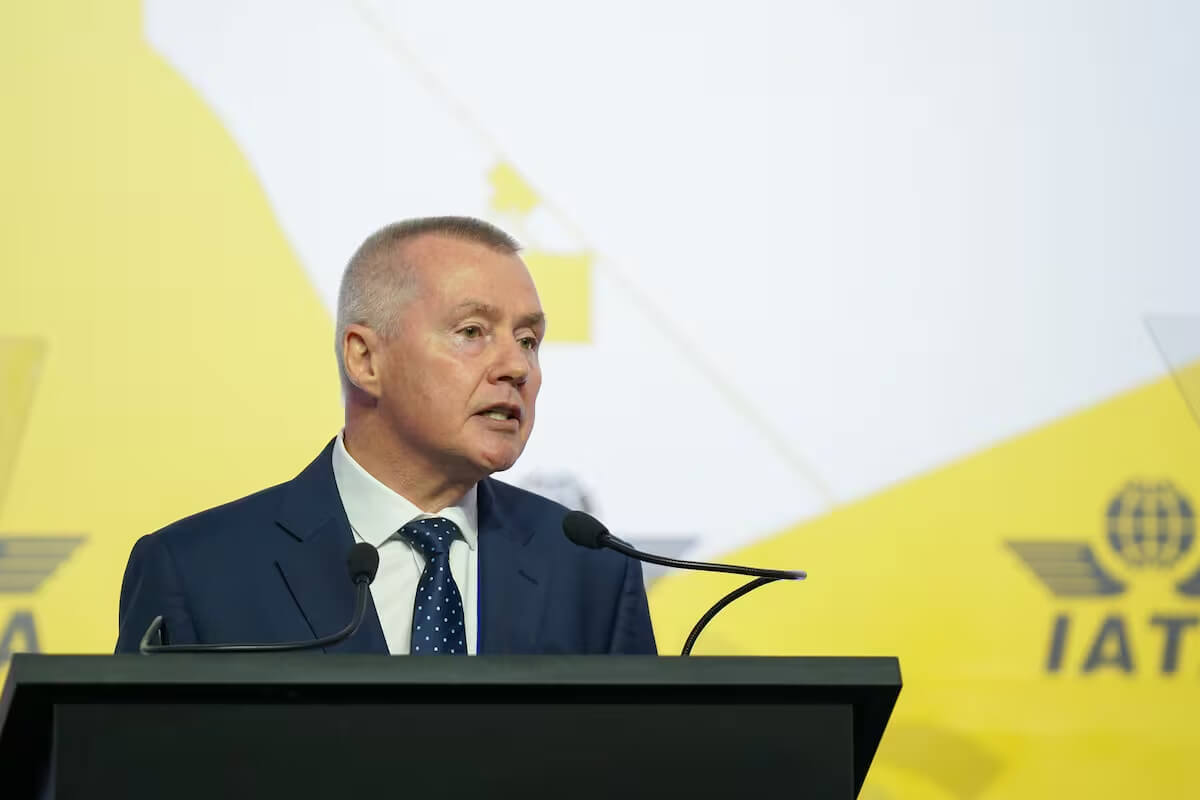
Willie Walsh has issued a stark warning about the future of the global airline industry, saying airlines are facing another difficult and unpredictable year as fuel prices rise, aircraft deliveries fall behind schedule, and sustainability goals come under increasing pressure.
In his latest industry report, the IATA Director General said global airline profitability is expected to fall sharply in 2026. Net profits are projected to drop from $45 billion in 2025 to $23 billion in 2026, while net margins are expected to decline from 4.2% to 2.0%.
Walsh said the aviation sector is once again operating in challenging conditions after emerging from the COVID-19 crisis only to face aerospace supply chain failures, war in Ukraine, geopolitical tensions, changing trade policies, and conflict in the Middle East.
Willie Walsh Says Jet Fuel Prices Are the Biggest Pressure on Airlines
A major focus of Willie Walsh’s report is the sharp increase in jet fuel prices. Following the outbreak of war in the Middle East in March, oil prices climbed and jet fuel costs surged.
According to Walsh, average jet fuel prices are expected to be 70% higher year-on-year. This could add around $100 billion to the global airline industry’s collective fuel bill.
Despite the pressure, Walsh said passenger demand remains resilient. However, growth is expected to slow, with passenger business projected to grow by 2.1% and cargo by only 0.7%.
Walsh also pointed to traveler polling showing that 86% of passengers expect airfares to follow oil prices. Nearly half of travelers expect to spend more on travel this year than last year, while 43% plan to spend the same.
This suggests demand could remain strong during the northern summer travel season, but Walsh warned that the major uncertainty is how long travelers and shippers can continue absorbing higher costs.
Walsh Criticizes Aerospace Supply Chain Failures
Willie Walsh’s report strongly criticized aircraft and engine manufacturers for failing to deliver aircraft and engines as promised.
He said airlines are being forced to operate older and less fuel-efficient aircraft because of ongoing supply chain problems. The aircraft order backlog now exceeds 18,000, while the average fleet age has reached a record 15.2 years.
Walsh said airlines are short more than 5,000 fuel-efficient replacement aircraft that were expected to help reduce operating costs and emissions.
As a result, airlines are missing out on efficiency gains while facing higher lease rates and increased maintenance costs. Supply chain failures cost airlines at least $11 billion in 2025, and Walsh warned that higher fuel prices will make the impact even worse.
He also criticized engine manufacturers, saying their profits have remained strong while airline customers continue to deal with delays, shortages, and reliability issues.
Walsh’s message to engine manufacturers was direct: stop overcharging airlines and return to producing reliable engines that work and last.
IATA to Strengthen Its Voice Under Walsh’s Industry Push
In the report, Walsh said IATA is increasing its advocacy work to better defend airline interests with governments and regulators.
The organization is strengthening its Brussels office and aligning its global team around the need for stronger airline representation.
Walsh said the goal is to help airlines connect the world more safely, efficiently, and sustainably. He stressed that air connectivity supports economic growth, jobs, trade, and prosperity.
He identified three key policy areas where governments must do more: global standards, infrastructure, and decarbonization policy.
Walsh Says Global Standards Are Essential for Aviation Safety
Willie Walsh’s report emphasized that global aviation standards remain the foundation of airline safety.
He noted that flying remains the safest way to travel, with one accident for every 760,000 flights. Nearly 5 billion passengers traveled safely on 39 million flights last year.
However, there were still 51 accidents, including eight fatal accidents. Walsh said each accident is a tragedy and that the path to making aviation even safer is through global standards, industry best practices, data insights, and consistent regulation.
He warned that problems arise when governments ignore global standards, especially in areas such as taxation and passenger rights.
Walsh Warns Aviation Taxes Could Damage Connectivity
Walsh said flying should not be treated as a luxury but as an essential service and an economic catalyst.
He welcomed Sweden’s decision to remove an aviation tax but criticized Brazil’s plan to apply a 26.5% VAT on airline tickets.
According to Walsh’s report, the tax could add $195 to the average international fare of $740 and cause up to 3.6 million international journeys to disappear.
Walsh warned that any government revenue gained from such taxes could be outweighed by the broader economic damage caused by reduced travel and weaker connectivity.
Passenger Rights Rules Need Reform, Walsh Says
Another major point in Willie Walsh’s report is passenger rights regulation.
Walsh criticized the European Union’s EU261 regulation, calling it an example of poor policy. He argued that penalties under EU261 can exceed the price of the ticket and often punish airlines for disruptions outside their control, including air traffic management issues and infrastructure failures.
Walsh said passenger rights rules should focus on what travelers actually want during disruptions. According to IATA polling, passengers value alternative routings more than penalties. The poll also found that more than 70% of travelers felt airlines treated them fairly during disruptions.
He urged Europe to reform EU261 and warned other governments not to copy what he described as a flawed model.
Walsh Highlights Airport and Air Traffic Infrastructure Problems
Willie Walsh’s report also warned that airport and air traffic infrastructure are holding the airline industry back.
Nearly 400 airports now require slot coordination because there is not enough capacity to meet demand at all hours. Walsh said this creates delays, weakens productivity, and reduces competitiveness.
He pointed to positive airport expansion projects in Vietnam, Singapore, and Australia, but criticized poor airport concession structures and excessive fees in other markets.
Walsh also raised concerns about London Heathrow’s third runway plans. He said regulators must ensure strong economic oversight and foster real competition to protect consumers, airlines, and the wider economy.
Air Traffic Management Reform Could Save Airlines Billions
Walsh said outdated air traffic management systems are another major source of unnecessary costs and emissions.
Europe continues to suffer from fragmented air traffic systems, while the United States has underinvested in modernization. Conflict-related airspace restrictions are also forcing airlines onto less efficient routes.
According to Walsh, even a modest 5% improvement in air traffic management efficiency could save airlines $12.5 billion annually and reduce millions of tonnes of carbon emissions.
He said modern aircraft already have the technology to operate more efficiently, but air traffic systems are not using that capability effectively.
Walsh Warns Aviation Sustainability Goals Are Under Threat
Sustainability was another central issue in Willie Walsh’s report.
Five years ago, airlines committed to reaching net zero carbon emissions by 2050. Governments later followed through ICAO’s Long Term Aspirational Goal.
However, Walsh warned that two major parts of the aviation decarbonization roadmap are now under threat: CORSIA and sustainable aviation fuel.
CORSIA Is Being Undermined, Walsh Says
Walsh said CORSIA, the global carbon offsetting system for aviation, is facing serious implementation problems.
Airlines will need between 170 million and 236 million eligible emissions units during the first phase of CORSIA. So far, only 10 countries have made such units available, totaling around 38 million.
Walsh said the shortage is not caused by a lack of potential, but by poor coordination within governments.
He also criticized the European Union for undermining CORSIA while favoring its own emissions trading system.
Sustainable Aviation Fuel Production Is Far Behind Target
Walsh also warned that sustainable aviation fuel, or SAF, is not being produced fast enough.
Airlines have signed more than 180 SAF purchase agreements since 2021, showing strong demand from the industry. However, SAF production this year is expected to reach only 2.4 million tonnes, covering just 0.8% of airline fuel needs.
The long-term goal is for SAF to cover 65% of airline fuel demand by 2050, equal to around 500 million tonnes.
Walsh said the gap is wide and not closing fast enough. He noted that SAF projects have been canceled or reduced in several countries, including Sweden, the Netherlands, Germany, Spain, Denmark, the UK, and Singapore.
He argued that governments should use incentives first to increase SAF production before imposing mandates. According to Walsh, mandates without enough supply only raise costs for airlines without solving the fuel shortage.
Walsh Says Aviation Still Has a Strong Future
Despite the challenges, Willie Walsh’s report ended with confidence in the long-term future of aviation.
Walsh said the next five to ten years could be some of the most exciting in the airline industry, especially as artificial intelligence creates new opportunities to improve efficiency, reduce costs, and enhance customer service.
He also highlighted aviation’s wider role in the global economy. The industry carries more than 5 billion travelers annually, supports $4.1 trillion in trade, and creates employment opportunities for 86.5 million people worldwide.
Walsh said aviation remains a force for connection, freedom, and economic growth, even as the world faces conflict and division.
However, his report made clear that the airline industry cannot solve its biggest challenges alone. Governments, aircraft manufacturers, engine makers, airports, air navigation service providers, and fuel suppliers must all play their part.
Without urgent action on fuel costs, supply chains, infrastructure, taxation, passenger rights, and sustainable aviation fuel, Willie Walsh warned that the industry’s recovery could face serious setbacks in 2026 and beyond.
