


Uzbekistan does not seem interested in choosing one side of the global AI race. The Central Asian country wants closer technology ties with both the United States and China. That position is becoming harder to maintain as Washington and Beijing build competing AI alliances.
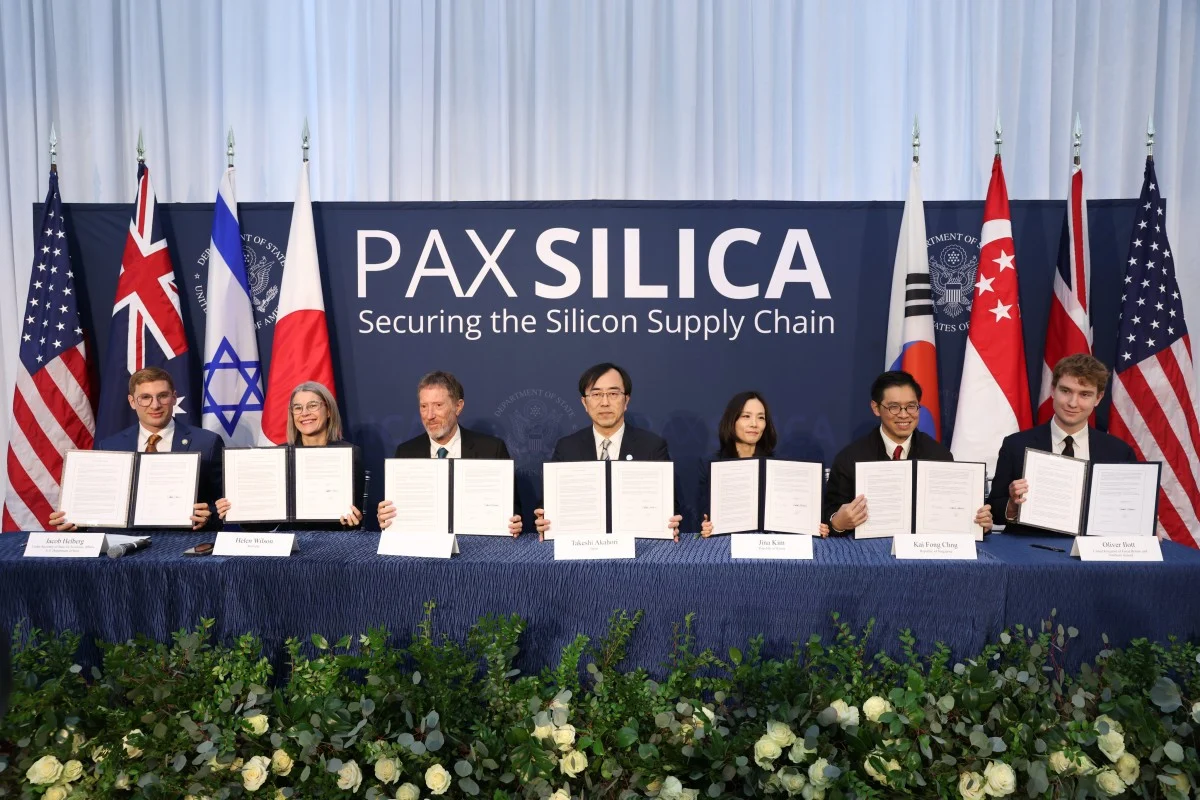
Uzbekistan has formally asked to join Pax Silica, the US-led initiative focused on AI and technology supply chains. The request comes only a month after Tashkent joined China’s World Artificial Intelligence Cooperation Organization (WAICO).
That puts Uzbekistan in an interesting position. Washington increasingly wants trusted AI partners to stay away from China’s competing framework. Tashkent has a different idea. It wants access to both.
Uzbekistan Wants to Join the US-Led Pax Silica Initiative
Uzbekistan has formally approached Washington about joining Pax Silica. Ambassador Furqat Sidikov said Tashkent sent a diplomatic note to the US State Department. The request was submitted last week. Uzbekistan is now waiting for Washington’s response. Sidikov said the country is ready to sign once the US confirms its participation. The move brings Uzbekistan closer to an American AI framework built around secure technology supply chains.
There Is One Complication: Uzbekistan Already Joined China’s AI Group
Uzbekistan’s Pax Silica bid would be fairly straightforward without one detail. Tashkent has already joined China’s WAICO. Beijing established the organization in July 2026. It promotes international AI cooperation and technology sharing, particularly among developing countries. Uzbekistan was among the countries that joined. Now it wants membership in Washington’s competing initiative as well. That overlap turns an ordinary technology agreement into a geopolitical test.
Washington Is Building Pax Silica Around Trusted AI Supply Chains
The United States launched Pax Silica in December 2025. The initiative focuses on securing supply chains for critical technologies. AI models, semiconductors, communications networks, energy and critical minerals all fall within its scope. Washington also wants to reduce dangerous dependencies in the technology ecosystem. About two dozen countries have joined the initiative. They include major US allies such as Japan, Australia and South Korea.
China Is Offering Developing Countries a Different AI Path
China’s WAICO takes a different approach. Beijing has presented the organization as a platform for international AI cooperation. It places particular emphasis on the Global South. Technology access, training and infrastructure are important parts of China’s pitch. Beijing also wants developing countries involved in shaping global AI governance. For nations building their digital economies, that offer can be difficult to ignore. Access to affordable AI technology matters as much as geopolitical alignment.
The US May Not Be Comfortable With Countries Joining Both
Washington appears increasingly concerned about overlapping memberships. Reuters reported in August that US officials were preparing a tougher message for potential Pax Silica partners. Countries participating in China’s competing AI framework could face exclusion from the American coalition. The reported approach would turn AI cooperation into a clearer strategic choice. That creates an immediate problem for countries such as Uzbekistan. They want technology from both ecosystems rather than dependence on one.
Uzbekistan Says Drawing AI Red Lines Is Counterproductive
Uzbekistan is openly pushing back against the idea of choosing sides. Ambassador Sidikov argued that countries should have opportunities to participate in different international partnerships. He also described strict red lines around cooperation as counterproductive. From Tashkent’s perspective, competition between major technology powers can create opportunities. Uzbekistan wants those opportunities available from both directions. That position reflects a wider Central Asian preference for diversified international relationships.
Tashkent Wants American and Chinese AI Technology
The message from Uzbekistan’s government has been remarkably consistent. Bobur Khodjaev, an official in the Presidential Administration, discussed the issue on August 24. He said Uzbekistan wants access to both American and Chinese AI technologies. The country also wants to develop its own AI infrastructure. For a developing economy, limiting access to one technology ecosystem carries obvious risks. Uzbekistan would rather take useful technology wherever it can find it.
Kazakhstan Shows That Dual Membership Is Already Possible
Uzbekistan would not be the first Central Asian country with connections to both initiatives. Neighboring Kazakhstan has already joined Pax Silica and China’s WAICO. Kazakhstan is especially important because of its critical mineral resources. Those materials matter for semiconductors, batteries and other advanced technologies. Its position demonstrates why Central Asia is becoming strategically valuable. The region sits between major powers while holding resources needed for the next technology cycle.
Central Asia Does Not Want an AI Cold War
The US-China technology rivalry looks increasingly binary from Washington and Beijing. Central Asian governments often see things differently. Their foreign policies have traditionally relied on maintaining relationships with several major powers. That strategy is now extending into artificial intelligence. Countries in the region want American chips and advanced AI capabilities. They also want Chinese infrastructure, models and investment. Giving up either side could slow their own digital development.
AI Alliances Are Becoming About More Than Chatbots
Pax Silica and WAICO show how much the AI competition has expanded. The fight is no longer only about which company builds the best model. Semiconductors, data centers, energy and critical minerals now sit inside the same strategic contest. Technical standards are becoming important too. Countries joining these frameworks may eventually influence which technologies dominate their domestic markets. That gives AI alliances economic weight far beyond today’s generative AI boom.
Uzbekistan Could Become a Test Case for Washington
Washington now faces an awkward decision. Accepting Uzbekistan would show that Pax Silica can accommodate countries working with China. Rejecting it would reinforce the idea that membership requires choosing sides. Either decision sends a message beyond Tashkent. Other developing countries are watching the same rivalry unfold. Many want American technology without cutting ties with China. Uzbekistan is simply making that position unusually clear.
The AI Race Is Becoming a Battle for Countries, Not Just Companies
The global AI race began with familiar names such as OpenAI, Google, Microsoft, Nvidia and major Chinese technology firms. Governments are now building alliances around them. Supply chains, computing power and access to advanced chips are becoming geopolitical assets.
Uzbekistan’s move captures that shift neatly. It wants China’s AI cooperation framework and America’s secure technology network at the same time.
Washington may prefer a cleaner choice.
Tashkent doesn’t.
That tension could become much more common as developing economies decide how they fit into an increasingly divided global AI landscape.
Sources
- South China Morning Post — Uzbekistan tests US-China AI rift with bid to join rival tech bloc
https://www.scmp.com/news/china/diplomacy/article/3365645/uzbekistan-tests-us-china-ai-rift-bid-join-rival-tech-bloc - Kursiv Uzbekistan — Pax Silica’s binary AI choice does not fit Central Asia
https://uz.kursiv.media/en/2026-08-25/url-pax-silica-central-asia-ai-choice-vladimir-norov/
