


The UAE is putting more structure behind its push to bring autonomous AI into everyday government work, and this is a key part of the growing UAE FedAI ecosystem.
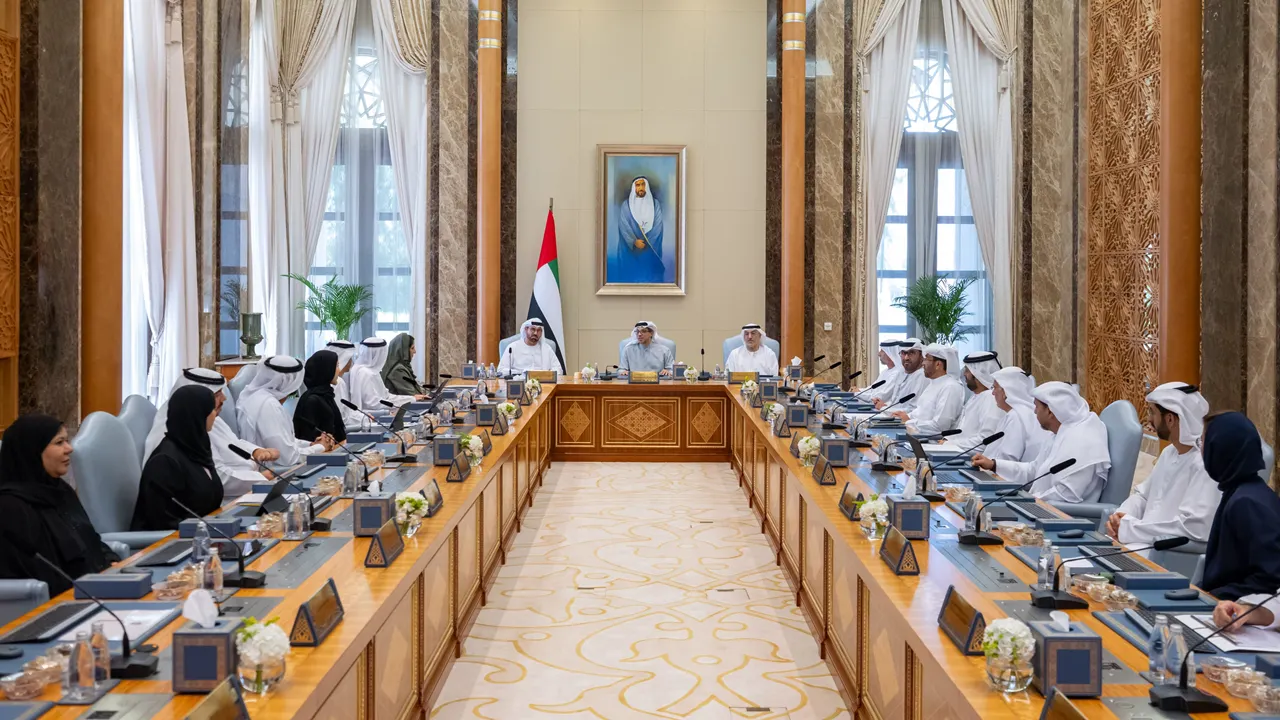
The country’s Ministerial Council for Artificial Intelligence and Development has reviewed plans for FedAI, a national technical ecosystem. This new system is designed to give federal entities a secure environment for developing, adopting and operating Agentic AI solutions.
The move comes as the UAE prepares for the next phase of its wider Agentic AI Project. The focus is shifting from assessing government processes to actually deploying AI across selected services, operations and tasks.
The meeting was chaired by Sheikh Mansour bin Zayed Al Nahyan, Vice President, Deputy Prime Minister and Chairman of the Presidential Court. It took place at Qasr Al Watan in Abu Dhabi on September 9.
FedAI Gives Federal Entities a Shared AI Environment
FedAI is being developed as a national technical ecosystem rather than another standalone government AI tool. Its purpose is to give federal government entities a flexible and secure framework. Within this framework, they can build, adopt and operate Agentic AI solutions.
That matters as more ministries move beyond basic chatbots and isolated automation projects. Instead of every entity developing its own AI environment from scratch, FedAI points toward a more coordinated approach. This approach could make it easier to establish common technical requirements, security controls and deployment practices across government.
The broader idea is to create a shared foundation for AI agents rather than allowing each federal body to build disconnected systems. If the model works as intended, ministries could move faster. At the same time, they would still operate within a common national framework.
UAE Moves Its Agentic AI Project Into the Next Phase
The first phase of the Agentic AI Project focused heavily on identifying where the technology could have the biggest impact. Federal entities reviewed government services, operations and internal tasks. They assessed which processes were suitable for AI-driven automation or agent-based systems.
That early work also included capability building, mapping potential use cases and submitting projects for future implementation. The second phase now moves closer to deployment, with selected services and operations expected to begin using Agentic AI.
This is an important shift because the programme is moving away from workshops and planning exercises and toward real government use. The next stage will show whether AI agents can deliver measurable improvements in service delivery, productivity and decision-making.
Customer Experience Lab Will Test Agentic AI in Services
The Council also reviewed plans for a customer experience lab that will study how Agentic AI can improve government services. The lab is expected to provide an environment where federal entities can test new AI-driven service models before introducing them more widely.
A controlled testing environment could become especially useful as government AI becomes more capable. Systems that simply answer questions are relatively easy to manage. However, agents that can carry out tasks, coordinate workflows or connect with multiple government systems bring more complex technical and governance challenges.
The UAE is also looking at internal challenges that encourage government employees to develop their own AI solutions. That approach could help federal entities identify practical problems from inside government rather than relying entirely on technology vendors to define what should be automated.
Agentic AI Is Becoming Part of the UAE Government Model
The FedAI initiative is part of a much larger government push toward Agentic AI. Earlier in 2026, the UAE announced plans to adopt Agentic AI across 50% of federal government services and operations within two years.
That target was followed by an implementation framework aimed at helping federal entities move from exploration to actual deployment. The government also announced plans to train tens of thousands of public-sector employees in Agentic AI capabilities.
By June, hundreds of participants from dozens of federal entities had already joined specialised workshops focused on mapping services, projects and operations that could use the technology. Some participating entities were also placed into shorter implementation tracks designed to accelerate deployment.
The direction is becoming clear. The UAE is not treating Agentic AI as a collection of experimental pilots. It is trying to integrate the technology into the way federal government operates.
A Central AI and Data Structure Is Already Taking Shape
FedAI also fits into a broader restructuring of how the UAE manages artificial intelligence and government data. In June, the UAE approved the creation of the Artificial Intelligence and Data Authority. This move brings several responsibilities related to AI, public data and digital government under one national body.
The new structure is intended to strengthen coordination across federal and local government while supporting the development of policies, legislation and national AI strategies. It also gives the UAE a more central framework for managing government data and overseeing AI adoption.
FedAI could serve as the technical layer underneath that governance structure. The authority can help define how AI should be managed. Meanwhile, FedAI could provide the shared environment where government entities actually build and operate those systems.
That combination of policy, data management and infrastructure could give the UAE a more unified approach. This is increasingly important as the number of AI systems used by government continues to grow.
UAE Wants AI to Shape Decisions, Not Just Automate Tasks
The government’s ambitions go beyond using AI to automate repetitive administrative work. Sheikh Mansour said Agentic AI represents a new phase in developing the UAE’s Government of the Future, with the goal of improving efficiency, service quality and execution speed.
The technology will also play a role in policies, operations, and decision-making. That makes the project more significant than a typical automation programme because AI agents may eventually influence how governments manage processes rather than simply handling routine digital tasks.
This also raises more difficult questions around accountability, cybersecurity, data quality and human oversight. A shared system such as FedAI could help address some of those issues by giving federal entities a more consistent environment instead of allowing different standards to develop independently.
What FedAI Could Mean for Government AI
FedAI may not be the part of the UAE’s AI strategy that residents see directly, but it could become one of the most important pieces behind the scenes. Governments can launch many AI assistants without becoming genuinely AI-native if those tools remain disconnected from each other and from the systems that power public services.
The harder challenge is building infrastructure that lets AI interact securely with government data, internal workflows and digital services. At the same time, the government must maintain consistent standards across different agencies.
FedAI appears to be aimed directly at that problem. If it becomes the common technical environment envisioned by the government, federal entities could gain a clearer path from experimentation to operational deployment.
The next phase of the project will be the real test. AI agents will need to prove that they can improve productivity, strengthen services and operate securely inside government systems.
For now, FedAI gives the UAE something increasingly important as its Agentic AI ambitions grow: a shared foundation for building government AI at scale.
Sources
Middle East AI News
https://www.middleeastainews.com/p/uae-creates-federal-government-ai
Emirates News Agency
https://www.wam.ae/en/article/c25rx4o-ministerial-council-for-artificial-intelligence
UAE Government Media Office
https://www.mediaoffice.ae/en/news/2026/may/18-05/mohammed-bin-rashid-chairs-uae-cabinet-meetin
