


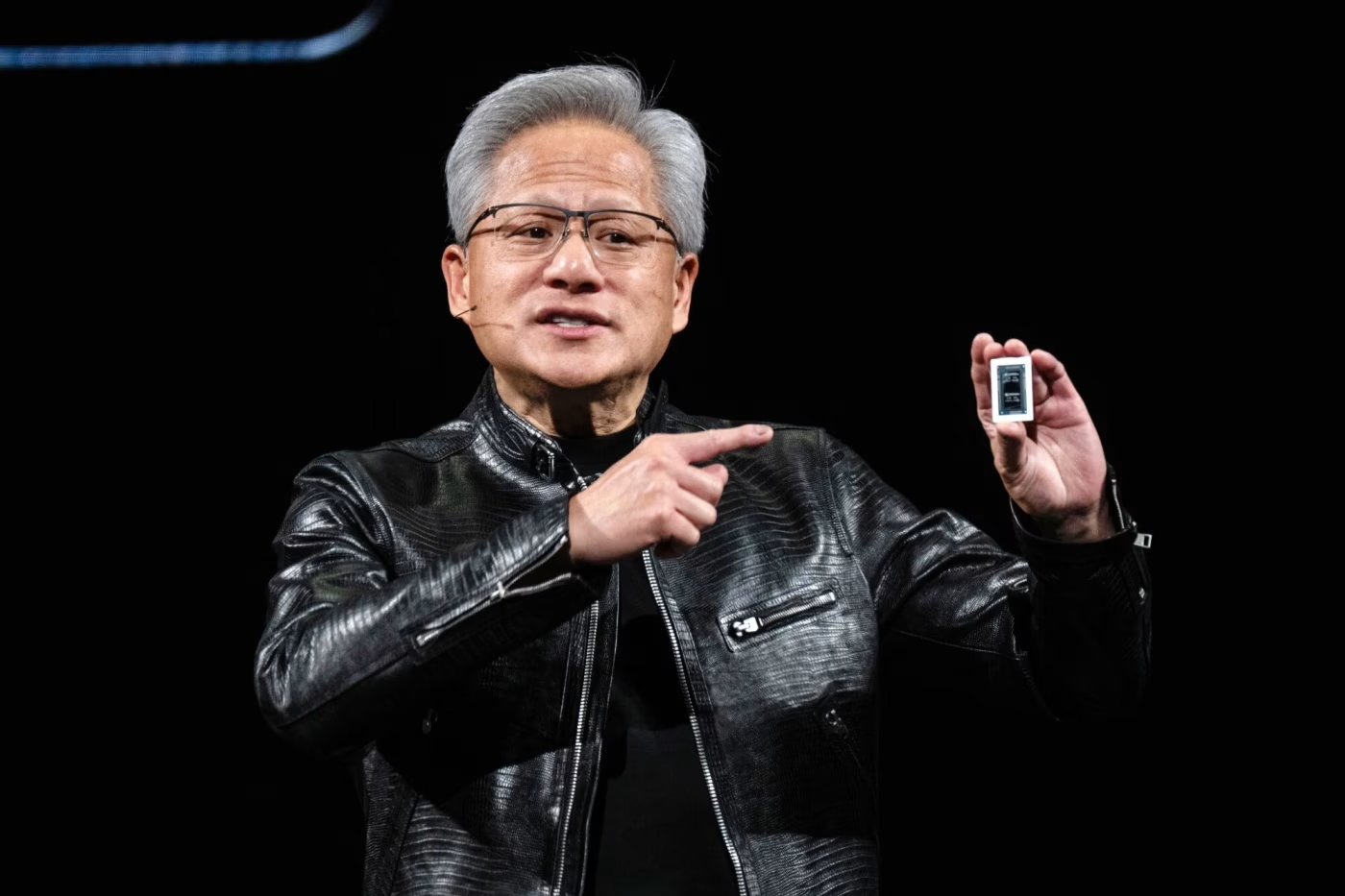
Nvidia Launches RTX Spark AI Laptops for the Age of AI Agents Nvidia is plunging further into the future of personal computing with a new class of AI-powered laptops and desktops. These are centered around its RTX Spark chip.
Nvidia’s RTX Spark platform, which was launched at Computex 2026, is designed to bring the latest AI capabilities to personal computers. Rather than relying solely on cloud servers, the new devices are built to run AI agents locally. As a result, users can execute complex tasks faster, more privately, and with reduced reliance on internet-based AI services.
The move is a major expansion for Nvidia beyond its dominance in graphics processors and data center AI chips. With RTX Spark, Nvidia is positioning itself as a serious player in the next generation of Windows PCs.
Nvidia RTX Spark AI Laptops Target Local AI Workloads
The new Nvidia RTX Spark AI laptops are designed for users who need powerful AI performance in portable devices. These include creators, developers, gamers, researchers, and professionals working with generative AI tools.
AI agents are expected to become a major part of future computing. Unlike simple chatbots, AI agents can take actions, manage workflows, analyze files, assist with creative projects, and automate software tasks. Additionally, they can interact with apps on behalf of the user.
By bringing this capability onto laptops and desktops, Nvidia is betting that the next big shift in computing will happen directly on personal devices.
Major PC Makers Join Nvidia’s AI Laptop Push
Nvidia’s RTX Spark chips are expected to appear in systems from major manufacturers including Microsoft, Dell, HP, Lenovo, Asus, and MSI.
These partnerships give Nvidia a broad launch base across premium Windows laptops and compact desktop PCs. The first wave of RTX Spark devices is expected to focus on high-end users. These users need strong AI, graphics, and productivity performance in one machine.
The partnership is particularly important for Microsoft, as Windows is increasingly being built around AI features. RTX Spark-powered PCs could make AI agents more useful by running natively on local hardware. In contrast, they will not need to rely solely on cloud infrastructure.
Why it’s important to run AI locally
There are several major advantages to running AI locally.
First, it can enhance privacy. An AI agent that can handle documents, images, code or creative files on a laptop may mean fewer sensitive files have to be sent to remote servers.
Secondly, local AI can decrease latency. Image generation, video editing, coding assistance, 3D rendering, and document analysis may be snappier when performed on the device.
Third, it gives developers and creators more control. Instead of depending entirely on cloud access, subscriptions, or external compute limits, users may be able to run more AI workloads directly from their own machines.
Nvidia Moves Into the AI PC Race
The launch of RTX Spark also places Nvidia in closer competition with Intel, AMD, Apple, and Qualcomm. All of these companies are trying to define the future of AI PCs.
While Nvidia is best known for GPUs, RTX Spark represents a broader system-on-chip strategy. The chip combines CPU, GPU, and AI acceleration capabilities in a package built for modern Windows machines.
This could reshape how premium laptops are designed. Instead, RTX Spark PCs are being pitched as machines built from the ground up for AI agents and local AI workloads. This is different from simply having AI as an add-on feature.
AI Agents Could Change How People Use Computers
Nvidia’s announcement hints at a future where computers are not just tools that users manually operate via keyboard and mouse. In this vision, AI agents could help users complete tasks by understanding context and navigating applications. Additionally, they could generate content, test software, organize files and assist with decision-making.
For the average person, that could be a laptop that can summarise work documents, build presentations, edit media, manage schedules and help automate repetitive tasks.
For professionals, RTX Spark-powered systems could help allow for the use of advanced AI models. They would not need constant access to cloud-based computing.
Nvidia’s Bigger AI Play
RTX Spark is part of a broader Nvidia strategy to move AI computing from data centers to personal devices.
The company already has a leading position in AI infrastructure and its high-performance GPUs are used by major cloud providers and AI companies. Now, Nvidia is trying to bring more of that AI power to the edge. This includes laptops, desktops, workstations, and robotics systems.
This strategy reflects a growing industry belief that the future of AI will not live only in massive data centers. Instead, AI will increasingly run across a mix of cloud systems and local devices.
Why it Matters
Nvidia’s RTX Spark AI laptops could mark a turning point for the PC industry.
For years, most advanced AI tasks have depended on cloud servers. However, if Nvidia and its partners can make local AI agents practical on laptops and desktops, personal computers may become far more capable, private, and autonomous.
This also raises the stakes in the AI PC race. Microsoft, Intel, AMD, Apple, Qualcomm, and Nvidia are all competing to define what the next-generation computer looks like. Nvidia’s RTX Spark gives the company a stronger position in that battle.
For users, the impact could be simple but powerful: future laptops may not just run apps. They may run intelligent AI agents that help get real work done.
For more Breaking AI news visit: https://breakingai.news
