


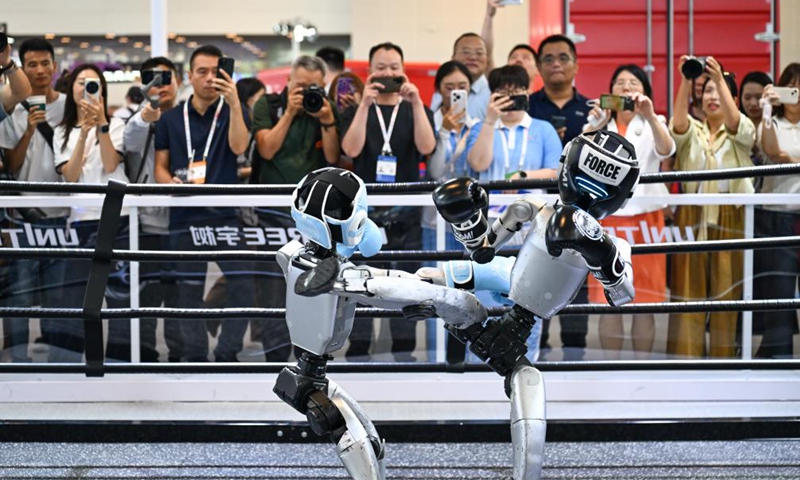
Embodied AI is becoming one of the biggest highlights in the global artificial intelligence race, and the World Intelligence Expo 2026 in Tianjin, China, offered a clear look at where the technology is heading next.
The four-day event brought together more than 700 exhibitors showcasing the latest advances in artificial intelligence, robotics, automation, and intelligent application scenarios. With a total exhibition area of 130,000 square meters, the expo placed a strong spotlight on embodied AI — a fast-growing field focused on giving machines the ability to sense, interact with, and operate in the physical world.
Humanoid Robots Draw Major Attention
One of the most eye-catching parts of the expo was the presence of humanoid robots performing a wide range of demonstrations. Visitors watched robots box, grip packages, interact with people, perform push-ups, climb obstacles, and take part in staged performances.
These demonstrations showed how embodied AI is moving beyond software and digital assistants into machines that can physically respond to real-world environments. Humanoid and quadruped robots were presented not only as futuristic displays, but also as examples of how AI-powered machines could support industrial work, public services, logistics, and specialized operations.
What Is Embodied AI?
Embodied AI refers to artificial intelligence systems that are connected to physical bodies, such as robots, drones, autonomous machines, or smart devices. Unlike traditional AI models that mainly process text, images, or data, embodied AI systems interact directly with the real world through sensors, movement, and decision-making.
This makes embodied AI especially important for industries that require physical action. In manufacturing, it could help robots handle complex assembly tasks, logistics, it could improve warehouse automation and package handling. In public services, embodied AI could support assistance, security, inspection, and emergency response.
World Intelligence Expo Highlights China’s AI Ambitions
The World Intelligence Expo 2026 carried the theme “Intelligence: Extensive Development Space, Sustainable Growth Driver.” The event featured seven major exhibition zones, including embodied AI, core AI technologies, low-altitude economy, and commercial space exploration.
The strong presence of robotics companies and intelligent machine demonstrations reflects China’s growing push to commercialize AI in physical industries. Rather than focusing only on chatbots or generative AI tools, the expo showed how AI is increasingly being applied to machines that can move, work, and interact in real-world spaces.
Robots Move From Demonstration to Application
Many robot performances at technology expos are designed to attract public attention. However, the World Intelligence Expo 2026 focused on practical deployment. The robots on display demonstrated potential applications in industrial production, public services, special operations, and future consumer environments.
Package-gripping humanoid robots, climbing quadruped robots, and interactive service robots highlighted a common trend. AI is becoming more physical. Advances in sensors, machine learning models, robotic control systems, and hardware design are driving this shift. As a result, embodied AI could play a major role in the next wave of automation.
The Future of AI Is Physical
The rise of embodied AI suggests that the next stage of artificial intelligence may extend beyond screens, apps, and cloud-based tools. AI could increasingly power robots, smart machines, vehicles, and other systems used in everyday life.
The World Intelligence Expo 2026 offered a glimpse of that future. Humanoid robots entertained crowds, while other machines demonstrated real-world task capabilities. These displays showed how AI is evolving from digital intelligence into physical action.
Why it Matters
Embodied AI matters because it represents a major shift in how artificial intelligence can be used. Instead of only generating text, images, or data insights, AI systems are beginning to interact with the physical world through robots and intelligent machines.
This could reshape industries such as manufacturing, logistics, healthcare, public safety, transportation, and home assistance. As embodied AI becomes more advanced, businesses may gain new ways to automate physical tasks, while consumers could see more intelligent robots in daily life.
The World Intelligence Expo 2026 shows that the race to build practical AI-powered robots is accelerating. For the future of AI, the biggest breakthroughs may not only happen online — they may happen in the real world.
For more Breaking AI news visit: https://breakingai.news
