


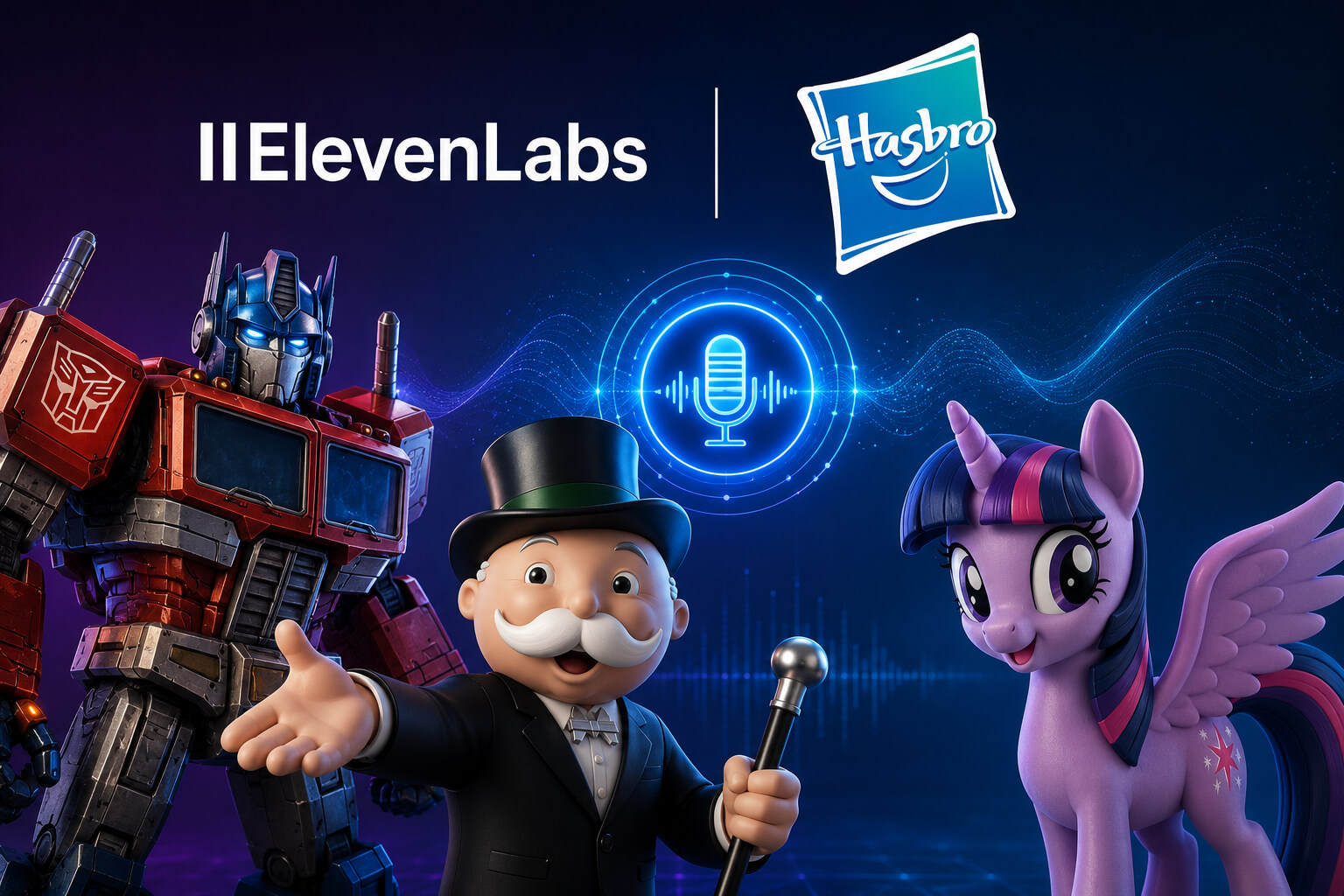
Hasbro is taking a major step into the AI era with the launch of Sixth Wall, a new AI studio created to bring the company’s iconic characters into interactive digital experiences.
The toy and entertainment giant has also announced a strategic partnership with ElevenLabs, the AI audio company known for voice generation technology. Through the partnership, selected Hasbro characters will become available for authorized AI-powered experiences, including voice-based interactions, storytelling, games, digital companions, and brand engagement tools.
The move could reshape how major entertainment companies license their characters in the age of artificial intelligence.
Hasbro Launches Sixth Wall AI Studio
Sixth Wall is Hasbro’s new AI-focused studio designed to create the next generation of character experiences. The studio will focus on bringing familiar characters into AI environments while protecting brand identity, creative rights, and performer participation.
Rather than simply licensing how a character looks, Sixth Wall is introducing a new model called Behavioral Licensing. The emphasis is on how characters speak, think, react and interact in fluid digital environments.
The goal is to let partners use Hasbro characters in AI-driven experiences while keeping those characters true to their original personalities, stories, voices and brand rules.
ElevenLabs Partnership Brings Character Voices to AI
As part of the launch, Hasbro is partnering with ElevenLabs to make select characters available through the ElevenLabs Iconic Marketplace.
The first group of characters expected to be available includes major Hasbro names such as Optimus Prime, Megatron, Cobra Commander, Mr. Potato Head, and characters from Clue.
These AI character experiences will use authorized source material and approved voice performances. Hasbro says the model is designed to support creators and performers while giving brands a controlled way to bring characters into AI-powered platforms.
What Is Behavioral Licensing?
Behavioral Licensing is Hasbro’s new framework for AI character licensing.
Traditional licensing often focuses on visual identity, merchandise, film rights, or branded products. Behavioral Licensing broadens the definition of how a character behaves in real time interactive environments.
It’s a character’s voice, personality, style of speech, backstory, and boundaries of safety.
An Optimus Prime experience would have to sound, respond and behave in a way that feels true to the character, say, if it were AI-enabled. And the same would be true of Mr. Potato Head, Clue characters and other Hasbro properties.
This framework is meant to prevent unauthorized or off-brand AI versions of popular characters from spreading across chatbots, voice tools, games, and content creation platforms.
CharacterOS Will Power Hasbro’s AI Experiences
Sixth Wall is powered by CharacterOS, a proprietary system created to preserve character identity across AI interactions.
CharacterOS preserves a character’s personality, canon, voice, and safety guidelines. This gives Hasbro and its partners more control over how characters are used in interactive AI environments.
The system also aims to provide clear commercial terms for partners while protecting the rights of creators, performers, and intellectual property owners.
Hasbro Is Focusing on 13+ AI Experiences
Hasbro says Sixth Wall’s initial focus will be on experiences for users aged 13 and older, as well as enterprise and business use cases.
The company is not currently developing AI products targeted at young children. This is an important detail as the toy industry continues to discuss safety standards, guardrails, and responsible design for AI-enabled play.
Potential use cases for Sixth Wall include interactive storytelling, conversational games, digital companions, connected products, robotics, AI-powered brand ambassadors, customer engagement agents, and location-based entertainment.
Why Hasbro’s AI Move Is Significant
The partnership between ElevenLabs and Hasbro shows how major entertainment and toy companies are beginning to respond to the rapid growth of generative AI.
AI tools can already create voices, images, videos, and chatbot experiences inspired by well-known characters. However, many of these uses happen without permission from the original rights holders.
Hasbro’s approach creates a more formal path for authorized AI character experiences. It also gives performers and creators a role in how these AI versions are developed and monetized.
For ElevenLabs, the deal bolsters its growing AI voice ecosystem with premium entertainment IP. For Hasbro, it creates a new licensing category that could extend its characters beyond toys, films, games and traditional media.
AI Characters Could Be Next Big Licensing Market
The debut of Sixth Wall suggests licensing AI characters could be a valuable new business model for entertainment brands.
Rather than merely static merchandise or scripted content, companies can now explore characters that interact with users in real time, which could create new opportunities in gaming, education, customer service, fan engagement, retail and immersive entertainment.
It also raises important questions about copyright, voice rights, performer compensation, safety standards, and the degree to which brands should be able to dictate the behavior of AI-generated characters.
Hasbro’s move into this space could inspire other big IP owners to follow suit with AI licensing strategies.
Why it matters
This partnership between ElevenLabs and Hasbro could represent a big shift in how legacy entertainment brands use artificial intelligence.
With the launch of Sixth Wall and the deployment of Behavioral Licensing, Hasbro isn’t just dabbling in AI. It’s building a framework to help introduce beloved characters into interactive digital realms, while safeguarding intellectual property and creative rights.
This matters because AI-generated characters are already appearing all over the internet, often without consent. Hasbro’s model is a more controlled and commercial alternative that could benefit brands, performers, developers, and fans alike.
If it works, this could be a model for how big franchises transition into the age of AI, turning iconic characters from static media assets into interactive AI-powered personalities.
For more Breaking AI news, visit: https://breakingai.news
