


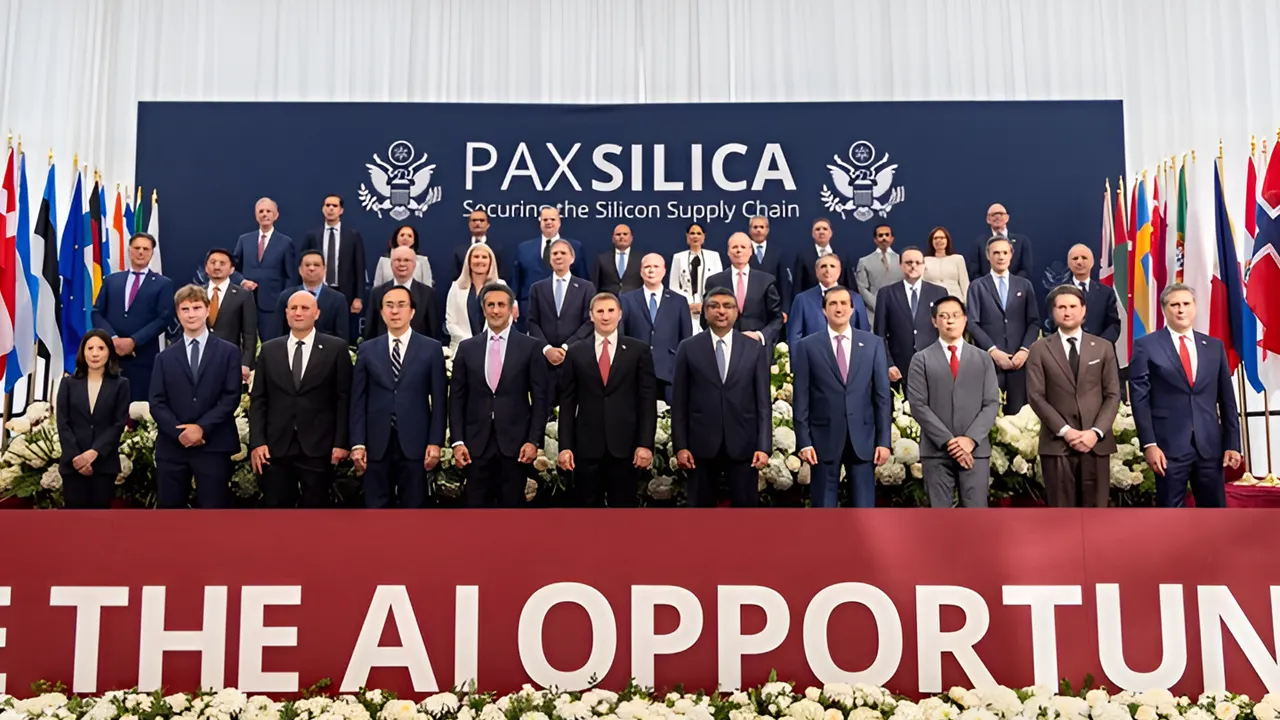
Bahrain, Qatar, and the United Arab Emirates have signed a joint statement at the second Pax Silica Summit, highlighting the growing role of Gulf countries in shaping trusted artificial intelligence infrastructure.
The Pax Silica AI Summit took place in Washington D.C. on June 25 and 26, 2026. It brought together allied countries and technology organizations focused on building secure AI supply chains, advanced compute access, semiconductor cooperation, and reliable digital infrastructure.
According to the report, Bahrain, Qatar, and the UAE are now among the signatories supporting the Joint Statement on AI Opportunities. The statement reflects a shared commitment to responsible AI development, trusted semiconductor supply chains, energy infrastructure, critical minerals, and cross-border innovation.
UAE Delegation Includes G42, Core42 and MGX
The UAE delegation was led by Minister of State H.E. Saeed bin Mubarak Al Hajeri. The delegation also included representatives from major UAE technology and investment organizations, including G42, Core42, MGX, and the Telecommunications and Digital Government Regulatory Authority.
The UAE’s participation is significant because the country has been positioning itself as a major player in global AI infrastructure. In recent years, the UAE has invested heavily in AI companies, data centers, compute systems, and international technology partnerships.
Through Pax Silica, the UAE is also expected to support stronger assurance systems for advanced AI chips. These systems may help verify where sensitive AI semiconductors are located, how they are controlled, and whether they are used only for approved purposes.
Bahrain Signs Joint Statement
Bahrain’s Ambassador to the United States, Shaikh Abdullah bin Rashid Al Khalifa, signed the joint statement during the summit. While Bahrain has not yet been formally admitted into the Pax Silica alliance, its participation in the statement shows growing interest in regional AI cooperation.
For Bahrain, the agreement could support future collaboration in AI policy, digital infrastructure, startup development, and technology investment.
Qatar and UAE Strengthen AI Alliance Role
Qatar and the UAE had already joined Pax Silica earlier in 2026. Their participation reflects the Middle East’s expanding influence in artificial intelligence policy and infrastructure.
Both countries have been investing in digital transformation, cloud computing, AI research, and innovation ecosystems. As AI development becomes more dependent on chips, energy, data centers, and trusted international partnerships, Gulf countries are becoming important players in the global AI race.
What the Pax Silica Joint Statement Covers
The Pax Silica joint statement focuses on several major areas of AI cooperation. These include trusted semiconductor supply chains, AI compute access, critical minerals, energy infrastructure, and research partnerships.
The statement also supports pro-innovation AI regulation. This means signatories aim to encourage AI development while also improving security, reliability, and international trust.
In addition, countries agreed to explore ways to export trusted AI technology stacks to partner nations. These may include secure connectivity, advanced data centers, AI systems, and related infrastructure.
Why the Pax Silica AI Summit Matters
The Pax Silica AI Summit matters because artificial intelligence is no longer only about software. The future of AI also depends on physical infrastructure, including chips, cloud systems, energy supply, data centers, and secure international supply chains.
For Gulf countries, participation in Pax Silica creates an opportunity to influence how global AI infrastructure rules are developed. It also allows Bahrain, Qatar, and the UAE to build stronger partnerships with the United States and other AI-focused economies.
Moreover, the agreement could help regional companies gain better access to AI compute, trusted chips, venture capital, and cross-border research opportunities.
Middle East Expands Role in Global AI Infrastructure
The participation of Bahrain, Qatar, and the UAE shows how the Middle East is becoming more involved in global AI governance and technology infrastructure.
The region is already investing in AI platforms, national digital strategies, sovereign cloud systems, and advanced data centers. Therefore, agreements such as Pax Silica may help Gulf countries move from being AI adopters to AI infrastructure leaders.
As competition for AI chips and compute power increases, trusted international partnerships will become more important. Through the Pax Silica AI Summit, Bahrain, Qatar, and the UAE are signaling that they want to be part of the next phase of global AI development.
Conclusion
Bahrain, Qatar, and the UAE’s participation in the Pax Silica AI Summit joint statement marks another important step for AI cooperation in the Middle East.
The agreement highlights the importance of secure AI supply chains, trusted semiconductor access, responsible regulation, and international research partnerships. Furthermore, it shows that Gulf countries are becoming more active in shaping the future of artificial intelligence infrastructure.
As AI becomes central to economic growth and national competitiveness, the Pax Silica framework may play a key role in connecting trusted partners, advanced compute resources, and next-generation AI systems.
